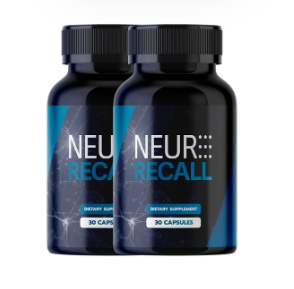

NeuroRecall is being promoted as a memory and cognitive-support supplement for people who want better recall, sharper focus, and improved mental clarity. With ingredients such as Ginkgo Biloba and Bacopa appearing on some of the sales pages, it initially looks like another fairly ordinary nootropic. Then I started investigating the websites selling it.
I found multiple NeuroRecall domains calling themselves official, different versions of the formula, conflicting directions for how many capsules to take, and some very large customer-review claims that are difficult to reconcile with the product’s limited independent footprint. I also found a recent BBB Scam Tracker report describing an alleged deepfake advertisement involving Bill Gates and an Alzheimer’s cure. For me, the websites and marketing became a much bigger story than the ingredients.
Quick Verdict
Would I buy NeuroRecall? No. There are too many inconsistencies around the product for me to feel confident about what I’d actually be ordering.
- Multiple “official” websites: I found several domains presenting themselves as NeuroRecall websites.
- Different formulas: One version contains six nootropic ingredients, while another lists 14 ingredients and includes compounds usually associated with blood sugar and eye health.
- Different directions: Some pages say one capsule daily, while another formula requires two.
- Huge review claims: One NeuroRecall site advertises thousands of verified ratings and more than 75,000 bottles shipped.
- Deepfake complaint: A recent BBB Scam Tracker report describes a consumer allegedly encountering a fake Bill Gates Alzheimer’s endorsement connected with neurosrecall.com.
- Clinical evidence: I found no published clinical trial demonstrating that the finished NeuroRecall supplement reverses memory loss or treats Alzheimer’s disease.
Table of Contents
- Quick Verdict
- I Found More Than One “Official” NeuroRecall Website
- Which NeuroRecall Formula Is the Real One?
- Even the Dosage Changes Between Websites
- Then I Found the Bill Gates Deepfake Complaint
- The Alzheimer’s Angle Is Particularly Concerning
- The Review Numbers Raise More Questions
- What’s Actually Inside NeuroRecall?
- The 14-Ingredient Version Creates a Different Safety Issue
- Is NeuroRecall a Scam?
- NeuroRecall Possible Side Effects
- What to Do If You Already Ordered NeuroRecall
- A Pattern I Keep Seeing
- Smarter Alternatives
- Conclusion
- FAQ
I Found More Than One “Official” NeuroRecall Website
This was the first problem. I found NeuroRecall being promoted through domains including neuurorecall.com, neurosrecall.com, neurrorecall.com, neurorrecall.com, neurorecall.co and neurorecallofficial.com. Several don’t present themselves as unrelated retailers. They describe themselves as the official NeuroRecall website or otherwise appear dedicated entirely to the product. Normally, multiple domains wouldn’t be enough to concern me. A manufacturer might own several addresses or affiliates might build separate promotional pages. But then I compared what those websites were actually selling. That’s where the inconsistencies became much harder to ignore.
Which NeuroRecall Formula Is the Real One?
One NeuroRecall website describes a simple six-ingredient formula containing: Ginkgo Biloba, Bacopa Monnieri, L-Theanine, Vitamin B12, Phosphatidylserine, and Rhodiola Rosea. That sounds like a conventional nootropic formula. Then I found another version called NeurRecall containing 14 ingredients.
That formula includes Ginkgo, Bacopa, L-Theanine, B12, folate and Alpha-GPC, but also cinnamon extract, berberine, chromium and alpha-lipoic acid. It even contains bilberry, lutein and zeaxanthin, ingredients more commonly associated with eye-health formulas. The website itself acknowledges this strange combination and explains that the blood-sugar and eye-health ingredients really are on the label. That’s not a reformulation involving one or two ingredients. It’s a fundamentally different supplement. Before I can decide whether NeuroRecall’s formula is good, I first need to know which formula NeuroRecall actually is.
Even the Dosage Changes Between Websites
The discrepancies don’t stop with the ingredient list. Several NeuroRecall pages describe it as a convenient one-capsule-a-day supplement containing 30 capsules per bottle. The 14-ingredient NeurRecall version says the serving size is two capsules, with 60 capsules providing 30 servings. Again, there could be an innocent explanation. Perhaps we’re looking at different generations of the product or unrelated sellers using extremely similar names. But that’s precisely the problem for a shopper.
If several websites are presenting themselves as NeuroRecall while describing different formulas and different dosing instructions, how is someone supposed to know which bottle they’re purchasing?
Then I Found the Bill Gates Deepfake Complaint
This was the most serious thing I found. In September 2026, the Better Business Bureau’s Scam Tracker published a report from someone whose elderly father allegedly encountered a convincing video that appeared to show Bill Gates promoting a honey-based Swedish supplement that supposedly could reverse Alzheimer’s disease. According to the report, the consumer spent approximately $350 on a six-month supply. The website identified in that scam report was neurosrecall.com.
A BBB Scam Tracker submission is a consumer report, not a court finding or proof that every allegation is true. I therefore wouldn’t state that NeuroRecall itself created the alleged video. But I certainly wouldn’t ignore it either. I found no credible evidence that Bill Gates developed, manufactured, clinically tested, or endorsed NeuroRecall. I also found no evidence that this supplement reverses Alzheimer’s disease.
If you encounter a NeuroRecall advertisement featuring Bill Gates or another celebrity claiming a memory-loss breakthrough, I would not treat that video as genuine without confirmation from the person or organization supposedly involved.
The Alzheimer’s Angle Is Particularly Concerning
There’s a huge difference between selling a supplement for everyday memory support and suggesting it can reverse Alzheimer’s disease. Some of the NeuroRecall websites I found are actually careful about this. They explicitly state that the product is a wellness supplement and isn’t intended to treat Alzheimer’s, dementia, neuropathy, or another diagnosed condition. That’s responsible wording. But it creates an obvious contradiction if consumers are simultaneously reaching NeuroRecall through advertisements suggesting a dramatic Alzheimer’s breakthrough. A disclaimer at the bottom of a website doesn’t make an unsupported disease claim scientifically valid. And I found no product-specific clinical trial showing NeuroRecall treats Alzheimer’s disease.
The Review Numbers Raise More Questions
One NeuroRecall website advertises a 4.8-star average rating, more than 4,120 verified ratings, and over 75,000 bottles shipped. Those are impressive numbers. But when investigating supplements, I don’t treat a number printed on the seller’s website as independent evidence. I looked for a substantial external review footprint that would help me compare those claims with experiences outside NeuroRecall’s own marketing ecosystem. I couldn’t find anything remotely comparable to thousands of independently documented customer experiences. That doesn’t prove the displayed reviews are fabricated. It does mean I can’t independently confirm the scale of customer satisfaction being advertised.
What’s Actually Inside NeuroRecall?
If we’re discussing the six-ingredient version, the formula isn’t ridiculous. Ginkgo Biloba, Bacopa Monnieri, L-Theanine, Vitamin B12, Phosphatidylserine, and Rhodiola are all recognizable ingredients in cognitive supplements. Some have legitimate research behind particular cognitive or stress-related uses. But research on Bacopa isn’t a clinical trial on NeuroRecall.
Research on Ginkgo isn’t evidence that NeuroRecall prevents dementia. And having six researched ingredients doesn’t establish that combining them into one capsule at unknown doses will produce the results advertised. One NeuroRecall page even acknowledges that exact milligram amounts aren’t published for its six ingredients. Without the doses, meaningful comparison with clinical research becomes much harder.
The 14-Ingredient Version Creates a Different Safety Issue
The other NeurRecall formula deserves separate attention because it contains berberine, cinnamon and chromium. Those aren’t ingredients I’d expect most people shopping for a simple memory supplement to anticipate.
Berberine in particular can interact with medications and affect blood glucose. The NeurRecall website itself warns people taking diabetes medication to speak with their doctor before using it. I actually appreciate that warning.
But it reinforces why the conflicting formulas matter. Someone researching the six-ingredient NeuroRecall version might never realize another product carrying almost exactly the same name contains ingredients relevant to blood sugar and medication interactions. Formula transparency isn’t merely an SEO or branding problem. It can become a safety issue.
Is NeuroRecall a Scam?
I would avoid the NeuroRecall websites I investigated. I can’t establish that every website using the NeuroRecall name belongs to the same operation, so I wouldn’t make a blanket claim that every NeuroRecall bottle is fake. What I can establish is that the online situation is messy enough to make me uncomfortable spending money.
I found multiple websites presenting different formulas, conflicting dosing instructions, large seller-hosted review claims I couldn’t independently substantiate, and a recent BBB Scam Tracker report involving one NeuroRecall domain and an alleged Bill Gates Alzheimer’s deepfake. That’s enough for me. I don’t need to prove that every part of the operation is fraudulent before deciding there are safer places to spend my money.
NeuroRecall Possible Side Effects
Potential side effects depend on which NeuroRecall formula you actually receive. Ginkgo may increase bleeding risk in some circumstances, particularly for people taking anticoagulant or antiplatelet medication. Bacopa can cause digestive symptoms, while Rhodiola may not be suitable for everyone.
The 14-ingredient version adds another layer because it contains berberine and other metabolic ingredients that may affect blood glucose or interact with medication. Anyone taking prescription medication should therefore know the exact NeuroRecall formula they’re considering before using it.
What to Do If You Already Ordered NeuroRecall
Check the domain you purchased from and save your confirmation email, receipt, product page, refund terms and screenshots of the formula that was advertised. When the bottle arrives, compare its Supplement Facts panel with the ingredients you were shown before checkout. If they don’t match, I’d contact the seller before taking anything.
If you purchased after seeing a celebrity video claiming NeuroRecall reverses Alzheimer’s disease, don’t use that advertisement as medical evidence. And if you see unexpected recurring charges or can’t obtain a promised refund, contact your card issuer promptly to discuss your dispute options.
A Pattern I Keep Seeing
NeuroRecall reminds me of what I found with HoneyFil and Nervelin Capsules. In both investigations, different websites presented substantially different formulas under essentially the same product name.
NeuroRecall adds something more troubling: a consumer scam report involving an alleged celebrity deepfake and Alzheimer’s claim. That is why I now spend as much time investigating how a supplement reaches the customer as I do reading its ingredient label.
Smarter Alternatives
If you simply want a cognitive supplement, I’d rather choose an established manufacturer with one clearly identifiable official website, one consistent Supplement Facts panel, disclosed ingredient amounts, independent testing information, and a substantial history outside its own sales pages.
If worsening memory or cognitive changes are the reason you’re shopping for NeuroRecall, I’d speak with a healthcare professional instead. Memory problems can have many causes, and a supplement advertisement can’t diagnose Alzheimer’s disease or tell you what’s causing the changes.
Conclusion
I went into this investigation expecting another memory supplement. I came away more concerned about the confusing network of NeuroRecall websites than the nootropic ingredients themselves.
The conflicting formulas, unclear dosing, difficult-to-verify review claims and reported deepfake promotion are enough for me to pass. I wouldn’t buy NeuroRecall from the websites I investigated.
FAQ
What is NeuroRecall?
NeuroRecall is marketed as a cognitive-support supplement for memory, focus, mental clarity and brain energy.
Is NeuroRecall a scam?
I can’t establish that every product using the NeuroRecall name is fraudulent. However, the inconsistencies and reported marketing issues I found are serious enough that I wouldn’t purchase it from the websites I investigated.
Does Bill Gates endorse NeuroRecall?
I found no credible evidence that Bill Gates endorses NeuroRecall. A September 2026 BBB Scam Tracker report describes an alleged deepfake video appearing to show Gates promoting an Alzheimer’s supplement connected with neurosrecall.com.
Can NeuroRecall reverse Alzheimer’s disease?
I found no clinical evidence showing NeuroRecall reverses or treats Alzheimer’s disease. Several NeuroRecall websites themselves state that the supplement isn’t intended to treat Alzheimer’s or dementia.
What ingredients are in NeuroRecall?
That depends on which website you consult. Some list six nootropic ingredients including Ginkgo, Bacopa, L-Theanine, B12, Phosphatidylserine and Rhodiola, while another NeurRecall formula lists 14 ingredients including Alpha-GPC, berberine, chromium and several eye-health compounds.
Are NeuroRecall reviews real?
Some NeuroRecall websites advertise thousands of ratings, but I couldn’t find a comparable independent review history that would allow me to verify those numbers.
Would I buy NeuroRecall?
No. There are too many inconsistencies around the websites, formula and marketing for me to feel confident about what I’m purchasing.