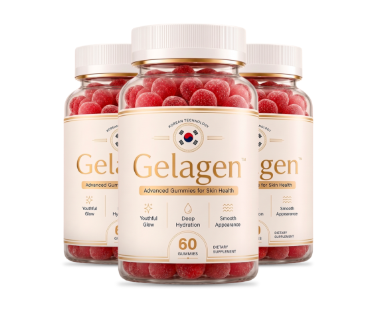

Gelagen Korean Gummies are being promoted through one of the more misleading supplement ads I’ve come across recently. The video tells a story about a Korean anti-aging discovery and a pink gelatin recipe, then appears to show celebrities such as Nicole Kidman and Martha Stewart talking about the method.
The problem is that I could find no credible evidence that either woman endorses Gelagen. The celebrity footage appears to be AI-generated or manipulated, making it look as though familiar public figures are recommending a beauty product they have no verified connection to. And once I looked past the celebrity story, Gelagen itself turned out to be much less exotic than the advertising makes it sound.
Quick Takeaways
- Gelagen is marketed as a skin, hair, and beauty gummy.
- Ads use what appear to be AI/deepfake videos of Nicole Kidman and Martha Stewart.
- I found no credible evidence that either celebrity endorses Gelagen.
- Some promotions revolve around a supposed Korean pink gelatin anti-aging recipe.
- The published Gelagen formula is mainly vitamins and minerals, with an unusually large amount of biotin.
- Despite the name and gelatin story, the ingredient information I found doesn’t list gelatin or collagen.
- The label uses the phrase “Korean Technology,” but I couldn’t find a clear explanation of what that actually means.
- There is no published clinical trial showing that Gelagen itself reverses skin aging.
- I would not trust the celebrity videos as evidence that the product works.
Table of Contents
- Quick Takeaways
- What Is Gelagen Korean Gummies?
- The Nicole Kidman and Martha Stewart Videos
- The Korean Pink Gelatin Story
- What Is Actually in Gelagen
- The “Korean Technology” Claim
- The Claims vs. What You’re Actually Buying
- The Biotin Dose Is Hard to Miss
- The Fake Endorsement Matters More Than the Formula
- Does Gelagen Korean Gummies Have Side Effects?
- Before You Buy Gelagen, Ask Yourself This
- Pattern I Keep Seeing
- Is Gelagen Korean Gummies Legit or a Scam?
- What To Do If You Already Ordered Gelagen
- Conclusion
What Is Gelagen Korean Gummies?
Gelagen is sold as a dietary supplement for skin health, with additional claims involving hair, nails, hydration, smoothness, and a more youthful appearance. A bottle contains 60 gummies, with two gummies making up a daily serving. The actual formula is closer to a beauty multivitamin than some revolutionary Korean anti-aging treatment. It contains vitamins A, C, D, E, B6 and B12, folate, pantothenic acid, iodine, zinc, inositol, choline, and a very large amount of biotin. That’s very different from the story being used to introduce the product in some ads.
The Nicole Kidman and Martha Stewart Videos
This is the part of the Gelagen promotion I have the biggest problem with. Some ads appear to show Nicole Kidman and Martha Stewart discussing a Korean anti-aging method or lending credibility to the story surrounding Gelagen. If you watched one without knowing how convincing AI-generated videos have become, you could easily come away believing these women had genuinely discussed or endorsed the product. I couldn’t find credible evidence that they have.
The footage shows signs consistent with AI manipulation or deepfake advertising, and independent investigations into the campaign have reached the same conclusion. I would not treat anything Nicole Kidman or Martha Stewart appears to say in these Gelagen videos as a genuine testimonial. Using recognizable celebrities this way isn’t a small advertising exaggeration. Their faces and reputations can make an unknown supplement seem established before the viewer has even looked at what’s inside the bottle.
The Korean Pink Gelatin Story
The celebrity videos are tied to a story about a Korean beauty secret, sometimes presented as a pink gelatin recipe or discovery connected to youthful-looking skin. It’s an effective hook because you’re initially watching to find out what this supposed recipe is. Eventually, however, the presentation leads into a supplement offer. And here’s the strange part: the Gelagen ingredient information I found doesn’t list gelatin. The gummy base is described as using pectin, while the active ingredients are primarily vitamins and minerals. Collagen isn’t listed either. So anyone expecting the bottle to contain some special Korean gelatin or collagen formula based on the advertisement may be surprised by what the label actually shows.
What Is Actually in Gelagen
The standout ingredient is biotin at 5,000 mcg per serving. That’s 16,667% of the Daily Value. The formula also contains vitamin C, vitamin D, vitamin E, B vitamins, folate, zinc, iodine, choline, and inositol. These aren’t useless ingredients. Several play legitimate roles in maintaining normal skin, hair, or general health. But this isn’t evidence of a secret anti-aging discovery.
Biotin is particularly associated with hair and nail supplements, but taking huge amounts doesn’t automatically produce better hair or younger-looking skin in someone who isn’t deficient. High-dose biotin can also interfere with certain laboratory tests, something worth knowing if you’re taking the gummies regularly.
The “Korean Technology” Claim
“Korean Technology” appears prominently in Gelagen’s product presentation, but I couldn’t find a meaningful explanation of what technology the phrase refers to. There doesn’t appear to be a clearly identified Korean manufacturing process, Korean research program, patented delivery system, or published Gelagen clinical study attached to that wording. That leaves the phrase doing a lot of marketing work without telling the buyer very much.
This also sits awkwardly beside information stating that the gummies are manufactured in the United States using globally sourced ingredients. There’s nothing inherently wrong with a U.S.-made supplement, but that’s quite different from the impression someone might get from an advertisement built around a Korean anti-aging discovery.
The Claims vs. What You’re Actually Buying
Once the celebrity videos and Korean beauty story are stripped away, you’re left with a vitamin and mineral gummy marketed for skin health. Vitamin C is involved in normal collagen synthesis. Zinc and several other nutrients are important for normal skin and hair health. Someone who is deficient in certain nutrients may benefit from correcting that deficiency. None of this demonstrates that Gelagen can reverse visible aging or recreate the transformations suggested by dramatic advertisements.
I couldn’t find a published clinical trial testing Gelagen itself and showing that people taking these gummies develop significantly younger-looking skin.
The Biotin Dose Is Hard to Miss
Gelagen contains 5,000 mcg of biotin per daily serving, which is far above the Daily Value. More isn’t necessarily better here. Biotin supplements are heavily marketed for hair, skin, and nails, but deficiency is uncommon in otherwise healthy people eating a normal diet.
High-dose biotin can also interfere with certain blood tests and potentially produce misleading laboratory results. If you’re taking Gelagen and need blood work, tell your healthcare provider that you’re using a high-biotin supplement. That’s considerably more useful to know than the celebrity story used to sell the gummies.
The Fake Endorsement Matters More Than the Formula
Gelagen could contain perfectly ordinary vitamins and still have a serious advertising problem.A supplement company shouldn’t need viewers to believe Nicole Kidman or Martha Stewart secretly discovered its beauty solution. If the formula is worthwhile, the company should be able to sell it by showing consumers exactly what’s inside and providing evidence for the benefits being claimed. The fake-celebrity angle does the opposite. It borrows credibility from people who don’t appear to have agreed to provide it.
For me, that makes the sales funnel much harder to trust, regardless of whether the bottle itself contains the ingredients printed on its label.
Does Gelagen Korean Gummies Have Side Effects?
Most of the ingredients are familiar vitamins and minerals, but that doesn’t mean everyone should take them without thinking about what else they’re already using. The unusually high biotin content deserves particular attention because of its ability to interfere with some laboratory tests. The gummies also contain vitamin A, iodine, zinc, and other nutrients that someone may already be getting from a multivitamin or another beauty supplement.
If you’re pregnant, taking medication, being treated for a medical condition, or already using several supplements, check the complete label before adding Gelagen.
Before You Buy Gelagen, Ask Yourself This
Would you still want these gummies if Nicole Kidman and Martha Stewart had never appeared in the advertisement? That’s probably the simplest way to judge the offer. Ignore the celebrity faces, the Korean beauty story, and the dramatic before-and-after message. Look at the Supplement Facts panel instead. What you’re considering buying is essentially a high-biotin beauty supplement with additional vitamins and minerals. If that isn’t what you thought the advertisement was selling, that’s useful information before spending your money.
Pattern I Keep Seeing
Fake celebrity endorsements have become common in aggressive supplement advertising. We’ve seen a similar pattern with NeuroRecall, where an AI-generated celebrity or expert is used to make an unfamiliar product look credible. Gelagen takes that approach further by combining the celebrity footage with a Korean beauty-secret story. The faces get your attention, but neither the celebrities nor the story prove that the gummies work.
Is Gelagen Korean Gummies Legit or a Scam?
There appears to be an actual Gelagen supplement behind the advertisements, so this isn’t simply a nonexistent product. What I would call deceptive is the promotion using apparent AI/deepfake celebrity endorsements. I found no credible evidence that Nicole Kidman or Martha Stewart endorses Gelagen, and consumers shouldn’t be led to believe otherwise.
So while a bottle of gummies may arrive after ordering, I would avoid the sales funnel built around fake celebrity endorsements. A real product doesn’t make misleading advertising acceptable.
What To Do If You Already Ordered Gelagen
Check the bottle against what you remember being promised in the advertisement. Read the Supplement Facts panel, manufacturer information, serving directions, and billing terms rather than relying on the video that led you to the product.
If the product or charge isn’t what you agreed to, keep your confirmation email, screenshots of the offer, packaging, and any communication with the seller. Contact the company first, and if an unauthorized charge isn’t resolved, contact your payment provider.
And if the celebrity endorsement was the main reason you purchased Gelagen, don’t assume the video was genuine simply because the face and voice looked convincing.
Conclusion
After researching Gelagen Korean Gummies, I found a vitamin and mineral supplement built mainly around high-dose biotin rather than the unusual Korean anti-aging formula suggested by some of its advertising. I also found no credible evidence that Nicole Kidman or Martha Stewart genuinely endorses the product.
The biggest problem is the marketing. Using apparent AI-generated celebrity footage to sell a supplement makes the promotion difficult to trust, while the claims about youthful skin go beyond what has been demonstrated for Gelagen itself. I would not buy it based on the celebrity videos or the Korean beauty story.

[…] become a recurring feature of aggressively marketed supplements. We saw a similar approach with Gelagen Korean Gummies, where apparent AI-generated videos featuring Nicole Kidman and Martha Stewart were used to promote […]