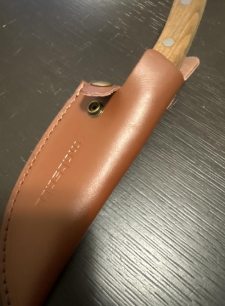

My girlfriend knows I love to cook, so for my birthday, she gifted me the Matsato Chef Knife. I thought it was a thoughtful present, especially since she picked something I could actually use. I’d seen the knife advertised online before, with all the talk about exceptional sharpness, Japanese-inspired craftsmanship and a design that’s supposed to make cutting easier.
I was happy to try it, but after using it in my kitchen, I didn’t understand the excitement surrounding it. The knife looks nice, particularly the wooden handle, but the blade didn’t impress me. I decided to look into the materials and read other customer reviews to see whether I’d received a poorly sharpened knife or whether other people had similar experiences.
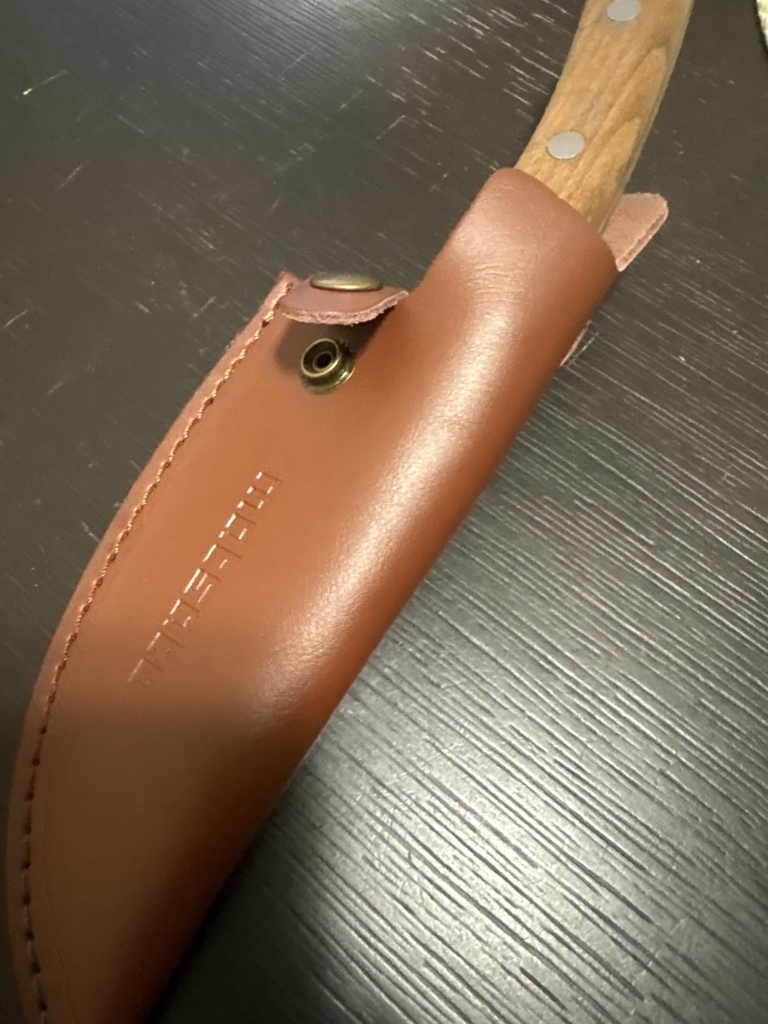
Table of Contents
- My Experience Using the Matsato Chef Knife
- The Build and Quality of the Knife
- The Wooden Handle Is Nice, but What About the Blade?
- Matsato Makes Some Big Claims About Sharpness
- What Other Buyers Are Saying About the Matsato Chef Knife
- Does the Matsato Chef Knife Hold Its Edge?
- The Similarity to Other Heavily Advertised Knives
- What I Like and Don’t Like About Matsato
- Would I Recommend the Matsato Chef Knife?
- Conclusion
My Experience Using the Matsato Chef Knife
I liked the Matsato’s appearance when I received it. The wooden handle is genuinely nice, and I think it’s the best thing about the knife. It gives it a different look from the regular kitchen knives I’m used to seeing. But once I started using it, the blade was a disappointment. The advertisements make it look incredibly sharp, with people slicing through ingredients as though the knife is doing all the work. Mine wasn’t anything like that. It could cut, obviously, but I didn’t find it particularly sharp or impressive. I enjoy cooking, and I appreciate a knife that makes preparing ingredients easier, but nothing about the Matsato’s cutting performance stood out to me. I wasn’t expecting some magical kitchen tool, either. I just expected better sharpness considering how heavily the company promotes that feature. I appreciate the gift and the thought my girlfriend put into choosing it, but judging the knife itself, I think it’s overhyped.
The Build and Quality of the Knife
I checked Matsato’s specifications because I wanted to understand what kind of knife I was dealing with. The standard Matsato has a 14.8 cm blade, measures 28 cm from end to end and weighs around 176 grams. The handle is made from roasted beech wood, which explains its attractive appearance, while the blade is stainless steel. Matsato’s support documentation identifies the steel as 4CR14, although another product page lists 1.4116, so even the company’s published material information isn’t entirely consistent. Neither description, on its own, establishes that this is a premium knife. The blade is also shorter than a conventional eight-inch chef’s knife, making it closer to a compact all-purpose kitchen knife. I don’t have a problem with that size, but I think it’s something buyers should know. The overall design is distinctive, yet the specifications don’t reveal anything particularly exceptional about the construction.
The Wooden Handle Is Nice, but What About the Blade?
One thing Matsato gets right is the appearance of the handle. The wood gives it a more traditional look, and I can understand why someone shopping for a gift would find it appealing. There’s also a circular hole near the base of the blade, which the company says helps with finger placement and control. I don’t think that feature is necessarily better than the pinch grip people already use with ordinary chef’s knives, but some buyers may find it comfortable. What interests me more is the blade’s finishing. A knife can be made from perfectly usable steel and still perform poorly if the cutting edge hasn’t been ground and sharpened properly. The angle of the edge, how evenly it’s finished and whether the manufacturer removes the burr after sharpening all affect the result. Those are practical details that matter much more to me than the shape of the handle or the hole in the blade.
Matsato Makes Some Big Claims About Sharpness
Matsato promotes the knife using descriptions such as precision cutting, lasting sharpness and ice-hardening. Its advertisements also lean heavily on Japanese knife-making traditions, which gives the impression that you’re buying something more specialized than an ordinary kitchen knife. Ice-hardening is a real manufacturing process, but simply mentioning it doesn’t tell buyers how hard the finished blade is or how it compares with other knives. The company doesn’t provide enough consistent technical information to judge those claims properly. I also noticed that Matsato’s advertising often focuses on how effortlessly the knife cuts in demonstrations. Those videos might look convincing, but they don’t establish how well a particular knife has been sharpened before it’s shipped. There’s a difference between promoting a knife as sharp and consistently delivering one with a well-finished cutting edge.
What Other Buyers Are Saying About the Matsato Chef Knife
After using mine, I went looking for customer reviews to see whether anyone else had complained about the sharpness. I found a buyer on Trustpilot who said they’d purchased two Matsato knives, one through Amazon and another directly from the company, and neither was as sharp as advertised. Another customer complained about receiving a dull knife and having difficulty getting the company to acknowledge the problem. I also came across a Reddit discussion in a knife-sharpening community where someone who received Matsato knives as a birthday gift was disappointed with the factory sharpening, with other commenters pointing out problems with the cutting-edge finish. But not everyone has had a bad experience. Matsato has plenty of positive reviews on Trustpilot, with customers praising the sharpness, appearance and comfortable handle. Some Reddit users also say their knives arrived very sharp and worked well for everyday cooking. So the feedback is mixed, and I can’t say every Matsato knife has the same problem as mine. Still, finding several complaints about poor sharpness made me realize my experience wasn’t an isolated one.
Does the Matsato Chef Knife Hold Its Edge?
Sharpness and edge retention are two different things. A knife can arrive extremely sharp and become dull quickly, or it can arrive with a poorly finished edge despite being made from steel capable of holding a decent one. My complaint is about how sharp my Matsato was when I used it, not a measured test of how long its edge lasted. I haven’t carried out that kind of comparison, so I wouldn’t claim that mine lost its sharpness after a particular number of weeks. I did find customer reviews describing knives that dulled after ordinary kitchen use, including one buyer who said theirs became noticeably less sharp after a few months. That’s useful feedback for anyone planning to use the knife regularly, but long-term edge retention also depends on sharpening, cutting surfaces and maintenance. Matsato recommends washing the knife by hand and drying it rather than putting it in the dishwasher.
The Similarity to Other Heavily Advertised Knives
While researching Matsato, I noticed people comparing it with Huusk, another knife advertised online with a wooden handle, curved blade and finger hole. The designs are similar enough that buyers have questioned how distinctive Matsato really is. I can’t confirm that they’re manufactured by the same company or that the blades are identical, but the comparison is understandable. Matsato is sold with a strong story about craftsmanship and a distinctive design, yet similar-looking knives are available under other names. I think that’s another reason to judge it by its actual materials and cutting performance rather than assuming the appearance makes it special. And the fact that a knife is manufactured in China isn’t automatically a quality problem. China produces both good and poor kitchen knives. The issue is what you’re getting for the money.
What I Like and Don’t Like About Matsato
Pros
- The wooden handle looks attractive.
- Its compact size may suit people who prefer smaller knives.
- The design is different from a conventional chef’s knife.
- The stainless steel blade can be sharpened and maintained.
- Some buyers report good cutting performance.
Cons
- Mine wasn’t as sharp as the advertisements suggested.
- Other buyers have also complained about factory sharpening.
- The published steel specifications aren’t entirely consistent.
- The unusual finger-hole design won’t appeal to everyone.
- The marketing makes the knife sound more exceptional than its construction establishes.
Would I Recommend the Matsato Chef Knife?
Not particularly. If someone already has one and enjoys using it, I don’t see any reason they should stop. A properly sharpened Matsato can still be useful for ordinary kitchen work. But if someone asked me whether they should buy it because of the impressive cutting demonstrations online, I’d tell them not to rely on those videos. I don’t think the knife offers a compelling reason to choose it over a well-made, properly sharpened kitchen knife from an established brand. I would pay more attention to the quality of the cutting edge, the steel and the manufacturer’s consistency than to the advertising.
Conclusion
I appreciate my girlfriend buying me something connected to my love of cooking, and I still think the Matsato has a very nice wooden handle. But as a kitchen knife, it didn’t give me the cutting performance I expected. I went looking for other reviews because I wondered whether I was being too critical, and finding similar complaints about sharpness helped put my experience into perspective. I don’t think it’s a useless knife. I just think Matsato has made an ordinary kitchen tool sound much more impressive than it really is.
You can Check Out My Review of The BRYN Rolling Grill Basket Here