
Garmin makes some of the most capable sports watches on the market, but the MARQ Gen 3 is a different kind of purchase. At $2,500 to $3,100, it costs considerably more than the watches most runners, cyclists, and outdoor enthusiasts would normally consider. For that money, Garmin is offering something that sits between a luxury timepiece and a fully equipped sports smartwatch, with the materials and finishing of an expensive watch and the technology of its latest performance models.
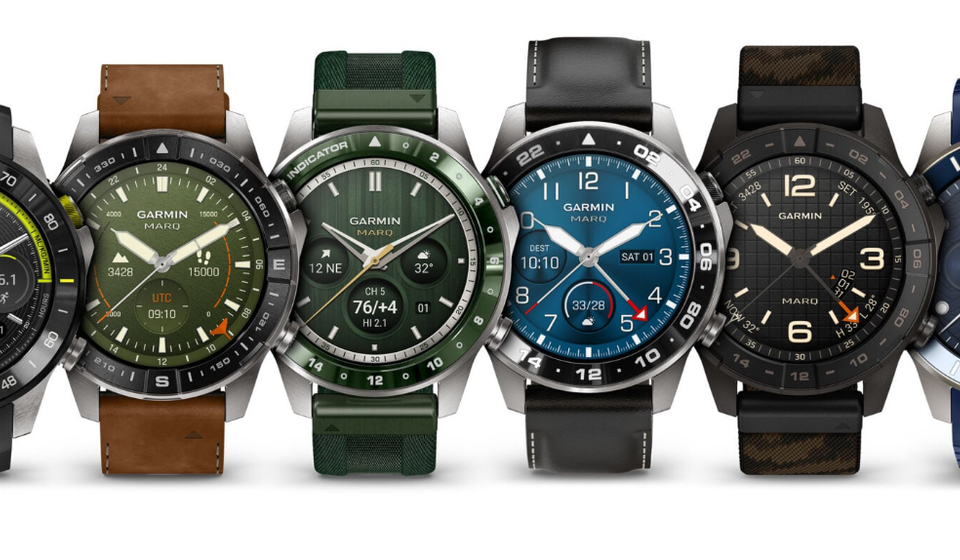
The new collection has six versions, each designed around a particular activity. There is an Athlete for serious training, an Adventurer for outdoor exploration, a Golfer, an Aviator, a Commander, and a Diver. All six share a Grade-5 titanium case, sapphire crystal, ceramic details, and a larger AMOLED display. Garmin has also introduced satellite communication, worldwide mapping, and several features that were missing from earlier MARQ watches.
I like the idea of a premium watch that can do more than tell the time or display notifications. But I also think a product this expensive deserves closer consideration than an ordinary smartwatch. The materials may justify part of the price, but they don’t necessarily make its GPS more accurate or its fitness tracking more useful than a cheaper Garmin. In this research-based review, I’ll look at the specifications, the differences between the six models, everyday usability, and what you’re actually getting for the extra money.
Quick Takeaway
- Product: Garmin MARQ Gen 3 luxury smartwatch collection.
- Price: $2,500 to $3,100, depending on the model.
- Models: Athlete, Adventurer, Golfer, Aviator, Commander, and Diver.
- Construction: Grade-5 titanium case, sapphire crystal, and ceramic bezel.
- Display: 1.4-inch AMOLED touchscreen with reported peak brightness of 3,000 nits.
- Battery life: Up to 18 days in smartwatch mode.
- Notable features: Advanced fitness tracking, worldwide maps, satellite and LTE communication, ECG support, and an LED flashlight.
- Main drawback: Several of its most useful functions are available on less expensive Garmin watches.
- Verdict: A serious luxury smartwatch with impressive capabilities, but its premium price makes sense mainly for buyers who value the craftsmanship and specialist designs.
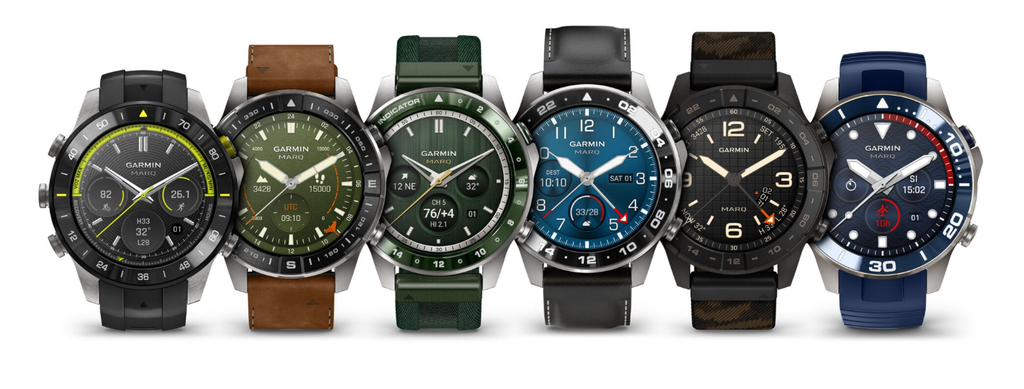
Table of Contents
- Quick Takeaway
- What Is New in the Garmin MARQ Gen 3?
- Garmin MARQ Gen 3 Specifications
- Garmin MARQ Gen 3 Build Quality and Design
- Is the MARQ Gen 3 Comfortable Enough to Wear Every Day?
- The AMOLED Display and Navigation Features
- Fitness and Health Features: How Much Can the Watch Track?
- Garmin MARQ Gen 3 Satellite and LTE Communication
- The Six Garmin MARQ Gen 3 Models Explained
- Garmin MARQ Gen 3 Battery Life
- Garmin MARQ Gen 3 vs Fenix 9: Is There Enough Difference?
- What Do Early Reviewers Think?
- Pros and Cons
- Is the Garmin MARQ Gen 3 Worth Buying? My Verdict
What Is New in the Garmin MARQ Gen 3?
The MARQ Gen 3 was announced on October 13, 2026, replacing a second-generation collection that had been around since 2022. Garmin has made several changes that go beyond giving the watches a different appearance. The display is larger, there is now a built-in speaker and microphone, and users get an LED flashlight, expanded navigation, and integrated inReach communication. Worldwide TopoActive maps and address search are also included, making it easier to find destinations without preparing a route on another device. The new collection retains the specialist approach of previous MARQ watches, but Garmin has added a dedicated Diver model with underwater functions and marine controls. These improvements are particularly relevant to someone considering an upgrade from the previous generation. The older MARQ already had expensive materials and advanced sports features, so simply improving the finish wouldn’t have been enough. The Gen 3 brings its technology much closer to Garmin’s newest outdoor watches, although that also means some of its additions will already be familiar to owners of recent Fenix models.
Garmin MARQ Gen 3 Specifications
The six watches share much of their internal hardware, although their straps, bezels, weight, and specialist features differ.
| Specification | Garmin MARQ Gen 3 |
|---|---|
| Case diameter | 47mm |
| Case material | Grade-5 titanium |
| Bezel | Ceramic with model-specific markings |
| Lens | Sapphire crystal |
| Display | 1.4-inch AMOLED touchscreen |
| Display resolution | 454 × 454 pixels |
| Advertised peak brightness | 3,000 nits |
| Internal storage | 128GB |
| Navigation | Multi-band GNSS, worldwide maps, address search |
| Connectivity | Bluetooth, Wi-Fi, LTE, satellite inReach |
| Health monitoring | Heart rate, sleep, HRV, Pulse Ox, ECG where available |
| Other hardware | Speaker, microphone, LED flashlight |
| Battery life | Up to 18 days in smartwatch mode |
| Price | $2,500–$3,100 |
The 128GB storage is generous for a watch and should provide plenty of room for supported maps, music, and other downloadable content. The more interesting specifications, however, are the display, construction, and communication hardware, because those are the areas where the Gen 3 aims to feel like a substantial upgrade.
Garmin MARQ Gen 3 Build Quality and Design
The construction is one of the strongest arguments for buying a MARQ instead of a conventional Garmin sports watch. The Grade-5 titanium case gives it the strength and corrosion resistance associated with high-end watchmaking materials without the weight of an equivalent steel case. Garmin has paired that with sapphire crystal and ceramic bezel inlays, both chosen partly for their resistance to everyday wear. The finishing is more elaborate than what you normally find on a sports watch, with distinctive bezel markings, carefully designed buttons, and straps selected to suit each model. Garmin has also used a manufacturing technique that combines titanium with polymer sections to accommodate the wireless antennas without compromising the metal-heavy design. One particularly interesting detail is the button mechanism. The buttons use inductive technology to help maintain water resistance, but Garmin has added a mechanical clicking sensation so they feel more like traditional watch controls. That might sound like a small improvement, yet it’s exactly the sort of detail buyers should expect when paying this much. The question isn’t whether the MARQ looks expensive. It does. What remains to be established is how well its finish and moving parts hold up after years of regular use.
Is the MARQ Gen 3 Comfortable Enough to Wear Every Day?
A luxury smartwatch should be comfortable enough to wear throughout the day, especially when many of its health features depend on continuous use. The MARQ Gen 3 has a 47mm case and is approximately 15mm thick, which makes it a fairly substantial watch. Titanium helps manage the weight, but the size may still be noticeable on smaller wrists or under fitted shirt cuffs. The strap also makes a difference. The Athlete’s silicone band is more suitable for sweaty workouts, while the Adventurer’s leather strap is better suited to everyday wear and less demanding activities. The Commander uses a woven band, and the Diver has a strap designed for adjustment around diving equipment. I would pay attention to these differences rather than choosing a model entirely for its appearance. A leather strap might look excellent with formal clothing but become less practical during a long run. Likewise, someone who wears a watch to bed for sleep tracking may find a thick 47mm case less comfortable than a smaller Garmin. Early hands-on impressions suggest that the MARQ feels well finished, but I wouldn’t treat a short demonstration as proof of long-term comfort.
The AMOLED Display and Navigation Features
Garmin has given the MARQ Gen 3 a 1.4-inch AMOLED display, making it the largest screen used in the MARQ collection so far. The reported peak brightness of 3,000 nits should help when checking information outdoors, although actual visibility depends on the conditions and display settings. I think the larger screen is particularly useful for navigation. Maps are difficult enough to read on a wrist-sized display, so having more space for route details, nearby roads, and elevation information is welcome. The watches come with worldwide TopoActive maps and can search for addresses directly, which makes them useful for travelling as well as hiking. Someone visiting an unfamiliar city could look up a destination without first creating a course on a computer. The display also benefits everyday activities such as reviewing workout data or reading notifications. However, there is no alternative display technology in this collection for buyers who prefer the traditional always-visible appearance of a memory-in-pixel Garmin screen. The AMOLED panel looks more modern, but keeping it illuminated continuously comes with a battery penalty.
Fitness and Health Features: How Much Can the Watch Track?
The MARQ Gen 3 is still a Garmin performance watch underneath its luxury construction. It includes heart-rate monitoring, training-load information, recovery metrics, sleep analysis, stress tracking, HRV status, and Pulse Ox measurements. Garmin has also included its ECG app, which can check for signs of atrial fibrillation in supported countries. For someone who trains regularly, I think the most useful features are the ones that help interpret performance rather than simply record activity. Training readiness, recovery information, and running metrics can provide context when deciding whether to push harder or take a rest day. The watches also support extensive sports profiles and navigation tools, so they can be used for much more than ordinary gym sessions. However, buyers should understand that these measurements have limitations. Wrist-based sensors aren’t equally accurate in every situation, and wellness information shouldn’t be treated as a medical diagnosis. ECG availability also depends on regional approval. For someone who only wants step counting, notifications, and occasional exercise tracking, the MARQ provides far more technology than necessary.
Garmin MARQ Gen 3 Satellite and LTE Communication
The addition of inReach communication gives the MARQ Gen 3 a useful capability that goes beyond fitness tracking. With an active plan and supported coverage, users can exchange messages, share their location, and request emergency assistance without depending entirely on a nearby smartphone. The watch can also use LTE for certain connected services, including calls and location sharing. This could be valuable for someone who regularly hikes alone, travels through remote areas, or participates in outdoor activities where mobile reception is unreliable. However, there are restrictions that aren’t obvious from the feature list. Garmin’s satellite connection requires suitable conditions, and the watch doesn’t provide the same communication experience as every dedicated inReach device. LTE coverage is also limited by region, and an active subscription is required for certain functions. I wouldn’t buy the watch assuming that every advertised communication feature will work wherever I travel. Garmin provides a separate explanation of its service requirements, and those details deserve attention before purchasing a MARQ primarily for emergency communication.
The Six Garmin MARQ Gen 3 Models Explained
Garmin has priced the six models differently because each combines its own design with tools aimed at a particular activity. The choice should come down to what you actually do, rather than which version has the highest price.
Garmin MARQ Athlete — $2,500
The Athlete is the most affordable version and the one I’d consider first if training were my main priority. It includes running economy, stamina metrics, and a VO2 max indicator on the bezel, alongside Garmin’s wider collection of performance tools. The silicone strap is also a sensible choice for regular exercise because it’s easier to manage around sweat and water than leather. For a dedicated runner, triathlete, or endurance athlete who wants premium materials, this model has a clear purpose. However, many of its training functions can be found on considerably less expensive Garmin watches, so the additional cost is largely for the construction and appearance.
Garmin MARQ Adventurer — $2,700
The Adventurer has a more traditional luxury-watch appearance, with a full-grain Italian leather strap and compass markings around the ceramic bezel. Its outdoor tools include ClimbPro, which provides information about climbs during supported activities. I think this is one of the more versatile designs because it doesn’t look quite as much like dedicated sports equipment. It could suit someone who hikes or travels frequently but also wants a watch that looks appropriate with everyday clothing. The leather strap is attractive, although I’d prefer a more practical band for strenuous exercise or prolonged exposure to water.
Garmin MARQ Golfer — $2,800
The Golfer includes more than 43,000 preloaded golf courses, Virtual Caddie, green contour information, and an 18-hole indicator on its bezel. Those tools can help someone who plays regularly understand course layouts and plan shots without repeatedly consulting another device. The watch also has a distinctive woven strap and golf-inspired styling. However, some functions require a Garmin Golf membership, which adds another expense to an already costly purchase. I think this model makes sense for an enthusiastic golfer who wants a luxury watch, but someone who plays occasionally could get many of the useful features from a less expensive Garmin golf watch.
Garmin MARQ Aviator — $3,100
The Aviator is designed for pilots and aviation enthusiasts, with flight mapping, aviation weather information, and UTC time markings. Its padded leather strap and polished black ceramic bezel give it a more formal appearance than the Athlete. These aviation tools could be convenient for someone who already uses Garmin equipment in the cockpit, particularly when checking flight-related information from the wrist. But I wouldn’t choose this model simply because it looks sophisticated. Its specialist functions account for much of its appeal, and they provide little practical benefit to someone who doesn’t fly.
Garmin MARQ Commander — $3,100
The Commander has a matte-black finish, camouflage-patterned woven strap, and tactical features such as stealth mode, night-vision compatibility, and an Applied Ballistics solver. Garmin has also used textured buttons intended to provide better tactile control. It’s a very different-looking watch from the Adventurer, with a more functional and understated appearance. I can see why the design might appeal to someone who prefers dark watches, but the specialist tools are the real reason to consider it. Unless those capabilities are relevant to your activities, the extra money doesn’t offer much practical advantage.
Garmin MARQ Diver — $3,100
The Diver is the newest specialist addition to the MARQ collection, offering scuba, apnea, and snorkelling functions for supported activities down to 40 metres. It also includes marine tools such as autopilot control and tack assist when used with compatible equipment. Garmin has fitted it with tactile, leakproof buttons and a microadjustable strap designed to accommodate different wearing conditions. This makes it potentially useful to someone who spends considerable time diving or boating. However, dive-computer functionality requires careful attention to operating limits and supported modes, and I’d want proper training and equipment familiarity before relying on any watch underwater.
Garmin MARQ Gen 3 Battery Life
Garmin advertises up to 18 days of battery life in smartwatch mode, which is impressive for a watch with an AMOLED display and this many features. However, the figure changes considerably depending on how the watch is used. With the always-on display enabled, Garmin’s estimate falls to around seven days. Continuous GPS tracking, music playback, navigation, and LTE communication can reduce endurance further. Someone who mainly checks notifications and records a few workouts each week may have a very different experience from someone tracking long-distance activities every day. I would pay particular attention to the GPS battery estimates if buying the watch for hiking, cycling, or endurance events. The 18-day figure is useful for understanding its general efficiency, but it doesn’t tell you how long the watch will last during a demanding activity. Since the Gen 3 has only recently launched, independent long-term battery results are still limited, so Garmin’s estimates shouldn’t be mistaken for established real-world performance.
Garmin MARQ Gen 3 vs Fenix 9: Is There Enough Difference?
The Fenix 9 is probably the watch I’d compare with the MARQ before making a purchase. Garmin’s Fenix range already offers advanced training analysis, mapping, health tracking, and outdoor tools, while certain newer configurations also provide satellite communication. That means the MARQ doesn’t automatically give you better workout data or navigation simply because it costs more. Its advantages are primarily in the materials, finishing, specialist bezels, straps, and overall presentation. The MARQ also offers 128GB of storage, compared with 64GB on some high-end Fenix 9 configurations, although not everyone will make meaningful use of the extra capacity. I think Garmin has made a reasonable distinction between the two ranges, but whether it’s worth the price difference is a personal decision. If I were buying a watch mainly for running, cycling, hiking, or gym training, I’d choose the Fenix model with the features I need. If I wanted something closer to a luxury timepiece that could also handle those activities, the MARQ would be more appealing. The extra money buys a different ownership experience more than a dramatic improvement in fitness performance.
What Do Early Reviewers Think?
The MARQ Gen 3 was announced on October 13, 2026, so it’s too early to draw conclusions from long-term customer ownership. Most available independent coverage consists of launch reporting and short hands-on experiences. TechRadar’s hands-on coverage provides some useful observations about the physical construction, particularly the way Garmin has combined metal components with wireless connectivity and improved the tactile feel of the buttons. The reviewer also compared the MARQ Adventurer with a lighter Garmin sports watch during a hike and found a noticeable difference in how the watches felt on the wrist. Those observations support Garmin’s emphasis on premium construction, but they don’t establish how the watches will perform after months of use. There is still little independent evidence about battery ageing, software reliability, repairs, or how well the different straps and finishes withstand everyday wear. I wouldn’t manufacture customer complaints or claim that owners are satisfied when the collection hasn’t been available long enough to establish either. For a purchase this expensive, waiting for detailed ownership reviews would be a reasonable decision.
Pros and Cons
Pros
- Premium titanium, sapphire, and ceramic construction.
- Six distinctive designs with activity-specific functions.
- Larger AMOLED display and extensive navigation features.
- Advanced training and health monitoring.
- Satellite communication, LTE connectivity, and emergency assistance.
- Strong advertised battery life for a full-featured smartwatch.
Cons
- Considerably more expensive than other capable Garmin watches.
- The 47mm case may feel bulky on smaller wrists.
- Satellite and certain specialist services involve additional costs or restrictions.
- Several important features are available on cheaper Fenix models.
- Limited independent long-term feedback because the collection is newly released.
Is the Garmin MARQ Gen 3 Worth Buying? My Verdict
The Garmin MARQ Gen 3 is an impressive collection, and I think Garmin has done more than simply dress up an ordinary sports watch. The materials are appropriate for the price category, the specialist designs have genuine functions, and the updated technology makes the watches useful beyond their appearance. The new display, navigation tools, and communication features are meaningful improvements over the previous generation.
However, I wouldn’t recommend spending $2,500 to $3,100 on one unless the luxury construction is a major part of what you want. A person who primarily needs dependable fitness tracking, GPS navigation, and recovery information can get much of that functionality from a less expensive Garmin. The MARQ doesn’t become a better purchase simply because it sits at the top of the company’s lineup.
There’s also the question of long-term value. Traditional luxury watches can remain useful for decades with appropriate servicing, but a smartwatch depends on electronics, battery health, software updates, and connected services. Those considerations don’t make the MARQ a poor product, but they do change how I’d think about spending this much money.
For me, the Athlete and Adventurer are the most broadly appealing models. The Athlete makes sense for serious training, while the Adventurer offers an attractive balance between outdoor capability and everyday style. The remaining versions are easier to justify when their specialist functions match your activities. I wouldn’t call the Garmin MARQ Gen 3 overpriced simply because cheaper watches exist, but I would call it unnecessary for most buyers. It’s a luxury purchase that happens to be an extremely capable smartwatch, and understanding that distinction is the best way to decide whether it’s worth the money.
You can also check out my review of Garmin Cirqa here.