
I’ve finally reached the age where I need reading glasses, so I guess I’ve officially joined the old fogies’ club. I’d been looking for decent readers for quite some time, but I kept having the same problem. Some didn’t look particularly nice, others didn’t feel right, and I wasn’t interested in spending too much money on glasses I might eventually misplace.
I finally decided to order a four-pack of TruVision Readers from Amazon. My thinking was that I could keep one pair at home, another at work and one in the car, with a spare somewhere in case I lost one. It seemed more practical than buying a single expensive pair. And after trying them, I actually liked the glasses more than I expected. Unfortunately, the lenses and the frames have turned out to be two very different stories.
Quick Take
- What I bought: A four-pack of TruVision reading glasses from Amazon.
- Lens quality: Very clear, with no noticeable distortion during reading.
- Comfort: Lightweight and comfortable to wear.
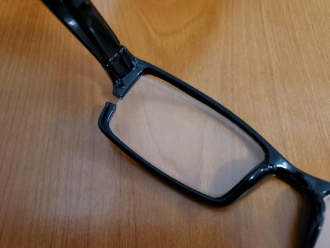
- Durability: Two of my four pairs broke at the hinges in less than two months.
- Customer feedback: Generally positive, although some buyers report similar frame failures.
- My verdict: Good inexpensive readers for clarity and comfort, but I’m disappointed with how poorly mine have held up.
Table of Contents
- Quick Take
- What Are TruVision Readers?
- My Experience Using TruVision Readers
- The Lenses Are Better Than I Expected
- The Build Quality Is Where TruVision Falls Short
- I Checked Whether Other Buyers Had the Same Problem
- Are the Four-Packs Actually Good Value?
- TruVision Readers Aren’t Prescription Glasses
- What I Like and Don’t Like
- What to Do if Your TruVision Readers Break
- Would I Buy TruVision Readers Again?
- Conclusion
What Are TruVision Readers?
TruVision Readers is a brand of over-the-counter reading glasses sold in different styles, magnification strengths and multipacks. The company offers standard readers, computer glasses and some sun-reading models. Its four-packs are particularly convenient for people who like keeping spare glasses in different places. These are ready-made glasses with the same magnification in both lenses, rather than individually prescribed lenses made to correct each eye separately. They’re intended for ordinary close-up tasks such as reading books, looking at labels and using a phone. TruVision advertises lightweight frames, clear lenses and comfortable spring hinges, with some models also featuring reinforced screws. The exact design and materials vary by model, so it’s worth checking the particular pair you’re buying.
My Experience Using TruVision Readers
When my order arrived, I was interested in seeing whether I’d finally found affordable reading glasses that looked decent and felt right. I wasn’t expecting anything luxurious, but I was pleasantly surprised when I started using them. The lenses are really clear. I haven’t noticed any distortion while reading, and I don’t have to keep adjusting the glasses to get a comfortable view. They’re also comfortable to wear, which is something I appreciate because I didn’t want glasses that would feel awkward every time I needed to read something. For inexpensive readers, the actual viewing experience has been very good. The problem started with the frames. I’ve had the four-pack for barely two months, and two pairs have already broken at the hinges. That’s half my order gone in a very short time. I bought several pairs partly so I wouldn’t have to worry about running out of glasses, but I didn’t expect to lose two because of breakages so quickly. I can accept that budget readers won’t feel like expensive prescription frames, but I still expect them to survive ordinary use. It’s particularly annoying because I genuinely like the lenses. If the frames were better made, I’d have very little to complain about.
The Lenses Are Better Than I Expected
One thing I’ve learned from trying reading glasses is that magnification isn’t the only thing that matters. Poorly made lenses can introduce blur or distortion, particularly toward the edges, and that can make reading uncomfortable even when the magnification is technically correct. TruVision promotes its lenses as providing clear vision, and this is one part of the product I think it gets right. I also found customer reviews specifically praising the lack of distortion around the edges. One Amazon buyer described using the glasses in several different settings and said the lenses remained clear across the viewing area. Other customers mention that the magnification works well for reading and that the glasses are comfortable enough for everyday use. These are useful observations because inexpensive readers aren’t always pleasant to look through, even when the frames appear attractive.
The Build Quality Is Where TruVision Falls Short
TruVision makes a point of advertising flexible spring hinges and what it calls Dura-Tight screws. Its website also describes some frames as durable polycarbonate, while individual product listings identify certain models more generally as plastic. Spring hinges are supposed to allow the arms to flex outward slightly, helping the glasses fit different face widths without placing too much pressure on the temples. That’s a useful feature, but the presence of a spring hinge doesn’t guarantee that the surrounding frame or hinge attachment is strong. Those areas experience repeated movement whenever glasses are opened, folded or removed. If the connection between the hinge and frame is weak, the glasses can fail even when the lenses remain perfectly usable. The company doesn’t publish detailed durability testing for its inexpensive readers, so I couldn’t establish how much repeated opening and closing the frames are designed to withstand.
I Checked Whether Other Buyers Had the Same Problem
I went looking for other TruVision reviews because I wanted to know whether the hinge failures were unusual. One Google reviewer said they’d bought three pairs and all three broke at the hinges within two months. That was particularly interesting because it was almost exactly the problem I’d experienced. Another customer complained that three out of four pairs had significant issues, although those involved scratched lenses and incorrect magnification rather than broken hinges. I also found an Amazon review from a buyer who liked the lenses but acknowledged that the frames eventually broke where the arms connected, usually after several months of hard use. On the positive side, there are plenty of customers who describe the glasses as sturdy and comfortable. One Amazon buyer reported using two pairs daily for about a year and a half without either breaking, while another praised the spring hinges and lightweight construction. So the feedback is mixed, but the overall balance of customer reviews appears favourable. My experience doesn’t seem to be universal, although the hinge complaints show that it isn’t unique either.
Are the Four-Packs Actually Good Value?
I can see why TruVision’s multipacks are popular. The company currently lists some four-packs for around $24 to $26 on its website, which works out to roughly $6 per pair before any additional costs. That’s affordable compared with buying several separate pairs from some optical stores. Having spares also makes sense if you’re the kind of person who leaves reading glasses in different rooms or occasionally forgets where you put them. But value isn’t just about how many pairs arrive in the package. It also depends on how long they remain usable. Someone who gets a year or more from each pair may consider the four-pack an excellent purchase. Someone who experiences early frame failures will have a different opinion. I think the multipack idea is sensible, but it doesn’t automatically compensate for poor construction.
TruVision Readers Aren’t Prescription Glasses
I think these glasses make more sense when you treat them as inexpensive over-the-counter readers rather than expecting them to perform like custom prescription eyewear. Ready-made readers generally use the same lens strength in both eyes and don’t account for individual differences such as astigmatism or unequal prescriptions. They can work well for uncomplicated age-related difficulty focusing on nearby objects, but they aren’t suitable for every vision problem. It’s also important to choose the right magnification instead of automatically buying the strongest lenses available. If you experience headaches, blurred vision at multiple distances or difficulty seeing clearly even with readers, a proper eye examination is more useful than repeatedly changing strengths. Good lens clarity doesn’t replace the need for appropriate vision correction.
What I Like and Don’t Like
Pros
- Clear lenses with no noticeable distortion in my experience.
- Comfortable and lightweight.
- Available in several magnification strengths.
- Affordable multipack options.
- Convenient for keeping spare glasses at home, work or elsewhere.
Cons
- Two of my four pairs broke at the hinges in less than two months.
- Some other buyers have reported similar hinge failures.
- Frame materials and construction vary across models.
- Not suitable for people who need individually prescribed lens corrections.
- The low price becomes less attractive when pairs fail early.
What to Do if Your TruVision Readers Break
If you’ve recently bought TruVision Readers and a pair breaks, it’s worth checking the seller’s return or exchange policy before throwing it away. Some TruVision four-pack listings advertise a 30-day satisfaction return guarantee and a 180-day exchange guarantee, although the exact terms may depend on the product and where it was purchased. Since I ordered mine through Amazon, the applicable Amazon order terms and any manufacturer warranty would be the first things to check. Keep the original order details and take photographs showing where the frame failed. If the hinge has separated from the plastic, trying to glue it back together may not produce a reliable repair, especially if the joint is under tension. A loose screw is a different problem and may be easier to fix, but a broken hinge or cracked frame is usually a stronger reason to request a replacement.
Would I Buy TruVision Readers Again?
I’m undecided. I like how clearly I can see through them, and they’re comfortable enough that I’d happily continue using the remaining pairs. But I don’t like the idea of replacing reading glasses every few weeks because the hinges can’t hold up. I bought the four-pack for convenience, and I think that’s a perfectly reasonable reason to choose inexpensive readers. The problem is that convenience disappears when you have to keep worrying about breakages. If I were buying another set, I’d probably compare TruVision with readers that have stronger frames, even if they cost a little more.
Conclusion
I don’t regret trying TruVision Readers because they’ve shown me that inexpensive reading glasses can have very good lenses. I just wish the company had paid the same attention to the frames. For someone who wants clear, comfortable readers at a low price, I can understand why the brand has so many satisfied customers. But based on my experience, I wouldn’t count on every pair lasting particularly long. They’re good readers when they’re intact, and that’s the frustrating part.
You can check out my review of Clarity Blue Glasses