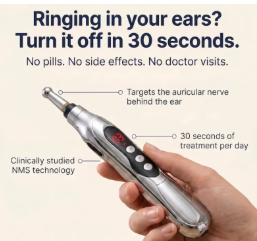

Tinnitus is one of those conditions that makes people willing to try almost anything. When you hear ringing, buzzing, or hissing all day, it’s easy to understand why a device promising relief in just a few minutes a day gets so much attention. That’s exactly what made me curious about the Loera Tinnitus Device. Before taking the claims at face value, I wanted to find out whether the evidence behind it was as convincing as the advertising.
Quick Take
- Non-invasive tinnitus relief device that uses electrical stimulation.
- Based on a technology that is being researched for tinnitus.
- The device’s marketing is much more confident than the available evidence.
- I couldn’t find independent clinical studies on Loera itself.
- I’d be careful about expecting fast or guaranteed results.
Table of Contents
- Quick Take
- What Loera Is Actually Promising
- The Technology Isn’t Made Up, But That Doesn’t Answer Every Question
- I Tried Finding Evidence Specifically About Loera
- People Living With Tinnitus Tend To Ask Harder Questions
- What I’d Want To Know Before Buying Loera Tinnitus Device
- A Pattern I Keep Seeing
- Is Loera Worth Buying?
- Conclusion
- FAQ
What Loera Is Actually Promising
The Loera sales page presents the device as a simple solution for a frustrating problem. The idea is that gentle electrical stimulation behind the ear calms the nerves believed to be responsible for tinnitus, gradually reducing the ringing over time. It also suggests that many common approaches, including supplements and masking sounds, don’t address the real cause, while Loera does.
That sounds reassuring until you start looking at what tinnitus specialists actually say. Tinnitus isn’t one condition with one known cause. For some people it develops after hearing loss, for others it’s linked to prolonged noise exposure, certain medications, ear injuries, or other underlying health issues. In many cases, doctors can’t point to one single reason why it started. That’s why there isn’t one treatment that works for everyone, and it’s also why I’m always cautious when a product makes the condition sound much simpler than it really is.
The Technology Isn’t Made Up, But That Doesn’t Answer Every Question
One thing I want to be fair about is the technology itself. Electrical stimulation and neuromodulation aren’t marketing inventions. Researchers have spent years studying different ways of using electrical or sound stimulation to help people living with tinnitus, and some medical devices based on similar ideas are already being used in clinical settings.
Where I started becoming more cautious was the way Loera presents its own device. The website gives the impression that relief is likely, quick, and consistent for most users. That’s a much stronger message than what I found while reading about tinnitus research. Even among devices that have been studied more extensively, the results are mixed. Some people report meaningful improvement, while others notice very little difference. Researchers are still trying to understand why some patients respond better than others.
I Tried Finding Evidence Specifically About Loera
This is usually the point where I look for published studies on the product itself. I couldn’t find any.
Most of the information I came across led back to Loera’s own websites or promotional pages repeating the same customer testimonials and success rates. I was hoping to find independent clinical research showing how many people used the device, how long they used it, and what the actual results looked like. I also wanted to know how many participants experienced little or no improvement. Those are the kinds of details that help me trust a product. Without them, it’s difficult to separate genuine clinical evidence from marketing claims.
People Living With Tinnitus Tend To Ask Harder Questions
I also spent time reading discussions from people who actually live with tinnitus, and one thing stood out. Most of them aren’t looking for miracle cures anymore. Many have already tried supplements, hearing aids, sound therapy, white noise machines, and various devices over the years. Some have found partial relief, while others say nothing has made a noticeable difference.
That experience seems to make people more careful. Instead of asking whether a product sounds promising, they’re asking whether anyone outside the company has actually tested it. I think that’s a reasonable approach because tinnitus affects people so differently. A product that genuinely helps one person may do very little for someone else.
What I’d Want To Know Before Buying Loera Tinnitus Device
If I were thinking about buying the Loera Tinnitus Device, I’d have a few questions before spending my money. Has the device itself been evaluated in independent clinical trials? Who carried out those studies? Are the reported success rates published anywhere outside the company’s own website? How many people didn’t benefit from using it?
I couldn’t find clear answers to those questions during my research. Instead, the sales page relies heavily on testimonials and bold claims about how quickly users may notice improvements. That’s not enough for me when the condition being treated is as complex as tinnitus.
A Pattern I Keep Seeing
This reminds me of Somnial NeuroTone, SleepEase Pro, and LumaLean Ultra. They’re completely different products, but they all follow a similar pattern. They take a technology that has genuine scientific interest, simplify it into an easy-to-use consumer device, and market it with a level of certainty that the research hasn’t fully reached yet.
Is Loera Worth Buying?
I don’t think Loera should automatically be dismissed. The idea behind electrical stimulation for tinnitus is legitimate enough that researchers continue studying it, and there are people who genuinely report improvements from neuromodulation-based treatments.
What I haven’t been able to verify is whether the Loera device itself performs as consistently as the company suggests. Until I see stronger independent evidence specific to this product, I’d go into it with realistic expectations. If someone decides to try it, I’d make sure they understand the return policy and avoid expecting it to work as a guaranteed solution.
Conclusion
After spending time researching the Loera Tinnitus Device, I came away feeling more interested in the technology than the marketing. Electrical stimulation is an area worth watching, and future research may continue improving treatments for tinnitus. What I don’t think the current evidence supports is the impression that a single consumer device can reliably reduce tinnitus for almost everyone in just a few minutes a day.
If the company backed its claims with independently published clinical studies on the device itself, I’d feel much more confident recommending it. Until then, I’d treat Loera as a product with an interesting concept but one that still leaves some important questions unanswered.
FAQ
Does the Loera Tinnitus Device really work?
It uses a technology that researchers are studying for tinnitus, but I couldn’t find independent clinical studies evaluating the Loera device itself.
Is electrical stimulation for tinnitus legitimate?
Yes. Neuromodulation is an active area of tinnitus research, although results vary from person to person and no single treatment works for everyone.
Can Loera cure tinnitus?
There is currently no universally accepted cure for chronic tinnitus. Devices like Loera are marketed to help reduce symptoms rather than eliminate the condition completely.
Would I recommend buying Loera?
I’d approach it with cautious optimism. The concept is scientifically plausible, but I’d like to see stronger independent evidence specific to Loera before feeling comfortable recommending it.
You can also check out my review of Hydrus Jet here.