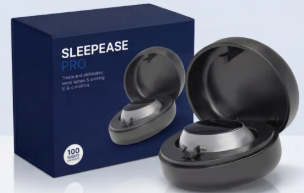

Can sticking a small device under your chin really stop snoring, or is SleepEase Pro making promises that sound much bigger than the evidence behind them?
SleepEase Pro immediately stood out because it doesn’t look like a typical anti-snoring product. Instead of a mouthpiece, nasal strip, or CPAP machine, the company says you simply place the device under your chin before bed. It claims to detect snoring and send gentle electrical muscle stimulation (EMS) pulses to your throat muscles to keep your airway open while you sleep. It also claims that, after a few months, your throat muscles become stronger, so you may no longer need the device. It’s an interesting idea. It’s also the kind of claim that deserves a real look.
Quick Take
- Wearable anti-snoring device that sits under the chin
- Uses EMS technology instead of a mouthguard or nasal strip
- The concept of muscle stimulation is plausible, but the long-term claims are ambitious
- Biggest concern is the promise that it can treat snoring and even sleep apnea with minimal effort
- I’d look beyond the sales page before spending the money
Table of Contents
- Quick Take
- What SleepEase Pro Is Supposed To Do
- The Marketing Raised More Questions Than Answers
- What I Found Looking Beyond The Sales Page
- The Biggest Thing I’d Be Careful About
- A Pattern I Keep Seeing
- Is SleepEase Pro Worth It?
- Conclusion
- FAQ
What SleepEase Pro Is Supposed To Do
According to the official website, SleepEase Pro monitors for snoring while you sleep. When it detects vibrations associated with snoring, it delivers gentle electrical pulses under the chin to stimulate the throat muscles. The company says this helps keep the airway open and gradually “retrains” those muscles over time. It also advertises the device as helping with mild sleep apnea and claims many users no longer need it after two or three months of use. The idea isn’t completely out of left field. Electrical muscle stimulation is a real technology and has legitimate medical uses in different settings. Where I became more cautious was how confidently the marketing jumps from that concept to claims like eliminating snoring from the first night and creating long-term freedom from snoring after a few months. Those are very big promises for a consumer device.
The Marketing Raised More Questions Than Answers
The official website leans heavily on emotional selling. It talks about couples sleeping in separate bedrooms, damaged relationships, waking up exhausted, and finally getting your life back. It also repeatedly describes the device as clinically proven and doctor recommended while making strong claims about treating sleep apnea at its source. None of that automatically means the product doesn’t work. But whenever I see a page built around dramatic transformation stories, I always want stronger independent evidence than marketing copy alone. Snoring is not caused by one thing. For some people it’s sleeping position. For others it’s nasal congestion. For others it’s weight, anatomy, alcohol, or obstructive sleep apnea. That makes me skeptical whenever one product is presented as the answer for nearly everyone.
What I Found Looking Beyond The Sales Page
One thing I always do is look outside the official website. There isn’t a large amount of independent discussion about SleepEase Pro compared with more established anti-snoring products. The Reddit discussions I found were mixed, but they certainly weren’t very positive. Some users questioned whether the device worked at all, while others complained that it was uncomfortable, caused skin irritation from the adhesive, or said customer service and refund requests were disappointing. Others admitted they never tried it after becoming skeptical of the claims. That doesn’t prove the device cannot help anyone. But it also doesn’t match the picture painted by pages showing almost universal success.
The Biggest Thing I’d Be Careful About
The biggest concern isn’t the idea of EMS itself. It’s assuming that every snorer has the same underlying problem. If your snoring is caused by relaxed throat muscles, this type of approach may make theoretical sense. If your snoring is related to nasal obstruction, obesity, enlarged tonsils, or moderate to severe obstructive sleep apnea, the situation becomes much more complicated. That’s why I would be very cautious about treating SleepEase Pro as a substitute for a proper medical evaluation, especially if someone experiences choking, gasping, or excessive daytime sleepiness.
A Pattern I Keep Seeing
This reminds me of products like Somnial NeuroTone, PeakFlex Knee Sleeve, and Onychom Pro Nail Care Device. Different products, but a similar marketing strategy. Start with a real problem. Introduce an easy at-home device. Then build the story around avoiding more traditional treatments while promising long-term results. Sometimes those products have genuine value. The important part is separating an interesting concept from claims that go further than the available independent evidence.
Is SleepEase Pro Worth It?
I’m not convinced enough by the marketing alone. The technology itself is interesting, and I wouldn’t dismiss EMS simply because it’s different. What gives me pause is the combination of very ambitious claims, limited independent discussion, and mixed user reports outside the official website. If you’re considering SleepEase Pro, I’d spend as much time researching independent experiences as you do reading the sales page.
Conclusion
SleepEase Pro is built around an idea that’s easy to understand. Nobody wants to wear a bulky CPAP machine or uncomfortable mouthguard if a small device under the chin could do the same job. The problem is that snoring isn’t a one-size-fits-all condition. The issue isn’t the technology itself. It’s the space between the confident marketing and the amount of independent evidence currently available to support those promises.
FAQ
Does SleepEase Pro really stop snoring?
It may help some users, but there isn’t enough independent evidence to conclude it works consistently for everyone. Most of the strongest claims come from the company’s own marketing.
Can SleepEase Pro treat sleep apnea?
The company says it may help mild sleep apnea, but anyone who suspects they have sleep apnea should seek a medical evaluation rather than relying solely on an over-the-counter device.
Does SleepEase Pro use electrical stimulation?
Yes. The device is marketed as using gentle EMS pulses under the chin to stimulate throat muscles when snoring is detected.
Is SleepEase Pro worth buying?
It’s an interesting concept, but I’d want more independent evidence and verified long-term user experiences before feeling confident about the product’s bigger claims.
You can also check out my review of Halo Grow Hair Spray here.