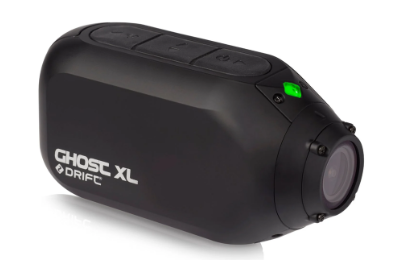

I bought the Drift Ghost XL for a biker friend who wanted a camera to record his rides. The idea was simple enough. He could mount it on his helmet, record whatever happened on the road and have footage to look back on if anything went wrong. Drift advertises the Ghost XL as a long-lasting action camera with up to nine hours of battery life, Full HD recording and features designed specifically for motorcyclists. It sounded like a sensible gift, especially since he wouldn’t have to stop frequently to recharge it. But after he’d owned it for several months, I asked him how it was holding up, and his feedback wasn’t encouraging. In this review, I’ll explain what happened with his camera, look at its features and discuss some of the problems other owners have reported.
Quick Take
- What I bought: The Drift Ghost XL, a 1080p action camera designed for motorcycle and bicycle recording.
- Battery life: Drift advertises up to nine hours, but my friend averaged around four and a half before the battery stopped charging altogether after seven months.
- Video quality: Poor glare control during the day and very little useful detail at night. Number plates were particularly difficult to read.
- Recording problems: Car Mode wouldn’t stay enabled, and event detection eventually filled the memory card with locked recordings.
- App and settings: The phone app was frustrating to use, and some settings wouldn’t stay the way he configured them.
- My verdict: I wouldn’t recommend it for dependable motorcycle recording, especially when important footage could be lost without the rider realizing it.
Table of Contents
- Quick Take
- What Is the Drift Ghost XL?
- My Friend’s Experience Using the Drift Ghost XL
- The Nine-Hour Battery Claim Needs Some Context
- Why the Recording Features Matter More Than They Sound
- Is 1080p Good Enough for a Motorcycle Camera?
- What Other Drift Ghost XL Owners Are Saying
- What I Like and Don’t Like About the Drift Ghost XL
- A Problem I’ve Noticed With Cameras Sold for Road Safety
- Is the Drift Ghost XL a Scam?
- What to Do If Your Ghost XL Develops Problems
- Would I Buy the Drift Ghost XL Again?
- 15 Tips on How to Shop Safely Online
- Conclusion
What Is the Drift Ghost XL?
The Drift Ghost XL is a compact action camera made by Drift Innovation, primarily for motorcyclists, cyclists and people who want to record their journeys without holding a camera. It has a narrow, elongated design that allows it to sit along the side of a helmet rather than sticking out from the front. The camera records up to 1080p at 30 frames per second, has a rotating lens for adjusting the recording angle and carries an IPX7 waterproof rating. It also offers Wi-Fi connectivity, loop recording and an event detection feature intended to protect important footage from being overwritten. The built-in battery is one of its main selling points, although it isn’t designed to be swapped out like the removable batteries found in some other action cameras.
My Friend’s Experience Using the Drift Ghost XL
When I asked my friend about the Drift Ghost XL, the first thing he mentioned was the battery. Drift claims up to nine hours of recording, but he was getting around four and a half hours on average. That was still enough for some of his rides, so he managed with it. Unfortunately, about seven months into owning the camera, the battery stopped charging completely. It wasn’t that the battery was simply lasting fewer hours than before. It wouldn’t charge at all. The camera still worked when connected to a power source, but he could no longer use it on his helmet the way he originally intended. He ended up mounting it on his handlebars and keeping it plugged in, which took away much of the convenience of having a helmet camera. He also had problems with Car Mode, the setting that’s supposed to automatically overwrite older recordings when the memory card fills up. For some reason, the camera kept leaving that mode, even when he charged it regularly or used it while plugged in. Getting it back into the right setting was annoying because the phone app was fiddly and unreliable, and trying to sort it out by the roadside wasn’t exactly convenient. Then there was the picture quality. He said daytime glare often washed out the footage, while at night he could barely make out anything beyond vehicle headlights. Reading number plates was particularly difficult. Under some conditions, he estimated that plates were only readable from about five metres away during the day and three metres at night, depending on the lighting. On bright sunny rides, he sometimes couldn’t read a single plate even with the camera set to its highest available picture quality. Another strange problem involved the thumbnail-video setting. He would turn it off, restart the camera and find it switched back on again. He was running the latest firmware available to him, but the setting still wouldn’t stay disabled. The most serious issue, though, was event detection. The camera kept registering ordinary riding movements as events and saving protected videos that couldn’t be overwritten. Eventually, those locked files filled the memory card, leaving no space for new recordings. He went on several rides without realizing the camera hadn’t recorded them until he checked afterward. That was the part I found especially disappointing. He’d been using the camera expecting it to document his journeys, only to discover that some of those journeys hadn’t been captured at all.
The Nine-Hour Battery Claim Needs Some Context
Drift’s advertised battery life is an up to figure, which means it represents the maximum expected under particular conditions rather than what every owner will get on every ride. Recording settings, wireless connections, temperature and battery condition can all affect how long a camera operates. Still, battery life is a major part of the Ghost XL’s appeal, and someone choosing it over a conventional action camera may be doing so specifically because they want fewer charging interruptions. There’s also the question of long-term ownership. Since the battery is built into the camera, replacing it isn’t as straightforward as carrying a spare removable battery. Anyone buying the Ghost XL for regular commuting should consider how a battery problem would affect the way they use the camera and what repair or warranty options are available.
Why the Recording Features Matter More Than They Sound
The Ghost XL has several features that make sense for motorcycle use, particularly loop recording and event detection. Loop recording allows the camera to reuse storage space by replacing older footage, while event detection is intended to preserve recordings associated with sudden movement or an impact. In theory, that’s useful because a rider doesn’t have to manage the memory card after every journey. The problem is that protected event recordings are treated differently from ordinary loop recordings. If too many clips become locked, the available storage can run out. It’s important to understand how the camera handles those files, whether event sensitivity can be adjusted and how to confirm that recording is still active. A rider shouldn’t have to discover after an incident that the camera had stopped saving video because the card was full of protected clips.
Is 1080p Good Enough for a Motorcycle Camera?
A 1080p recording can look perfectly acceptable when you’re watching a ride back on your phone or computer, but recording resolution alone doesn’t tell you how much useful detail the camera captures. Lens quality, exposure, motion, compression and lighting all affect the final picture. This becomes especially important when you’re trying to identify a vehicle or read a number plate. Wide-angle cameras capture more of the road, but distant objects occupy fewer pixels in the image. At night, bright headlights can also make it difficult for the camera to expose darker parts of the scene properly. The Ghost XL’s resolution may be adequate for recording general road conditions, but anyone expecting consistently readable number plates should examine unedited sample footage taken in traffic, bright sunlight and darkness rather than relying on promotional clips.
What Other Drift Ghost XL Owners Are Saying
I looked into feedback from other owners to see whether the concerns surrounding the camera were limited to one experience. There are positive comments about its shape, mounting options and convenience for recording ordinary journeys. Some riders like having a camera that sits relatively discreetly against a helmet instead of using a bulky front-mounted design. The complaints are more varied. Owners have reported problems with Wi-Fi connectivity, memory-card compatibility, unreliable recordings, firmware behaviour and audio quality. There are also accounts of cameras freezing or producing footage that couldn’t be accessed afterward. These reports don’t establish that every Ghost XL has the same defects, and some recording problems can involve unsuitable or faulty memory cards. Still, they’re worth considering because they concern the everyday reliability of the device rather than minor preferences about its appearance. I also came across complaints about customer support, particularly from buyers who struggled to get useful assistance with technical problems.
What I Like and Don’t Like About the Drift Ghost XL
Pros
- Compact design that suits side-of-helmet mounting.
- Rotating lens makes it easier to adjust the recording angle.
- Waterproof design without requiring a separate housing.
- Loop recording and event detection are useful features in principle.
- Can operate from an external power source.
Cons
- My friend’s battery lasted considerably less than the advertised maximum.
- The battery stopped charging after seven months.
- Daytime glare and poor nighttime detail made identifying vehicles difficult.
- Car Mode and other settings didn’t reliably stay configured.
- The phone app was frustrating to use.
- Excessive protected recordings filled the memory card and prevented further recording.
A Problem I’ve Noticed With Cameras Sold for Road Safety
A lot of motorcycle cameras are advertised using the same attractive features: long battery life, wide-angle footage, waterproof construction and automatic recording. Those are all useful, but I think recording status deserves just as much attention. When a rider is concentrating on traffic, they can’t keep checking a phone app or stopping to see whether the memory card is full. They need a camera that clearly indicates when something is wrong and makes it easy to retrieve footage afterward. I’d rather have a camera with fewer advertised features and a dependable recording system than one with several clever modes that need constant checking. It’s a practical consideration that doesn’t always get much attention in product demonstrations.
Is the Drift Ghost XL a Scam?
No, the Drift Ghost XL isn’t a scam. Drift Innovation is an established camera manufacturer, and the Ghost XL is a genuine action camera with identifiable features and specifications. The problem here is product performance and reliability, not whether the camera exists. I think its design has some merit, and it may work adequately for owners who haven’t encountered technical problems. But based on what my friend experienced, I wouldn’t recommend it as a dependable helmet camera. A product intended to record road journeys should make that task straightforward, and I don’t think someone should have to keep checking settings and storage just to be sure their camera is doing its job.
What to Do If Your Ghost XL Develops Problems
If your camera is behaving strangely, start by saving any accessible recordings before formatting the memory card or resetting the device. Check that you’re using a genuine, compatible microSD card and follow Drift’s recommendations for formatting it. If recordings are stopping unexpectedly, inspect the card for protected event files and check whether loop recording is configured correctly. For settings that keep resetting, confirm the installed firmware version and follow the manufacturer’s official instructions for any available update. A battery that no longer charges is a different issue and may require professional repair or replacement. Don’t attempt to open or modify a damaged lithium-ion battery yourself. If the camera is still covered by a warranty or the retailer’s return terms, document the fault and contact the seller promptly. Keep copies of your purchase receipt, messages and any video evidence of the problem.
Would I Buy the Drift Ghost XL Again?
No, I wouldn’t buy another one for my friend. I bought it because I thought it would be a useful way for him to record his rides without much trouble, and I wasn’t expecting him to spend so much time dealing with settings and technical problems. I also wouldn’t feel particularly confident recommending it to another biker who needs reliable footage. There are other action cameras and motorcycle recording systems worth comparing, but I’d pay close attention to long-term owner feedback and how consistently they save recordings before choosing one. A good camera shouldn’t require constant supervision to do the one thing it was purchased to do.
15 Tips on How to Shop Safely Online
- Check the exact model. The Drift Ghost XL and Ghost XL Pro aren’t the same camera.
- Read long-term customer reviews. Look for feedback from people who’ve used a device for several months.
- Compare advertised and real-world battery life. Manufacturer figures are often measured under specific conditions.
- Watch unedited sample footage. Promotional videos may not show how a camera performs in difficult lighting.
- Check memory-card compatibility. An unsuitable card can cause recording problems.
- Look into firmware support. Find out whether the manufacturer still provides updates.
- Read the warranty terms. Pay particular attention to battery and hardware coverage.
- Check the return period. Some technical faults may not appear immediately.
- Research the seller. Buy from a retailer with clear contact and return information.
- Compare prices carefully. An unusually cheap listing may be used, refurbished or missing accessories.
- Check what’s included. Confirm whether mounts, charging cables and memory cards come with the camera.
- Read app reviews. A poorly maintained app can make otherwise useful hardware frustrating.
- Save your purchase records. Keep receipts, order confirmations and warranty documents.
- Use a payment method with buyer protection. It may help if the item doesn’t arrive or is misrepresented.
- Test the product thoroughly after delivery. Check recording, charging, storage and connectivity before the return window closes.
Conclusion
Buying a camera as a gift is a little different from buying one for yourself because you’re hoping the person receiving it will find it useful for a long time. I thought the Drift Ghost XL would be a practical addition to my friend’s riding gear, and I was disappointed to hear how much trouble he’d had with it. His experience has made me more interested in how electronics perform after several months than how impressive their specifications look when they’re new. That’s something I’ll be paying closer attention to the next time I buy a gadget like this.
Check Out // Arlo Pro Wireless Camera Review: Is It Still Worth It or Outdated in 2026?