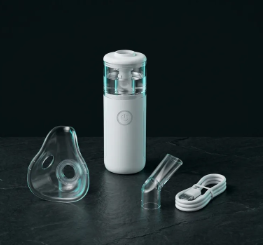

The Nebu Ease advertisement caught my attention because of how easily it promises to make breathing problems manageable. It shows a small, handheld nebulizer that can supposedly help with asthma, congestion, allergies, and other respiratory conditions within minutes. I can understand why someone who regularly uses a bulky nebulizer would find that appealing. A compact, quiet device that can be carried around sounds convenient, especially for parents who need something easy to use with their children. But I was more interested in whether Nebu Ease was a reliable medical device or simply another generic product being marketed with exaggerated health claims. After looking into the product, its advertising, and the websites selling it, I found several things that made me question whether it’s worth buying.
Quick Takeaway
- Product: Nebu Ease, a portable vibrating-mesh nebulizer.
- Main claim: Convenient respiratory relief for adults and children.
- Price: Advertised for approximately $35–$55, depending on the seller.
- Technology: Uses vibrating-mesh technology found in other portable nebulizers.
- Customer feedback: Thousands of reviews are advertised, but independent feedback is difficult to verify.
- Main concern: Unsupported medical claims and inconsistent information across sales websites.
- Verdict: I wouldn’t recommend Nebu Ease as a medical treatment device based on the information available.
Table of Contents
- Quick Takeaway
- Nebu Ease Looks Familiar for a Reason
- The Breathing Relief Claims Are Hard to Believe
- Four Websites Selling Nebu Ease, but the Details Don’t Match
- Thousands of Positive Reviews, but Where Are the Actual Buyers?
- The Instructions About Using Water Concern Me
- Conclusion: Would I Buy Nebu Ease?
Nebu Ease Looks Familiar for a Reason
Nebu Ease is a small handheld device that uses vibrating-mesh technology to turn liquid medication or an appropriate nebulizer solution into a fine mist that can be inhaled through a mouthpiece or mask. The technology itself is legitimate and widely used in respiratory care. Compared with traditional compressor nebulizers, mesh models can be quieter, lighter, and easier to carry around. Nebu Ease is advertised with adult and child masks, simple controls, and features such as USB charging and automatic cleaning. However, there’s nothing particularly new about its construction. Similar-looking portable nebulizers with transparent medication cups and detachable masks are already sold by numerous retailers. I found no convincing evidence that Nebu Ease uses proprietary technology or offers better medication delivery than established alternatives. That doesn’t mean every similar device is identical, but it does make the product look more like a generic-style mesh nebulizer than the medical breakthrough its advertising suggests.
The Breathing Relief Claims Are Hard to Believe
The advertising is where Nebu Ease starts to lose me. Some sales pages suggest it can provide quick relief from asthma, bronchitis, wheezing, allergies, colds, and chest congestion, as though these conditions can all be managed with the same device. One website even claims that Nebu Ease helped 99.2% of users breathe comfortably again and describes the product as having been developed with a certified pulmonary specialist. I couldn’t verify a published clinical study supporting that percentage or identify the specialist supposedly involved. More importantly, a nebulizer doesn’t treat respiratory conditions simply by producing mist. Its medical purpose depends on the medication being administered, the dose delivered, and the condition being treated. A device that works with a prescribed asthma medication doesn’t automatically become a treatment for every breathing problem. The advertising makes the process sound far simpler than it is, and I wouldn’t trust promises of immediate relief without credible clinical evidence.
I’ve seen similarly ambitious respiratory claims in my BreathiZen review, where the advertised benefits went beyond what the product-specific evidence could establish.
Four Websites Selling Nebu Ease, but the Details Don’t Match
I found Nebu Ease being promoted through several websites, including NebuEase.com, GetNebuEase.com, NebuEase.net, and Nebu-Ease.com. What bothered me wasn’t simply the number of websites, but the differences between their product descriptions. One advertises a rechargeable USB-powered device, while another describes a model that operates through USB or AA batteries. The pricing also varies, with some offers starting around $34.99 and others approaching $55, often accompanied by discounts of up to 65%. I couldn’t establish a reliable pricing history supporting the higher crossed-out prices. Some pages also encourage customers to buy multiple units for bigger discounts, while refund terms and additional checkout charges differ between sellers. These could be separate versions or unrelated retailers using the same product name, but I found no clear explanation connecting them to a single identifiable manufacturer. That’s a problem when you’re buying equipment intended to deliver medication into your lungs. I want to know exactly who makes it, which model I’m receiving, and who is responsible if something goes wrong.
I found a comparable problem in my SharpVision investigation, where several websites presented themselves as official sellers while publishing inconsistent product information.
Thousands of Positive Reviews, but Where Are the Actual Buyers?
This Nebu Ease review is research-based, not a personal account of using the device. I looked for independent customer experiences on discussion forums, Amazon, eBay, and established review platforms, but I couldn’t find a substantial collection of reviews clearly connected to the exact Nebu Ease model. Meanwhile, its sales websites display impressive customer figures, with one advertising more than 4,820 ratings and another claiming over 14,600 reviews. Those numbers suggest a popular, widely purchased product, yet there’s little independently verifiable discussion to support that impression. The testimonials published on the websites describe convenient treatments and improved breathing, but they don’t establish how reliably the device delivers medication or how well it holds up after months of use. I also came across a reported complaint involving tracking and refund difficulties associated with a Nebu Ease sales domain, although I couldn’t independently confirm the account. For a product supposedly used by thousands of customers, the lack of dependable outside feedback is disappointing.
The Instructions About Using Water Concern Me
One Nebu Ease sales page tells customers they can fill the device with saline or water before switching it on. I find that wording particularly troubling because a nebulizer isn’t the same as a humidifier. It delivers aerosol directly into the respiratory tract, so the liquid used needs to be appropriate for inhalation. Ordinary tap water isn’t a suitable substitute for sterile nebulizer solutions, and medications should only be used according to their prescribed instructions and the device’s compatibility guidance. Cleaning is equally important because contaminated nebulizer components can introduce microorganisms into the airways. An advertised self-cleaning feature doesn’t necessarily replace proper washing, disinfection, and drying. I also couldn’t verify the kind of detailed manufacturer documentation I’d expect for Nebu Ease, including independently established aerosol performance, medication compatibility, and applicable medical-device regulatory status. These aren’t minor technical details. They determine whether a nebulizer can be used safely and effectively for its intended purpose.
Conclusion: Would I Buy Nebu Ease?
No, I wouldn’t buy Nebu Ease based on what I’ve found. Portable mesh nebulizers are legitimate medical devices, so the product category itself isn’t a scam. I also haven’t established that every website selling Nebu Ease is fraudulent. But the broad treatment promises, inconsistent product information, and lack of dependable manufacturer documentation make this particular offer difficult to trust. If I needed a nebulizer, I’d choose an identifiable model from an established medical-device manufacturer or reputable medical supplier, with proper instructions and guidance from a healthcare professional. Nebu Ease may be capable of producing mist, but that’s not enough to earn my recommendation for respiratory treatment. When a device is intended to deliver medication into the lungs, reliable performance matters far more than an attractive discount.