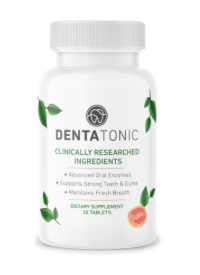

I went looking into DentaTonic expecting a normal oral health supplement review. What I found instead was a mess of contradictions. Different “review” articles describe completely different products under the same name, different form, different ingredients, different price, different guarantee. Here’s what that actually means for you.
Quick Verdict
Is DentaTonic a scam? I can’t confirm a specific product to call legit or fake, because the sources describing it disagree on basically everything except the name and the vague promise of better oral health.
- Form: Described as a dissolvable tablet in some sources, liquid drops in others
- Ingredients: At least four different ingredient lists across different “reviews,” ranging from clinical enzyme names to basic herbal ingredients
- Price: $69 a bottle in one source, a $49/$129/$234 tiered structure in another
- Guarantee: 180 days in one version, 60 days in most others
- Independent verification: None found, every source traces back to promotional or affiliate-style content
- Would I buy it: No, not until you can find one single, consistent official product page and confirm exactly what you’d be receiving
Table of Contents
- Quick Verdict
- The Basic Facts Don’t Match Across Sources
- Pricing and Guarantee Terms Also Don’t Match
- The “Reviews” Read Like Templates
- DentaTonic Possible Side Effects
- What to Do If You Already Ordered DentaTonic
- Tips to Avoid This Kind of Confusion
- How to Be Safe Shopping Online in General
- Smarter Alternatives
- Bottom Line
The Basic Facts Don’t Match Across Sources
This is the core problem. Multiple articles describe DentaTonic as a dissolvable tablet built around a “dental filtration breakthrough,” focused on boosting lactoperoxidase, an enzyme naturally found in saliva. The ingredient list here reads almost like a lab report: dextranase, lactoperoxidase, lactoferrin, beta-glucanase, lysozyme, microcrystalline hydroxyapatite, amylase.
Other articles describe DentaTonic as liquid drops you take daily, built around a completely different, much more familiar ingredient list: xylitol, elderberry extract, neem, peppermint. A third version of the liquid drops adds zinc, vitamin D3, and probiotics to that list. A fourth drops several of those in favor of green tea extract and minerals like calcium and phosphorus.
A tablet and a liquid are not the same delivery method. A clinical-sounding enzyme blend and a basic herbal blend are not the same formula. When you can’t get two sources to agree on whether something is a pill or a drop, you’re not reading independent reviews of one product, you’re reading marketing copy that’s been rewritten so many times the details have drifted apart.
Pricing and Guarantee Terms Also Don’t Match
One source lists DentaTonic at $69 a bottle with a 180-day guarantee. Others describe pricing tiers of $49 for one bottle, $129 for three, and $234 for six, paired with a 60-day guarantee instead. If you can’t get consistent pricing or guarantee terms across sources all claiming to describe the same “official” product, that’s a sign you need to verify directly with whatever site you’re actually buying from, rather than trusting any comparison article, including this one, at face value.
The “Reviews” Read Like Templates
A lot of what’s out there follows the exact same structure: a “Quick Facts” table, a section titled some version of “What Is DentaTonic,” an ingredient breakdown, a pros-and-cons list, and a closing “Final Verdict” that’s always positive. Multiple articles use nearly identical wording and structure to each other, which is a strong sign of syndicated or AI-assisted content built to rank in search results, not hands-on reviews from someone who actually tried the product. None of the versions I found linked to independent lab testing, published clinical trials on the finished product, or a review platform separate from the seller.
DentaTonic Possible Side Effects
Because the ingredient list depends entirely on which version you actually receive, side effect considerations vary:
- Xylitol is generally safe for humans in normal oral care amounts, but it’s toxic to dogs, worth knowing if you have pets in the house and are using a liquid or chewable version
- Neem and green tea extract are both generally well tolerated but can occasionally cause mild stomach upset in some people
- Zinc and probiotics are common in oral supplements and generally low risk, though high-dose zinc over long periods can interfere with copper absorption
- Enzyme-based formulas (lactoperoxidase, lysozyme, etc.) don’t have well-established consumer safety data the way common vitamins and herbs do, since they’re less commonly used in over-the-counter supplements
- Regardless of version, this is not a substitute for brushing, flossing, or regular dental checkups, and persistent gum pain, bleeding, or loose teeth need an actual dentist, not a supplement
What to Do If You Already Ordered DentaTonic
- Check the physical product and label when it arrives to determine which actual version you received, tablet or liquid, and match the ingredient list against what you were shown before buying
- Save your order confirmation, including the exact website URL you purchased from
- Check your bank statement for the actual charge and the guarantee window that specific seller advertises, not what a review article told you
- Request written confirmation of the refund policy from the seller if you’re planning to rely on the money-back guarantee
- If what arrived doesn’t match what was advertised on the page you ordered from, that’s grounds to request a refund, document the mismatch with photos if needed
Tips to Avoid This Kind of Confusion
- Search for multiple “reviews” of the same product and compare the basic facts. If price, ingredients, or delivery format don’t match across sources, you’re not looking at reliable information.
- Watch for templated “review” articles with the same structure (quick facts table, ingredient breakdown, pros and cons, final verdict) across different domains. That’s a sign of mass-produced affiliate content, not independent testing.
- Go directly to whatever site you intend to buy from and read its actual product page carefully, rather than relying on any third-party summary, including this one.
- A legitimate product usually has one consistent story. Multiple conflicting formulas under one name is a red flag on its own, regardless of whether any individual version is otherwise reasonable.
How to Be Safe Shopping Online in General
- Cross-check ingredient lists, pricing, and guarantee terms across several sources before buying, not just one article
- Be skeptical of articles that read like a template with your product name swapped in
- Use a credit card for better dispute protection if what arrives doesn’t match what was advertised
- If you’re buying for oral health specifically, remember that no supplement replaces basic dental care and regular checkups
Smarter Alternatives
- A dentist, for anything related to actual gum disease, tooth decay, or persistent bad breath, these need a real diagnosis, not a guess between conflicting supplement formulas
- Established oral care products with transparent, single, consistent ingredient labels from well-known brands, if you want to add a supplement to your routine
- Basic proven habits: brushing twice daily, flossing, and regular dental cleanings, which do more for oral health than any supplement claims to
- Xylitol gum or mints from a well-known, single-source brand, if that specific ingredient is what interests you, without the ingredient-list confusion
Bottom Line
I can’t responsibly call DentaTonic legit or a scam, because I can’t even confirm what “DentaTonic” consistently is. Multiple sources describe different products, different forms, different ingredients, different prices, and different guarantees, all under the same name. Until you find one clear, verifiable official source and confirm exactly what you’d be ordering, I’d treat any single “review” of this product, including the many I found online, with real skepticism.
Also Read >>> ColonBroom GLP-1 Review: “Natural Ozempic” or a Carefully Packaged Marketing Illusion?