
There’s a fake news video going around right now claiming scientists found a rosemary “trick” that reverses Alzheimer’s, and it’s using AI-faked footage of real public figures to sell it. CogniMary is one of the products sitting behind that ad. Here’s everything worth knowing before you trust anything in that video, or buy what it’s selling.
Quick Verdict
Is CogniMary a scam? Yes.
- What it is: A memory/focus supplement sold under several names (CogniMary, BrainMary, MaroBrain)
- Ad tactic: AI deepfake “news” video with a fake celebrity endorsement
- Endorsement status: Confirmed fake by Maria Shriver herself
- Formula: Different ingredients listed across different domains
- Dosage label: Not found anywhere
- Would I buy it: No
Table of Contents
- Quick Verdict
- The “Rosemary Recipe” Scam: How It Actually Works
- A Real Public Figure Has Already Denounced This
- Why the CogniMary Ad Is Worse Than a Bad Ingredient List
- CogniMary: Same Name, Different Bottles
- No Verifiable Dosage Label
- No Clinical Trials on the Actual Product
- CogniMary Possible Side Effects
- What to Do If You Already Ordered It
- Tips to Avoid Fake Celebrity Ad Scams Like This
- Tips to Avoid This Kind of Naming Confusion
- How to Be Safe Shopping Online in General
- Smarter Alternatives
- Bottom Line
The “Rosemary Recipe” Scam: How It Actually Works
This is worth understanding in detail because the format is deliberately designed to feel trustworthy. The ad shows up as what looks like a real news segment, often styled to resemble a CBS-style investigative report, featuring a recognizable public figure who appears to be discussing a newly discovered rosemary-based treatment that restores memory or reverses Alzheimer’s.
None of it is real. The video and audio are AI-generated, built to make it look like someone said things they never said. The story usually targets people specifically searching for memory support, dementia information, or caregiving advice, since that’s an audience already worried and looking for hope.
The ad promises a simple, free “rosemary recipe” using a cheap, familiar household ingredient, which makes the pitch feel safe and non-commercial at first. But the promised recipe keeps getting delayed through a long-form video presentation, and by the end, the “recipe” has been replaced by a pitch to buy a proprietary supplement instead, currently marketed under names like CogniMary or BrainMary. The comment sections under these fake articles are often static, pre-written content, not real discussion, designed to look like social proof.
A Real Public Figure Has Already Denounced This
Maria Shriver, a genuine, well-known Alzheimer’s advocate, has issued a direct public statement confirming that the deepfake videos and supplement endorsements circulating under her name and likeness are false, and that her advocacy organization has no connection to these products. That’s about as clear a confirmation as you can get that this specific campaign is fraudulent impersonation, not an aggressive but legitimate marketing strategy.
This isn’t an isolated incident either. The same deepfake-ad playbook (fake news-style video, fabricated celebrity endorsement, urgent “secret they don’t want you to know” framing) has been used against other public figures for entirely unrelated products, including a widely reported cookware scam that used a deepfaked chef’s voice and image without his consent.
Why the CogniMary Ad Is Worse Than a Bad Ingredient List
A misleading supplement label is one problem. A coordinated campaign using fabricated video of real people, particularly built to target families dealing with a loved one’s memory loss or dementia, a genuinely painful and frightening situation, is a different level of deception entirely. If you or someone you know has seen one of these “rosemary cure” videos, the most important thing to know is that the news segment, the expert, and the celebrity endorsement are all fabricated, regardless of how convincing the video looks.
CogniMary: Same Name, Different Bottles
Underneath the fake-ad campaign, there’s also the more ordinary problem I found first: “CogniMary” isn’t consistently one product even at the supplement level. Some CogniMary sales pages build the pitch around rosemary extract, bacopa, ginkgo biloba, and phosphatidylserine, ingredients with a real, if mixed, body of research behind memory and cognitive function. Other pages promoting the exact same product name list L-arginine, L-citrulline, beta-alanine, and niacin instead, ingredients you’d more typically see in a pre-workout or circulation supplement, not a memory formula. A third version leans on L-tyrosine, green coffee bean, and theobromine, stimulant-adjacent ingredients tied more to alertness than memory recall specifically.
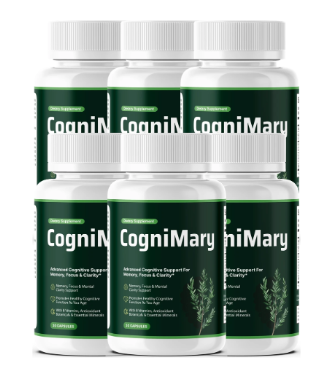
These aren’t minor variations. They’re substantially different supplements being marketed under one shared name, pushed through nearly identical sales page templates (the same three- and six-bottle package structure shows up across all of them).
If this kind of multi-domain, shifting-formula setup sounds familiar, it’s the same pattern we found with Nervelin and DentaTonic, worth a read if you want to see how common this tactic actually is.
No Verifiable Dosage Label
Even setting the multiple-formula issue aside, none of the sources I found show a proper Supplement Facts panel with confirmed milligram amounts. That matters because several of the ingredients being name-dropped (bacopa, ginkgo, phosphatidylserine) do have real clinical research behind them, but that research was conducted at specific doses. Without a visible label, there’s no way to know if what’s actually in the capsule matches the amounts used in the studies these pages implicitly lean on for credibility.
No Clinical Trials on the Actual Product
As with the multi-formula confusion, there’s no published clinical trial testing the finished CogniMary product itself, regardless of which version you’re looking at. Individual ingredient research (on bacopa or ginkgo, for example) is not the same as proof that this specific bottled formula, in whatever amounts it actually contains, delivers the memory or focus benefits being advertised.
CogniMary Possible Side Effects
Since the formula you’d actually receive is unclear, side effect considerations depend entirely on which version arrives:
- Rosemary, bacopa, ginkgo, phosphatidylserine version: Generally well tolerated, though ginkgo can increase bleeding risk and interact with blood thinners, and bacopa can cause mild digestive upset in some people
- L-arginine, L-citrulline, beta-alanine, niacin version: Niacin can cause a temporary flushing sensation, and these ingredients can affect blood pressure, worth flagging if you’re on blood pressure medication
- L-tyrosine, green coffee bean, theobromine version: These have mild stimulant properties, worth caution if you’re sensitive to caffeine-like effects or have a heart condition
- Across any version, anyone pregnant, breastfeeding, or on regular medication should check with a doctor first, especially given you may not know for certain which formula you’re getting until the bottle arrives
What to Do If You Already Ordered It
- Check the actual label on the bottle when it arrives, confirm exactly which ingredients and doses you received, not just what the site advertised
- Save your order confirmation, including which specific domain you purchased from
- Check your bank statement for the charge and the merchant name, that can help identify which company actually processed your order
- If the label doesn’t match what was advertised, or shows no clear dosage information at all, that’s grounds to request a refund
- Don’t rely on it for actual memory concerns. Persistent memory problems, confusion, or cognitive decline deserve a real medical evaluation, not a supplement guess
Tips to Avoid Fake Celebrity Ad Scams Like This
- A “news report” that’s actually an ad is a huge red flag. Real journalism doesn’t lead directly into a product checkout page, and it identifies editors, publication dates, and sources you can independently verify.
- If a celebrity or public figure appears to endorse a supplement, search their name plus the product name plus “scam” or “fake” before trusting it. Public figures frequently and publicly denounce these campaigns once they learn about them.
- A “free recipe” that keeps getting delayed and eventually turns into a paid product is a deliberate manipulation tactic, not an oversight.
- AI deepfake video and voice cloning are now good enough to convincingly fake a real person saying things they never said. Don’t treat video “proof” as automatically real anymore, especially in ads.
- Comment sections under these fake articles are frequently static and pre-written, not real audience discussion, don’t treat them as genuine social proof.
Tips to Avoid This Kind of Naming Confusion
- Search the exact brand name and see if multiple domains claim to be “official.” That’s your signal to slow down before buying from any of them.
- Compare ingredient lists across every site using the name. If they don’t match, you’re looking at several unrelated products, not one.
- Insist on seeing an actual Supplement Facts label with milligram amounts before buying, not just an ingredient name list.
How to Be Safe Shopping Online in General
- Search the brand name in quotes plus “ingredients” and see whether independent results agree with each other
- Look specifically for a visible Supplement Facts panel before ordering any supplement
- Use a credit card for better dispute protection if what arrives doesn’t match the listing
- If you’re on any medication, check with a doctor or pharmacist before adding any new supplement, especially when you can’t confirm the exact formula beforehand
Smarter Alternatives
- A doctor or neurologist, especially if you’re experiencing real memory concerns, actual cognitive symptoms deserve a proper evaluation, not a guess between three different unverified supplement formulas
- A single, well-established, transparently labeled bacopa or ginkgo biloba supplement from a reputable brand, if general cognitive support is what you’re after
- Foundational habits with strong evidence behind them: consistent sleep, regular exercise, and social engagement, which have a larger research base for cognitive health than any single supplement
Bottom Line
CogniMary isn’t just an overhyped supplement with mismatched formulas across multiple domains, it’s actively being sold through a coordinated ad campaign that fakes celebrity endorsements and imitates real news coverage using AI-generated deepfakes. A genuine, well-known public figure has already come forward to say she never endorsed it. If you see a “rosemary cure for Alzheimer’s” video featuring anyone you recognize, treat it as fabricated regardless of how real it looks, and don’t proceed to checkout. If you’re specifically dealing with memory concerns, whether your own or a loved one’s, that deserves a real doctor’s evaluation, not a supplement sold through a fake news segment.
Also Read >>> Is Amellia Safe? What Oral Tanning Products Can Actually Do to You