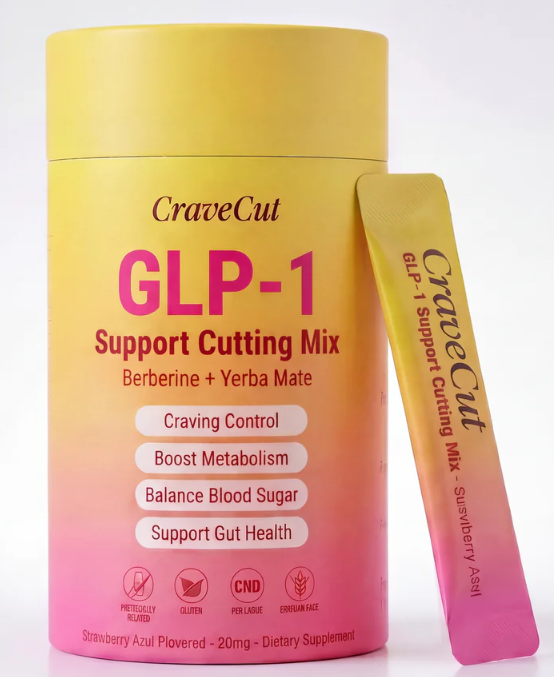

Have you seen CraveCut Cutting Mix all over social media promising flatter stomach, fewer cravings, better metabolism, and effortless weight control just by mixing one sachet a day? I kept running into it being pushed as a “GLP-1 inspired cutting drink,” so I decided to break down what it actually is and whether it holds up under real scrutiny.
In this review, I’ll walk through what CraveCut claims, the ingredient profile, the marketing red flags, and whether this looks like a legit metabolism support drink or just another heavily advertised cutting supplement riding the GLP-1 trend.
Quick Takeaways
- Marketed as a cutting drink mix for cravings, bloating, and weight control
- Heavily uses trending “GLP-1 support” and appetite control messaging
- Contains common supplement ingredients like berberine, chromium, 5-HTP, and yerba mate
- Claims fast effects on cravings and bloating, often within days
- Marketing is very similar to other viral “cutting mix” supplements
- Results are likely mild support, not dramatic fat loss
Table of Contents
- Quick Takeaways
- What Does CraveCut Cutting Mix Actually Claim To Do?
- What Immediately Raises Red Flags About CraveCut?
- Ingredient Breakdown: Does The Formula Make Sense?
- Why The Marketing Feels Overextended
- Customer Experience Patterns (From Similar Cutting Mix Products)
- Shipping, Transparency, and Trust Signals
- A Pattern I Keep Seeing
- Is CraveCut Cutting Mix Legit or a Scam?
- What To Do If You Already Ordered
- Final Thought
- Frequently Asked Questions
What Does CraveCut Cutting Mix Actually Claim To Do?
CraveCut is positioned as a daily drink mix designed to support:
- appetite control
- reduced cravings and emotional eating
- bloating reduction
- metabolism support
- blood sugar balance
- steady energy levels
- fat loss support
The marketing angle is simple: instead of dieting aggressively, you drink one sachet daily and your cravings “calm down,” making weight loss easier over time.
The product also leans heavily into GLP-1 language, suggesting it helps “boost natural appetite signals,” which is a major buzz phrase in modern weight-loss marketing.
What Immediately Raises Red Flags About CraveCut?
The first thing that stands out is how familiar the marketing structure feels.
It follows the same pattern I’ve seen in many cutting supplements:
- emotional transformation claims (“feel lighter instantly”)
- before-and-after lifestyle messaging
- rapid timeline expectations (days to weeks)
- heavy focus on cravings and bloating relief
- “natural fat-burning activation” language
Another concern is how many similar “cutting drink mixes” exist with almost identical ingredient stacks and claims. CraveCut doesn’t feel isolated—it feels like part of a wider template product category.
Ingredient Breakdown: Does The Formula Make Sense?
Berberine
Berberine is one of the main ingredients highlighted in CraveCut-style products. It has been studied for supporting blood sugar regulation and metabolic function when taken orally.
The key issue is that most real-world research involves standardized oral dosing, not proprietary drink blends with unclear concentrations. So while the ingredient itself is not questionable, the effectiveness depends heavily on dosage transparency—which is usually vague in products like this.
Chromium
Chromium is commonly used in metabolism and glucose-support supplements. It’s often marketed for craving control, especially sugar cravings.
The evidence is mixed, and results tend to be subtle rather than dramatic fat loss effects.
5-HTP
5-HTP is linked to mood and appetite regulation. It’s often included in “emotional eating” formulas.
It may influence satiety signals, but again, effects vary widely and are not the same as metabolic fat burning.
Yerba Mate
Yerba mate is a natural stimulant source used for energy and mild thermogenic support.
It can increase alertness, but it’s not a standalone fat-burning solution.
Ginger + Magnesium
These are more supportive ingredients:
- digestion
- bloating reduction
- general gut comfort
Useful, but not weight-loss drivers on their own.
Why The Marketing Feels Overextended
CraveCut presents itself as a “cutting transformation system,” but what it actually contains is a fairly standard mix of:
- appetite support compounds
- mild stimulants
- digestion-friendly ingredients
That’s not unusual in this category. What stands out is the promise level compared to the ingredient reality.
The claims of:
- visible stomach flattening
- rapid craving elimination
- noticeable body transformation in weeks
go far beyond what these ingredients typically produce in real-world use.
Customer Experience Patterns (From Similar Cutting Mix Products)
Even though CraveCut is part of a newer wave, similar cutting drink mixes show consistent patterns:
- reduced bloating reported early on (likely hydration/diet effect)
- mild appetite suppression in some users
- no significant weight loss for many users
- taste and convenience praised
- expectations often higher than results
This doesn’t make it automatically fake—it just places it firmly in the “support supplement” category rather than a transformation product.
Shipping, Transparency, and Trust Signals
One thing I always check is how transparent the brand is about:
- exact ingredient dosages
- clinical testing of the final formula
- manufacturing details
- long-term studies on the product itself
In most cutting drink supplements like this, the ingredients are known, but the finished product is not clinically studied as a full formula.
That gap between ingredient knowledge and product validation is important.
A Pattern I Keep Seeing
This fits a pattern I’ve been noticing across multiple “cutting mix” supplements I’ve reviewed, including products like LeeFar Cutting Drink Mix.
They all tend to follow the same structure:
- metabolism + cravings focus
- berberine + chromium base
- mood or appetite modifiers like 5-HTP
- digestion support ingredients
- heavy emotional transformation marketing
- “light, flat, confident” positioning
Once you see a few of these side by side, the formula becomes very predictable.
Is CraveCut Cutting Mix Legit or a Scam?
I wouldn’t call CraveCut an outright scam based on the ingredient profile alone.
It contains widely used supplement ingredients that do have individual research behind them. The issue is more about expectation versus reality.
What it likely is:
- a mild appetite and energy support drink
What it is marketed as:
- a fast-track fat loss and body transformation system
That gap is where most disappointment usually comes from.
What To Do If You Already Ordered
If you already purchased it:
- check for subscription billing settings
- monitor your payment activity
- use it consistently before judging results
- don’t expect rapid fat loss changes
- track actual changes vs perceived “bloat shifts”
Final Thought
CraveCut Cutting Mix sits right in the middle of the modern supplement wave: part science-based ingredient stack, part aggressive transformation marketing.
It may help some people feel slightly more in control of cravings or bloating, but the bigger fat-loss promises don’t match what the formula realistically supports.
It feels more like a convenience-driven appetite support drink than a true cutting transformation system.
Frequently Asked Questions
Does CraveCut Cutting Mix really work?
It may support appetite control and digestion, but strong fat-loss results are not guaranteed and depend heavily on diet and lifestyle.
Is CraveCut safe to use daily?
Most listed ingredients are commonly used in supplements, but individual tolerance and medical conditions should always be considered.
Can CraveCut help with weight loss?
It may indirectly support weight management by reducing cravings, but it is not a standalone weight-loss solution.