
Have you seen the Celestvéra Microneedle Tanning Patch all over TikTok-style ads claiming you can get a sun-kissed tan without UV exposure, tanning beds, or lotions? I kept running into it being marketed as a “breakthrough MC1R peptide tanning system,” so I dug into what’s actually going on behind the hype.
In this review, I’ll break down what Celestvéra Tanning Patch really claims, the red flags I found in the marketing, how believable the tanning science actually is, and whether this looks like a legit skincare innovation or just another viral beauty gimmick.
Quick Takeaways
- Marketed as a microneedle tanning patch for “natural melanin activation”
- Uses trending buzzwords like MC1R peptide, hyaluronic acid, and algae hydrogel
- Claims suggest full-body tanning from a small patch, which raises major scientific questions
- Website pushes luxury-style marketing and “effortless glow” messaging
- Similar tanning patch products are already under scrutiny for weak scientific backing
- Likely closer to a cosmetic trend than a proven tanning solution
Table of Contents
- Quick Takeaways
- What Does Celestvéra Patch Actually Claim To Do?
- What Immediately Raises Red Flags About Celestvéra Patch?
- Ingredient Breakdown: Does The Formula Actually Make Sense?
- Why The Science Behind It Feels Uncertain
- Customer Complaints and Pattern Observations
- Shipping, Transparency, and Trust Signals
- A Pattern I Keep Seeing
- Is Celestvéra Microneedle Tanning Patch Legit or a Scam?
- What To Do If You Already Ordered
- Final Thought
- Frequently Asked Questions
What Does Celestvéra Patch Actually Claim To Do?
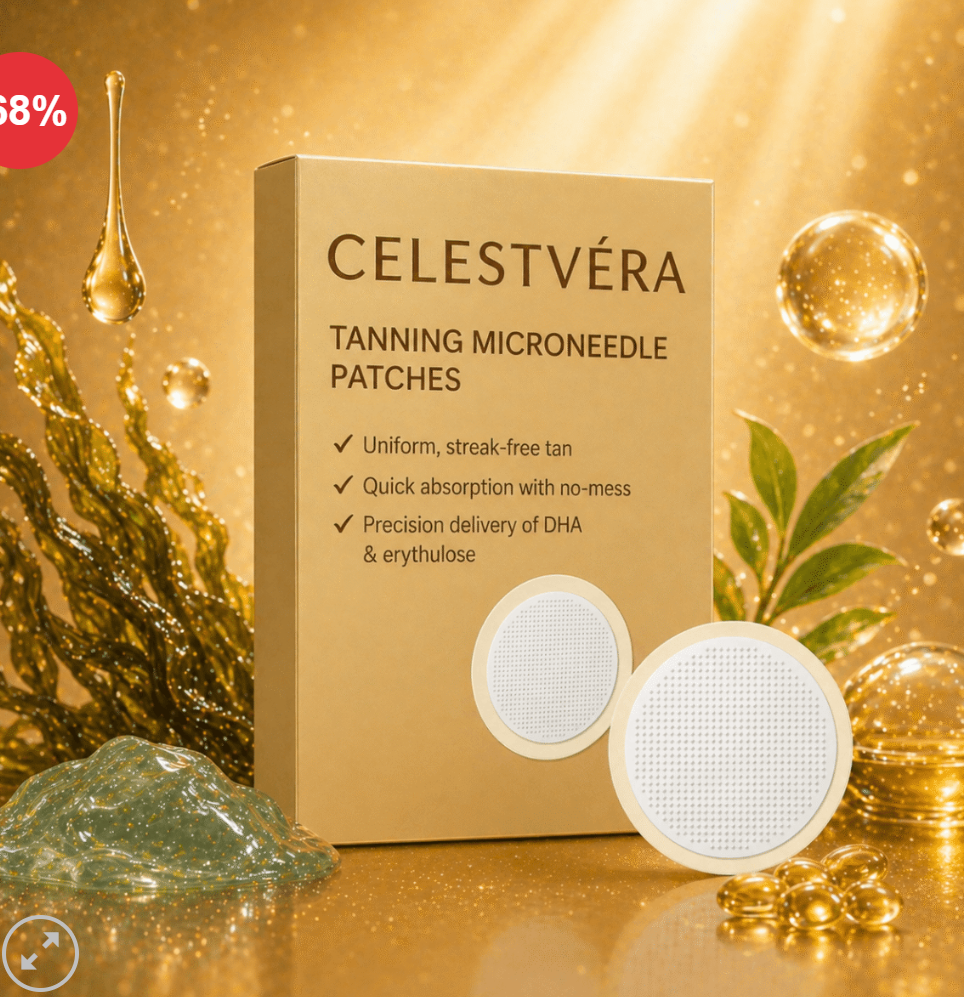
The Celestvéra Microneedle Tanning Patch is marketed as a mess-free alternative to tanning lotions and sprays. Instead of applying anything to your whole body, you supposedly place a small patch on your skin for around 10 minutes, and it “activates” tanning from within.
The claims include:
- stimulating melanin production
- creating a natural-looking tan without sun exposure
- even skin tone without streaks or orange patches
- long-lasting “glow results” every couple of weeks
The brand describes it as a modern skincare ritual using dissolvable microneedles and a minimal ingredient system designed for absorption under the skin
That’s the part that sounds impressive… and also the part that immediately raises questions.
What Immediately Raises Red Flags About Celestvéra Patch?
The first thing I noticed is how heavily the marketing leans on emotional beauty language instead of verifiable science.
You’ll see phrases like:
- “effortless glow ritual”
- “clean beauty tanning system”
- “premium skin transformation”
- “no effort sun-kissed skin”
This type of branding is extremely common in viral beauty patches that trend on social media before disappearing.
Another concern is the logic behind the product itself. A small patch placed on one area of the body claiming to trigger widespread tanning across the entire skin doesn’t align well with how melanin production actually works biologically.
Skin pigmentation is a systemic process influenced by genetics and UV response, not something typically activated through localized cosmetic patches.
Ingredient Breakdown: Does The Formula Actually Make Sense?
MC1R Peptide
This is the biggest marketing hook.
MC1R is a receptor linked to pigmentation and skin tone regulation. The problem is not the existence of the science, but how it’s being used in marketing.
There’s no clear public clinical evidence showing that a cosmetic microneedle patch can safely or effectively control whole-body melanin production in the way ads imply.
Sea Algae Hydrogel + Hyaluronic Acid
These are common skincare ingredients:
- hydrating
- soothing
- barrier-supporting
But they don’t naturally translate into tanning effects.
So what you’re left with is:
- skincare support ingredients
- plus a heavily implied tanning mechanism that isn’t well proven
That gap is where skepticism starts building.
Why The Science Behind It Feels Uncertain
The idea of microneedle delivery is real in skincare science, but usually in controlled medical or dermatology settings.
In this case, the leap is:
microneedles → melanin activation → visible tanning effect
That’s a big claim chain without strong independent proof backing the final outcome.
Similar tanning patch products in the market have already been criticized for overstating melanin activation claims and relying more on marketing language than clinical testing of the finished product.
Customer Complaints and Pattern Observations
Even though this product is still new, patterns from similar tanning patches show up repeatedly:
- no visible tanning results
- patch sticking issues
- skin irritation or sensitivity
- delayed shipping or vague fulfillment info
- subscription or billing confusion in some cases
On Reddit discussions around similar tanning patches, skepticism is strong, with many users pointing out that the concept doesn’t realistically match how tanning biology works.
At the same time, a small number of users report mild effects, which are often described more like cosmetic warmth or placebo-level glow rather than actual tanning transformation.
Shipping, Transparency, and Trust Signals
One of the recurring issues with products in this category is lack of transparency around:
- manufacturing details
- clinical testing of the finished patch
- clear ingredient percentages
- real-world user verification
The official product page leans heavily into aesthetic branding and lifestyle messaging rather than technical or scientific breakdowns, which is common in viral wellness products that prioritize conversion over documentation.
A Pattern I Keep Seeing
This fits into a pattern I’ve noticed across other viral beauty and wellness products I’ve reviewed, especially those involving:
- “nano” or “microneedle” delivery systems
- peptide-based marketing claims
- natural tanning or metabolism shortcuts
- fast visible transformation promises
I’ve seen similar marketing structures in other reviews like Joint Caps review, Sun-Free Glow Patch Review, and Fumepure Fat Burn Shorts review, where the formula stays the same: advanced-sounding science paired with vague proof and strong visual advertising.
Once you start comparing them side by side, the similarities become hard to ignore.
Is Celestvéra Microneedle Tanning Patch Legit or a Scam?
I wouldn’t label it as a straight scam product without confirmed fraud evidence, but the marketing definitely feels far ahead of the actual science supporting it.
The biggest issue is not necessarily safety alone, but the gap between:
- what the ads promise
and - what current skincare science realistically supports
At this point, it looks more like a viral cosmetic trend built on aesthetic appeal and buzzword science rather than a clinically proven tanning solution.
What To Do If You Already Ordered
If you already bought it:
- check for subscription or recurring billing settings
- monitor payment activity carefully
- keep order confirmations and screenshots
- avoid expecting fast or dramatic tanning results
- discontinue use if irritation appears
Final Thought
Celestvéra Microneedle Tanning Patch sits in that same growing category of “futuristic skincare” products that look impressive on the surface but become harder to justify once you dig into how tanning actually works biologically.
It’s appealing, no doubt. A quick patch for a perfect glow sounds like an easy win. But right now, the science behind that promise doesn’t feel strong enough to match the marketing energy behind it.
Frequently Asked Questions
Does Celestvéra Tanning Patch really work?
There’s no strong independent clinical evidence showing that microneedle tanning patches reliably produce full-body tanning results.
Is it safe to use microneedle tanning patches?
Microneedle skincare exists, but safety depends heavily on formulation transparency and testing, which is often unclear in viral beauty patches.
Can a patch really change skin color?
Skin pigmentation is a complex biological process. Claims of full-body tanning from small localized patches are not strongly supported by established dermatological science.