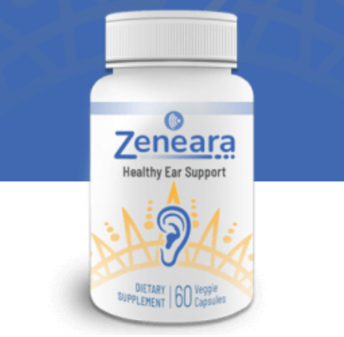

I came across Zeneara while looking into supplements advertised for tinnitus and other hearing-related problems. Anyone who has experienced persistent ringing, buzzing, or whistling in their ears knows how frustrating it can be, especially when it interferes with sleep, concentration, or everyday activities. Zeneara claims to support ear health and reduce these symptoms using a combination of herbs, vitamins, minerals, and other nutrients. The company also describes its ingredients as clinically proven and encourages customers to take the supplement consistently for better results. That sounds promising, but I wanted to see what is actually inside the capsules, whether the ingredients have credible evidence behind them, and whether Zeneara itself has been shown to work.
What Is Zeneara?
Zeneara is a dietary supplement marketed for ear health and tinnitus support. It comes in bottles containing 60 vegetarian capsules, with the recommended serving being two capsules daily, one in the morning and another before bed. The formula combines seven ingredients that the company claims support auditory nerve function, circulation, relaxation, and overall hearing health. Zeneara is particularly promoted to people experiencing ringing or buzzing in their ears, although its marketing also touches on stress, sleep, and mental clarity. It is important to understand that tinnitus is a symptom rather than a disease in itself, and its causes can include hearing loss, exposure to loud noise, earwax buildup, certain medications, and other medical conditions. A dietary supplement cannot be assumed to address all these underlying causes simply because it contains ingredients associated with general health.
Zeneara Ingredients and Dosage
Zeneara contains passion flower, vitamin B6, zinc, Ginkgo biloba, a probiotic blend, taurine, and valerian root. The sales page names these ingredients but doesn’t clearly display their individual quantities alongside the product description. I did find an image of a Supplement Facts label showing the following amounts per two-capsule serving: 2.4 mg of vitamin B6, 5 mg of zinc, 300 mg of Ginkgo biloba extract, 300 mg of probiotic blend providing 30 billion CFU, 300 mg of taurine, 150 mg of passion flower powder, and 150 mg of valerian extract. The probiotic blend is listed as containing Lactobacillus paracasei, Lactobacillus buchneri, and Lactobacillus brevis. This gives us a better idea of the formula, although I couldn’t independently confirm that the label image represents every current batch of Zeneara. Here is what these ingredients are supposed to contribute.
Passion Flower
Passion flower is traditionally used for relaxation and is commonly included in supplements targeting stress and sleep. Zeneara uses it to support calmness, apparently because stress can make tinnitus more difficult to tolerate. There is some research into passion flower for anxiety, but that doesn’t establish that it reduces the ringing itself or repairs hearing damage. At best, its proposed role is helping with relaxation rather than directly treating the underlying cause of tinnitus.
Vitamin B6
Vitamin B6 is an essential nutrient involved in normal nervous system function, protein metabolism, and the production of certain neurotransmitters. Zeneara includes it because healthy nerve function is important for communication between the ears and brain. However, getting enough vitamin B6 through diet is different from taking additional B6 to improve hearing. There is no convincing evidence that supplementing with this vitamin routinely reduces tinnitus in people who aren’t deficient. The listed 2.4 mg serving is also not proof that the product can restore auditory nerve function.
Zinc
Zinc plays several important roles in the body, including immune function, cell growth, and normal wound healing. Some research has explored whether zinc deficiency is associated with tinnitus, which helps explain why it appears in hearing-support supplements. However, the evidence for taking extra zinc to treat ringing ears is disappointing. A Cochrane review examining three clinical trials involving 209 adults found no convincing evidence that oral zinc supplementation improves tinnitus symptoms. Zeneara’s 5 mg serving may contribute to ordinary nutritional intake, but I wouldn’t interpret that as an established tinnitus treatment.
Ginkgo Biloba
Ginkgo biloba is probably the most recognizable herbal ingredient in this formula. It is often promoted for circulation, memory, and cognitive health, and Zeneara claims it helps improve blood flow to the auditory system. The theory is that better circulation may support the delicate structures involved in hearing. Unfortunately, clinical evidence hasn’t established that Ginkgo reliably reduces tinnitus. A Cochrane review examined 12 studies involving 1,915 participants and concluded that Ginkgo may have little to no effect on tinnitus severity compared with placebo, although the evidence was uncertain. This is worth considering because Zeneara gives this ingredient a prominent role in its hearing-support claims.
Probiotic Blend
Probiotics are live microorganisms that can provide health benefits when consumed in adequate amounts. Zeneara includes a blend of three Lactobacillus species and advertises it as part of its approach to overall wellness. The company appears to rely on the relationship between gut health, inflammation, and general bodily function to justify its inclusion. However, that connection doesn’t establish that these particular probiotic strains reduce tinnitus or improve hearing. I couldn’t find convincing clinical evidence demonstrating that Zeneara’s probiotic combination produces the advertised ear-health benefits.
Taurine
Taurine is an amino acid-like compound naturally present in the body, where it contributes to several processes involving cell function, metabolism, and the nervous system. It has also attracted scientific interest for its potential effects on cellular protection and neurological health. Zeneara includes it to support nerve communication and auditory function, but there is no established clinical evidence showing that taking taurine in this formula stops ringing in the ears. Its inclusion makes the formula sound more comprehensive, but the proposed benefits shouldn’t be confused with proven tinnitus relief.
Valerian Root
Valerian is a herbal ingredient commonly used in supplements marketed for relaxation and sleep. This is relevant because tinnitus can make it difficult for some people to fall asleep or stay asleep, particularly when the ringing becomes more noticeable in a quiet bedroom. Valerian may help with relaxation for some users, although research on its effectiveness for sleep is mixed. It doesn’t treat the underlying causes of tinnitus, and I couldn’t establish that the amount included in Zeneara has any specific effect on hearing-related symptoms.
Does Zeneara Really Work for Tinnitus?
After looking at the ingredients, I don’t think Zeneara has provided enough evidence to support its central promise. Some of its ingredients have legitimate uses in nutrition and general health, while others have been studied for relaxation, circulation, or neurological function. But those are not the same as demonstrating that a supplement can reduce persistent ringing in the ears. The research on Ginkgo biloba is particularly relevant because it has been investigated directly for tinnitus, yet the Cochrane review found little to no clear benefit. Zinc hasn’t performed much better in clinical studies.
I also couldn’t find a published clinical trial showing that the finished Zeneara formula reduces tinnitus severity, improves hearing, or restores auditory nerve function. The company’s claim that its ingredients are clinically proven doesn’t establish that the combination works as advertised. Even if individual ingredients have been studied, the results depend on their specific forms, quantities, and the people taking them. Tinnitus can have several different causes, so a formula that supposedly works for everyone is already making a very broad promise. I wouldn’t rely on Zeneara as a treatment for persistent ringing or use it as a substitute for an appropriate hearing assessment.
Zeneara’s Official Website and Other Sellers
Zeneara is marketed through Zeneara.com, where customers can view the product information and proceed to an order page handled by ClickBank. The website promotes the supplement as a natural hearing-support formula and highlights claims about its ingredients, manufacturing standards, and money-back guarantee. ClickBank identifies itself as the retailer, but its involvement in processing an order doesn’t mean it manufactures the capsules, independently tests the formula, or endorses the health claims.
There are also several similarly named websites promoting Zeneara, including domains with additional or altered letters. I would be careful not to assume that every website using the same product name belongs to the same seller. If you’re considering ordering, check the exact domain and make sure the payment page identifies the product and seller correctly. Buying from a lookalike website could create confusion if you later need customer support or want to request a refund.
Who Makes Zeneara?
This is one of the less transparent parts of the product. Zeneara’s website claims that the supplement is made in the United States in a facility registered with the FDA and operating under Good Manufacturing Practices. However, I couldn’t establish the legal name of the company responsible for manufacturing the finished capsules or independently identify the facility. The shipping and returns information lists an address at 285 Northeast Avenue, Tallmadge, Ohio, but this appears to be a fulfillment and returns address rather than proof of the actual manufacturing location.
The website also displays FDA-related and GMP claims that need to be understood correctly. The FDA does not approve dietary supplements before they are marketed in the same way it approves prescription drugs. Registration of a manufacturing facility is not product approval, and it doesn’t establish that Zeneara is effective for tinnitus. I would like to see the manufacturer’s identity, a complete product label, and independently verifiable quality-testing documents before placing much confidence in its manufacturing claims.
Zeneara Pricing: How Much Does It Cost?
Zeneara is sold in three main packages, with larger purchases advertised at a lower price per bottle. The prices displayed on the order page are:
- 1 bottle: $59, or $59 per bottle.
- 3 bottles: $147, or $49 per bottle.
- 6 bottles: $234, or $39 per bottle.
The seller advertises savings of up to $216 on the six-bottle package. However, comparing the six-bottle total with six bottles at the displayed single-bottle price of $59 gives $120 in savings, not $216. The larger package does reduce the advertised cost per bottle, but it also requires spending $234 upfront on a supplement whose effectiveness remains uncertain. I couldn’t verify whether the higher reference prices used to promote these offers represent genuine previous selling prices. I wouldn’t let the discount pressure me into buying six bottles simply because the offer makes it seem like a better deal.
Refund Policy
Zeneara advertises a 365-day money-back guarantee, giving customers up to a year to request a refund if they’re dissatisfied. That’s a much longer period than many supplement sellers offer, and it sounds reassuring when buying something that supposedly requires consistent use. ClickBank handles the checkout and provides the order-support route, while product questions are directed to the vendor.
However, I would still read the applicable return conditions before ordering. A long guarantee doesn’t automatically tell you whether opened bottles must be returned, whether return shipping is covered, or how the seller handles partially used multi-bottle packages. Keep your order confirmation and a copy of the guarantee so you have the terms available if you need to request a refund.
Is Zeneara Safe?
Zeneara describes its formula as natural, vegetarian, and suitable for daily use, but natural ingredients can still cause side effects or interact with medication. Ginkgo biloba deserves particular attention because it may increase bleeding risk, especially when combined with anticoagulants or certain other medicines. Valerian and passion flower can cause drowsiness, so combining them with sedatives or alcohol may increase that effect. Zinc can also interfere with the absorption of certain antibiotics when taken at the same time.
The listed ingredient quantities help with assessing exposure, but they don’t establish that the finished formula is safe for every person. Anyone taking medication, preparing for surgery, pregnant, breastfeeding, or managing a medical condition should speak with a healthcare professional before using it. Persistent or sudden hearing changes also deserve proper medical attention rather than being treated with a supplement alone.
Is Zeneara Legit or a Scam?
I wouldn’t call Zeneara a confirmed scam based on the information available. It is marketed as a dietary supplement, its checkout is handled by an identifiable retailer, and the seller advertises a lengthy refund guarantee. However, I see several reasons to be cautious. The manufacturer isn’t clearly identified, the manufacturing claims are difficult to verify, independent customer feedback is limited, and the evidence supporting its main tinnitus claims is weak. The product also relies on research involving individual ingredients without demonstrating that the finished formula has been clinically tested. These issues don’t prove that the capsules are fake or that every customer will have a bad experience, but they make it difficult to recommend the product with confidence.
How to Spot a Scam Website
Before buying a supplement online, check the website’s domain carefully and compare it with the brand’s actual sales page. Look up its registration history through WHOIS, search for the legal company name, and check whether the seller provides a verifiable business address and complete product label. You can also scan the website using the MalwareTips Website Scanner, although a clean scan doesn’t prove that a business is legitimate or that its supplements work. Be particularly careful with dramatic health promises, countdown timers, inflated original prices, and customer testimonials that cannot be independently verified. For supplements, a clear ingredient list, disclosed quantities, credible quality testing, and a traceable manufacturer are far more useful than a collection of impressive marketing claims.
Bottom Line
I wouldn’t personally spend money on Zeneara expecting it to stop ringing in my ears. Some of its ingredients have legitimate nutritional or health applications, but the evidence doesn’t establish that this combination treats tinnitus. The unclear manufacturer information, limited independent customer feedback, and reliance on broad health claims leave too many unanswered questions. I’d rather look into the cause of the ringing and consider options supported by proper clinical guidance than gamble on a supplement promising relief it hasn’t convincingly demonstrated.
Read also >>> VapoBrain Review: Does It Really Improve Memory, Focus, and Mental Clarity?