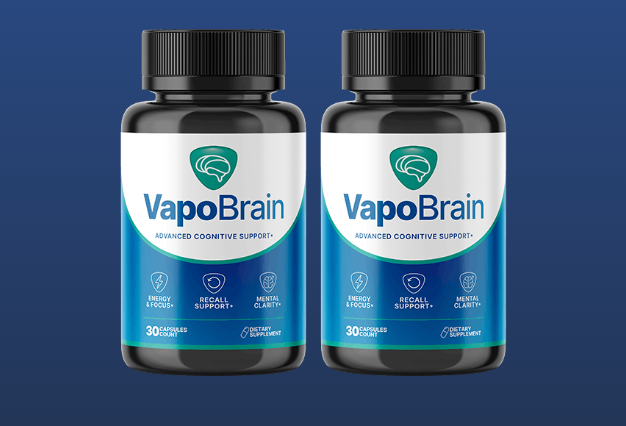

I came across VapoBrain while looking into supplements advertised for memory, concentration, and mental clarity. Products like this are becoming increasingly popular among people who feel mentally drained, struggle to stay focused, forget things easily, or simply want to stay sharp. VapoBrain claims to support memory, improve recall, sharpen concentration, and promote mental energy through a combination of herbal extracts and compounds associated with cognitive function. Those claims sound appealing, but brain supplements are an area where marketing can easily get ahead of the science. I looked at what VapoBrain contains, whether its ingredients have credible research behind them, who makes it, what customers are saying, and whether I think it is worth spending money on.
Table of Contents
- What Is VapoBrain?
- VapoBrain Ingredients and Dosage
- Does It Really Work?
- Who Makes VapoBrain?
- Pricing and Discounts
- Customer Reviews On VapoBrain
- VapoBrain Refund Policy
- Is VapoBrain Legit or a Scam?
- How to Spot a Scam Website
- Final Verdict: Is VapoBrain Worth Buying?
What Is VapoBrain?
VapoBrain is a dietary supplement marketed for cognitive support, particularly memory, focus, recall, and mental clarity. It comes in capsule form, with 30 capsules per bottle, and is promoted as a daily supplement for adults who want to maintain mental sharpness and improve their ability to concentrate. The formula is marketed as a combination of ingredients that support different aspects of brain function, including memory-related neurotransmitters, circulation, and brain cell health. VapoBrain isn’t a prescription medication, and it isn’t intended to treat memory loss, dementia, or any neurological condition. Its promises are aimed at everyday cognitive support, but whether taking these ingredients together actually delivers the advertised benefits is another question.
VapoBrain Ingredients and Dosage
VapoBrain lists four main ingredients: Bacopa monnieri, Ginkgo biloba, phosphatidylserine, and huperzine A. These ingredients have been studied individually for their potential effects on memory, attention, brain function, and cognitive performance. However, one thing I find concerning is that the website doesn’t clearly disclose how much of each ingredient is contained in a capsule. Knowing the ingredients is useful, but their dosages matter just as much because research is often conducted using specific amounts, standardized extracts, and consistent dosing schedules. Without that information, it’s difficult to determine whether VapoBrain contains enough of each ingredient to produce the effects advertised or whether the formula is simply relying on familiar supplement ingredients to make the product sound impressive.
Bacopa Monnieri
Bacopa is a traditional Ayurvedic herb commonly used in supplements marketed for memory and cognitive function. Some clinical studies suggest that standardized Bacopa extracts may improve certain aspects of memory and attention after consistent use over several weeks. However, these studies don’t show that every Bacopa supplement produces the same results, and the effects tend to be gradual rather than immediate. Bacopa can also cause digestive discomfort, nausea, or stomach upset in some people, so it isn’t necessarily suitable for everyone.
Ginkgo Biloba
Ginkgo biloba is another popular ingredient in memory supplements, often promoted for improving circulation and supporting brain function. It has been studied for cognitive decline, memory, and dementia, but the results have been mixed. Large clinical trials have not established that Ginkgo prevents dementia or reliably stops age-related memory decline. Although it has a long history of use, that doesn’t mean taking it will noticeably improve concentration or memory in otherwise healthy adults. Ginkgo may also increase bleeding risk, particularly in people taking blood-thinning medications.
Phosphatidylserine
Phosphatidylserine is a fatty substance naturally found in cell membranes, including those in the brain. It plays a role in maintaining cell structure and supporting communication between cells, which is why it is commonly included in supplements targeting memory and cognitive performance. Some older studies have suggested possible benefits for memory and mental function, particularly in older adults, but the evidence is limited and doesn’t establish that phosphatidylserine supplementation will noticeably improve cognitive performance in everyone. Its presence in VapoBrain sounds promising, but the undisclosed amount makes it difficult to assess its potential contribution.
Huperzine A
Huperzine A is a compound extracted from Chinese club moss that has attracted attention for its effects on acetylcholine, a neurotransmitter involved in memory, learning, and attention. It works by inhibiting an enzyme responsible for breaking down acetylcholine, allowing the neurotransmitter to remain active for longer. This mechanism is also relevant to certain medications used to manage Alzheimer’s symptoms, although that doesn’t make Huperzine A an equivalent treatment. It can cause side effects such as nausea, dizziness, sweating, and changes in heart rate, and it may interact with medications that affect acetylcholine. I would be particularly cautious with this ingredient because VapoBrain doesn’t clearly disclose its dosage.
Does It Really Work?
VapoBrain’s formula isn’t completely without scientific backing, but that doesn’t mean the finished product has been proven to work. Bacopa has some of the more encouraging research among the ingredients, with clinical trials suggesting modest improvements in certain memory tasks after consistent supplementation. Ginkgo has been extensively studied, but large trials haven’t demonstrated that it prevents dementia or reliably protects against cognitive decline. Phosphatidylserine has some limited research behind it, while Huperzine A has shown potential in small studies but raises questions about safety, interactions, and long-term use.
The problem is that I couldn’t establish that VapoBrain itself has undergone clinical trials demonstrating improvements in memory, attention, or mental clarity. Research involving individual ingredients cannot automatically be used to validate the complete formula, especially when the quantities of those ingredients aren’t disclosed. It’s also worth remembering that forgetfulness and difficulty concentrating can be caused by poor sleep, stress, nutritional deficiencies, certain medications, or underlying health conditions. Taking a supplement without addressing those factors may not accomplish much. I wouldn’t expect VapoBrain to produce an overnight improvement in memory, and I certainly wouldn’t rely on it to treat ongoing or worsening cognitive problems.
Who Makes VapoBrain?
VapoBrain is marketed through a website presenting the product as a cognitive-support supplement, but I couldn’t confidently establish the legal company responsible for manufacturing and distributing it. The website refers to VapoBrain Research and claims the product is manufactured in the United States in a facility following Good Manufacturing Practices (GMP). However, I couldn’t independently verify the manufacturer’s identity, inspect the manufacturing facility, or confirm the company’s quality-control procedures.
GMP manufacturing is important when buying dietary supplements because it helps ensure products are consistently produced and handled according to established quality standards. However, simply claiming GMP manufacturing doesn’t tell consumers how much of each ingredient is present, whether the finished product has been independently tested for purity, or whether it contains exactly what the label says. I would like to see more transparent manufacturer information and independently verifiable testing documentation before placing much confidence in these claims.
Pricing and Discounts
VapoBrain is sold in multi-bottle packages, with the price per bottle dropping considerably when you purchase more at once. The pricing displayed on the order page includes:
- 2 bottles: $79 per bottle, $158 total, plus $9.99 shipping.
- 3 bottles: $69 per bottle, $207 total, with free shipping.
- 6 bottles: $49 per bottle, $294 total, with free shipping.
The seller also displays much higher reference prices of $358, $537, and $1,074 against these packages, claiming savings of $200, $330, and $780, respectively. While the larger packages reduce the advertised cost per bottle, they require you to spend considerably more upfront on a supplement that hasn’t demonstrated its effectiveness as a finished formula. I couldn’t independently verify whether the original reference prices represent genuine previous selling prices, so I wouldn’t base my purchasing decision on the claimed savings alone. Personally, I’d avoid committing to six bottles just to get the lowest advertised price per bottle, particularly when the product’s effectiveness and ingredient dosages remain unclear.
Customer Reviews On VapoBrain
VapoBrain’s website displays a very high rating of 4.98 out of 5 from more than 2,000 reviews, along with several positive testimonials describing improvements in memory, concentration, recall, and mental clarity. Those are impressive numbers, but I couldn’t independently verify the reviews or trace the testimonials to confirmed purchasers. The website also uses illustrative customer images that aren’t verified reviewer photographs, making it difficult to determine how much of the displayed feedback represents genuine customer experiences.
I would take the testimonials with a grain of salt rather than treating them as proof that the supplement works. Memory and focus can fluctuate for many reasons, and subjective improvements don’t necessarily establish that a particular supplement caused them. I would be more confident in VapoBrain if it had verifiable reviews across independent platforms, particularly detailed feedback from customers who had used it consistently for several weeks and could explain what they noticed, whether they experienced side effects, and whether they thought it was worth the price.
VapoBrain Refund Policy
VapoBrain advertises a 60-day money-back guarantee, allowing customers to request a refund if they aren’t satisfied with their purchase. This is reassuring in principle, especially when buying a supplement whose benefits may take several weeks to become noticeable. However, I couldn’t establish all the practical details of the refund process, including whether customers must return unused or opened bottles, who pays return shipping, or how long refunds take to process. The website says customers should contact support using the details provided in their order confirmation. Before placing an order, I would save a copy of the refund terms and confirmation email rather than relying entirely on the guarantee advertised on the sales page.
Is VapoBrain Legit or a Scam?
I wouldn’t automatically call VapoBrain a scam because it contains ingredients that have been studied for cognitive health, and the product is presented as a dietary supplement rather than a prescription treatment. However, there are several reasons I would remain cautious. The manufacturer isn’t clearly established, the ingredient dosages aren’t disclosed on the website, I couldn’t verify clinical testing of the finished formula, and the customer reviews displayed on the sales page aren’t independently confirmed. The pricing also encourages buyers to purchase multiple bottles upfront, which isn’t something I would recommend when there are still unanswered questions about the formula and its effectiveness. VapoBrain may be a legitimate supplement being marketed with optimistic claims, but I don’t think the information currently available is strong enough to justify blindly trusting those claims.
How to Spot a Scam Website
When buying supplements online, don’t let an impressive sales page, high star rating, or dramatic discount convince you that a product is trustworthy. Check the website’s domain registration through WHOIS, look for a verifiable company name and business address, and confirm that the product has a complete Supplement Facts label with clearly disclosed ingredient quantities. You can also scan the website using the MalwareTips Website Scanner, although a clean scan only tells you about certain security risks and doesn’t prove the seller is legitimate. Be wary of exaggerated health claims, fake urgency, unrealistic promises, and testimonials that can’t be traced to actual customers. When a supplement claims to improve memory or cognitive performance, look for evidence involving the finished product rather than relying entirely on studies about individual ingredients.
Final Verdict: Is VapoBrain Worth Buying?
I wouldn’t rush to buy VapoBrain. Some of its ingredients have research behind them, but that isn’t enough to convince me that this particular formula will noticeably improve memory or focus. The undisclosed dosages, lack of independently verified customer reviews, and limited transparency about the manufacturer leave too many unanswered questions. I’d rather spend my money on a supplement with a fully disclosed label, independently tested ingredients, and a manufacturer I can actually verify than gamble on an expensive formula built around promising claims.
Read also >>> LumiVelle Gummies Review: Are These Viral Beauty Gummies a Scam?