
YoBurn was marketed as a natural weight-loss supplement promising to help people burn fat, improve metabolism, control appetite and lose stubborn weight. Its sales pitch focused on metabolic health, gut bacteria and the body’s ability to use stored fat for energy. However, the product has since undergone a name change. Its website now presents Ignitra as the new version of YoBurn, even claiming that the newer formula is 99.9% accurate compared with 59% for the original. But does this change represent a genuine improvement, or is it simply a new name and bottle? Here’s what consumers should know about the original supplement, its ingredients and the claims surrounding its replacement.
What Was YoBurn?
YoBurn was a dietary supplement sold in capsule form and marketed for weight management, metabolic support and appetite control. According to its promotional website, the formula was designed to support the body’s natural fat-burning processes while helping regulate hunger, improve digestive health and maintain energy levels. The sales pitch also connected weight gain to sluggish metabolism and poor gut health, suggesting that improving these functions could make losing weight easier.
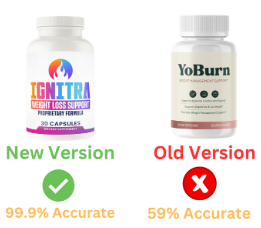
The website now identifies Ignitra as the new version of YoBurn. Its comparison graphic displays an Ignitra bottle as the new product and the original YoBurn bottle as the old version. It also assigns Ignitra a 99.9% accuracy rating compared with 59% for YoBurn. However, the website does not explain what these percentages measure or provide independent testing to support them. A new name and a redesigned bottle do not automatically establish that a supplement has become more effective.
YoBurn Ingredients
The ingredient information on YoBurn’s website is surprisingly inconsistent. One section lists Gymnema sylvestre, banaba leaf, bitter melon, cinnamon bark, licorice root, juniper berry, chromium and cayenne pepper. These ingredients are commonly found in supplements marketed for blood sugar balance, digestion, appetite control and metabolism.
However, another section of the same website lists an entirely different formula containing chicory root inulin, resistant potato starch and a probiotic blend featuring Bifidobacterium infantis, Clostridium butyricum and Akkermansia muciniphila. This second formula is presented as a gut-health supplement intended to support beneficial bacteria and healthy GLP-1 activity.
These are two distinct formulations with different ingredients and proposed mechanisms of action. The website does not adequately explain whether YoBurn underwent a formula change or which ingredients customers actually received. It also does not provide a clearly verifiable Supplement Facts label showing the individual quantities of each ingredient. Without that information, it is difficult to compare the formula with clinical research or determine whether its ingredients are present in meaningful amounts.
Does YoBurn Really Burn Fat and Boost Metabolism?
YoBurn’s central selling point was its ability to improve metabolic function, encourage fat burning and make weight management easier. Some of its listed ingredients have been investigated for metabolic effects. Gymnema sylvestre has been studied for its potential influence on sugar cravings and glucose metabolism, while bitter melon and banaba have been investigated for possible effects on blood sugar regulation. Chromium is involved in normal nutrient metabolism, and cayenne contains capsaicin, which has been studied for its thermogenic effects.
However, these findings do not establish that combining the ingredients into YoBurn produces meaningful weight loss. Research on individual ingredients cannot automatically be applied to a finished supplement, particularly when the exact quantities are undisclosed. The second formula’s focus on prebiotics, resistant starch and probiotics presents a different argument. These ingredients can support digestive health and influence the gut microbiome, but improved gut health does not automatically translate into substantial fat loss.
The website’s suggestion that the formula supports GLP-1 activity also needs some context. GLP-1 is a hormone involved in appetite regulation and blood sugar control, but supporting normal gut activity is not equivalent to producing the appetite-suppressing effects associated with prescription GLP-1 medications. There is no convincing clinical evidence that YoBurn increases metabolic rate enough to produce significant weight loss, melts stubborn belly fat or allows users to lose weight without meaningful changes to their eating habits and activity levels.
YoBurn for Appetite Control and Cravings
YoBurn also claimed to help control hunger, reduce cravings and make it easier to avoid unnecessary snacking. Gymnema sylvestre has been studied for its effects on sweet taste perception, while certain types of dietary fibre can promote fullness when consumed in adequate quantities. Prebiotics may also influence gut activity and digestive health.
However, these potential benefits depend on the specific ingredient, its dosage and how it is used. YoBurn does not disclose enough information to establish how much of its appetite-supporting ingredients are included in the formula. There is no reliable evidence showing that taking the supplement significantly reduces hunger, suppresses cravings throughout the day or makes it easier to maintain a calorie deficit. Anyone expecting it to eliminate hunger or stop emotional eating may end up disappointed.
YoBurn Side Effects and Safety
YoBurn was advertised as a natural supplement without harsh stimulants, but natural ingredients can still cause side effects and interact with medication. The botanical formula raises particular concerns because licorice root may affect blood pressure and potassium levels when consumed in sufficient quantities. Gymnema, bitter melon, banaba and cinnamon may also influence blood sugar, potentially creating problems for people taking diabetes medication.
The probiotic and fibre formula has its own potential drawbacks. Inulin and resistant starch can cause gas, bloating, abdominal discomfort or changes in bowel movements, particularly when introduced in large amounts. Probiotics may also be unsuitable for certain people with serious underlying illnesses or compromised immune systems.
Because the website does not clearly establish which formula was being sold or disclose individual ingredient quantities, it is difficult to assess the potential risks accurately. Anyone taking medication for diabetes, blood pressure or another chronic condition should consult a healthcare professional before using a weight-loss supplement. Pregnant or breastfeeding women should also seek medical advice before considering these products.
YoBurn Price and 100% Money-Back Guarantee
YoBurn was advertised at $49 per bottle, with the sales page promoting multi-bottle packages and substantial discounts. The website also offered a 100% money-back guarantee covering 60 days, giving customers an opportunity to request a refund if they were dissatisfied with their purchase.
However, the detailed refund policy includes conditions that are worth reading before ordering. Customers must obtain a return authorization, send the products back within the specified period and provide tracking information. Return shipping is the customer’s responsibility, and returned products must meet the seller’s requirements. In other words, the 100% guarantee does not mean customers can simply request their money back without following the return procedure.
The website also promotes savings of up to $780, but large crossed-out prices do not necessarily represent genuine reductions from the amount customers normally pay. Given the uncertainty surrounding the original formula and its effectiveness, buying several bottles simply to secure a lower price would be difficult to justify.
Is YoBurn a Scam or Legit?
YoBurn was presented as a dietary supplement for weight management, but its promotional campaign raised concerns beyond the usual exaggerated fat-burning claims. Its advertisements have been associated with questionable celebrity endorsements, manipulated videos involving medical professionals and misleading news-style presentations. These tactics can make a product appear medically supported or endorsed by familiar personalities when that support has not been established.
The website also makes manufacturing and quality claims, including references to an FDA-registered facility. However, an FDA-registered manufacturing facility does not mean the supplement itself has been FDA-approved or evaluated for effectiveness. The conflicting ingredient descriptions and lack of transparent dosing make independent verification difficult.
The fact that the website openly identifies Ignitra as the replacement for YoBurn provides some clarity about the product’s changing identity. However, the claimed improvement in accuracy remains unexplained, and there is no clear independent testing to establish that the newer version delivers better results.
How to Spot a Weight-Loss Supplement Scam
Weight-loss supplements are often promoted using dramatic before-and-after pictures, unrealistic promises, fake celebrity endorsements, fabricated medical news stories and claims that a secret ingredient can melt belly fat without dieting or exercise. These tactics are designed to sell hope rather than provide reliable evidence.
Before buying any fat burner or metabolism booster, check whether the manufacturer provides a complete ingredient label, exact dosages, a verifiable company identity and credible research supporting the finished product. Be cautious of websites that use fake countdowns, exaggerated discounts, hidden subscriptions or vague money-back guarantees.
You can also check a website’s domain registration details through WHOIS and scan the URL using the MalwareTips Website Scanner. Search for independent customer feedback outside the seller’s website, paying particular attention to recurring billing, refund problems and complaints about products not matching their advertised descriptions.
My Final Verdict on YoBurn
Weight-loss supplements don’t become more trustworthy simply because their names change. YoBurn’s replacement by Ignitra may be presented as an upgrade, but the impressive accuracy figures need more than a promotional graphic to mean anything. Until the newer product provides clear ingredient information and credible evidence behind its promises, consumers have little reason to take the company’s word for it. A new label is easy to print; proving that a supplement actually works is the harder part.
Read also >>> Rootation Berberine Gummies Review: I Tested Them for 30 Days. Here’s My Honest Take