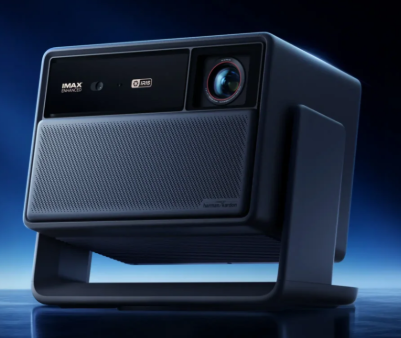

A 100-inch television is expensive, takes up a lot of space, and isn’t something you can easily move around. A projector sounds like a convenient alternative, especially when you can turn an ordinary wall into a screen much larger than most televisions. But anyone who has used a cheap projector knows there’s usually a catch. The picture looks great in a dark room, then becomes difficult to see once daylight enters. Dark scenes can look grey, and fast-moving games sometimes feel sluggish. XGIMI says its new HORIZON 30 projectors address these problems with brighter laser technology, better contrast, and 4K gaming at 120Hz. The specifications are impressive, but so are the prices. The cheapest model starts at $1,899 during the launch offer, while the most expensive costs $2,999. That’s serious money for something that still needs a suitable wall or screen. I looked into the three models, their picture quality claims, gaming features, and pricing to see whether the HORIZON 30 is worth buying or whether a good television would make more sense.
Quick Takeaway
- Product: XGIMI HORIZON 30 Series
- Models: HORIZON 30 Pro, Max, and Ultra Max
- Launch: October 2026
- Preorder prices: $1,899, $2,499, and $2,999 respectively
- Regular US prices: $2,499, $2,999, and $3,499
- Display: 4K DLP projection with RGB triple-laser lighting
- Brightness: 4,800 to 6,000 ISO lumens, depending on model
- Gaming: Up to 4K at 120Hz, with variable refresh rate and low-latency modes
- Entertainment: Google TV, Dolby Vision, HDR10+, IMAX Enhanced, and Harman Kardon speakers
- My verdict: A promising range for serious home cinema and gaming, but the Pro looks like the most sensible starting point. I wouldn’t spend more on the Ultra Max without knowing that my room actually needs the extra brightness.
Table of Contents
- Quick Takeaway
- What Is the XGIMI HORIZON 30?
- Picture Quality, Brightness, and the Problem With Daylight
- 4K Gaming at 120Hz: One of Its Best Features
- Google TV, Sound, and Everyday Use
- HORIZON 30 Pro vs Max vs Ultra Max: Which Is Worth Buying?
- Is the XGIMI HORIZON 30 Worth Buying?
What Is the XGIMI HORIZON 30?
The HORIZON 30 isn’t one projector. It’s a range of three models called the Pro, Max, and Ultra Max, all designed for people who want a proper big-screen entertainment setup at home. They replace the idea of a small, occasional-use projector with something closer to a television alternative. Each model uses three separate lasers to produce red, green, and blue light, rather than relying on a conventional lamp. This is called RGB triple-laser technology, and its main advantage is the ability to produce bright, rich colours. All three also support 4K resolution, meaning they can display a detailed picture with approximately 8.3 million pixels. The design is quite practical, too. XGIMI has given the projectors a built-in stand that rotates horizontally and tilts upwards, making it easier to aim the picture at a wall or ceiling without buying a separate mount. The automatic focus and screen adjustment features should also reduce the amount of fiddling needed during setup. I like that because one of the frustrating things about projectors is having to reposition them whenever the image looks crooked. However, these aren’t the kind of portable projectors I’d buy for casual camping trips. They’re fairly substantial home entertainment devices, and the Max alone weighs around 5.4 kilograms. They make more sense in a living room, bedroom, or dedicated movie room where you can leave them set up and enjoy a much larger picture than an ordinary television.
Picture Quality, Brightness, and the Problem With Daylight
Brightness is one of the biggest reasons to consider the HORIZON 30 series, but it’s also where I think buyers need realistic expectations. XGIMI rates the Pro at 4,800 ISO lumens, the Max at 5,300, and the Ultra Max at 6,000. Lumens measure light output, so higher numbers generally mean a projector has more light available to produce a visible picture, particularly on a large screen. These are impressive advertised figures for home projectors, and they suggest the HORIZON 30 models should be more usable in rooms with some lighting than many cheaper alternatives. But I wouldn’t interpret 6,000 lumens as permission to forget about curtains. A projector works by reflecting light off a screen or wall, and sunlight hitting that surface competes with the projected image. Even a powerful projector can struggle with washed-out blacks and reduced contrast in a bright room. The type of screen also matters. A proper projection screen designed to handle room lighting can make a noticeable difference compared with an ordinary white wall. XGIMI also claims improved colour coverage, with support for 110% of the BT.2020 colour space, although that figure needs careful interpretation and independent measurement. The three models use a Dual Intelligent Iris system that adjusts how much light passes through the lens, helping preserve detail in dark scenes while maintaining bright highlights. Native contrast is rated at 8,000:1 for the Pro, 9,000:1 for the Max, and 10,000:1 for the Ultra Max. Contrast is simply the difference between the darkest black and brightest white the projector can produce. Better contrast can make nighttime scenes look less grey and give images more depth. XGIMI’s figures are promising, but I’d still want independent measurements before deciding how much better one model looks than another. A projector can have excellent advertised specifications and still perform differently depending on its picture settings, screen, and room.
4K Gaming at 120Hz: One of Its Best Features
I think gaming is one of the strongest reasons to consider the HORIZON 30, particularly if you own a PlayStation 5, Xbox Series X, or a powerful gaming PC. All three models support 4K at 120Hz through compatible HDMI 2.1 connections. In simple terms, that means the projector can display up to 120 frames every second at 4K resolution, provided the connected device and game support it. This can make movement look smoother and controls feel more responsive than ordinary 60Hz gaming. The HORIZON 30 also supports variable refresh rate, AMD FreeSync, and automatic low-latency mode, features designed to reduce screen tearing and unnecessary delay. XGIMI advertises input lag as low as 1 millisecond, but there’s an important detail behind that number. It applies to 1080p gaming at 240Hz, not every resolution or setting. At 4K and 120Hz, the company lists approximately 1.9 milliseconds, while 4K at 60Hz is rated at 3 milliseconds. Those are excellent claimed figures for a projector, although they still need independent verification. I’d also point out that 4K 120Hz playback requires a compatible external device connected through HDMI. The projector’s built-in streaming system doesn’t decode 4K content at 120Hz on its own. For films, that’s hardly a problem because most movies are produced at 24 frames per second, but it matters if you’re buying specifically for high-refresh-rate gaming. The idea of playing racing games or exploring a detailed open-world game on a 120-inch screen is appealing, and this is an area where a projector can offer a very different experience from a regular television. The remaining question is how consistently the HORIZON 30 performs during real gaming sessions, including fan noise, heat, and image processing.
Google TV, Sound, and Everyday Use
A projector at this price shouldn’t require a pile of extra equipment just to watch Netflix, and thankfully, XGIMI has included Google TV. That gives the HORIZON 30 access to streaming apps and other entertainment services, although availability can vary by country. The projectors also support Dolby Vision, HDR10+, and IMAX Enhanced, which are technologies intended to improve how compatible films and shows look. Dolby Vision, for example, helps the projector adjust how it displays bright and dark parts of a picture. But support for these formats doesn’t automatically mean every film will look spectacular. The projector still has to produce convincing blacks, accurate colours, and enough brightness, which is why independent picture testing matters. XGIMI has also included two 12-watt Harman Kardon speakers. That’s 24 watts of built-in audio, and the company claims the sound system can produce surprisingly deep bass for a projector. I’d expect it to be convenient for everyday viewing, but I wouldn’t assume it can replace a proper home theatre sound system, especially in a large room. There are two HDMI ports, with support for 4K 120Hz, and one supports eARC for connecting compatible audio equipment. Wi-Fi 6, Bluetooth 5.2, USB ports, and an optical audio connection give buyers several ways to connect other devices. I particularly like the optical zoom and lens shift features. Optical zoom lets you adjust the picture size without relying on digital enlargement, while lens shift lets you move the image up, down, or sideways without physically moving the projector. That matters because digital correction can reduce image quality. There’s also a memory feature for saving different screen arrangements. If you regularly switch between movies, television, and gaming, these conveniences could make the HORIZON 30 easier to live with than a basic projector. Still, I’d want to know how quickly Google TV responds, how reliably the automatic adjustments work, and whether the cooling fan becomes distracting during quiet scenes.
HORIZON 30 Pro vs Max vs Ultra Max: Which Is Worth Buying?
This is where I’d be careful with my money because XGIMI has made the three models quite similar. They all have the same main features, including RGB triple-laser technology, 4K 120Hz support, Google TV, the Dual Intelligent Iris system, and Harman Kardon speakers. The differences are mainly brightness and contrast. During the US preorder period from October 12 to October 31, 2026, the Pro costs $1,899, the Max costs $2,499, and the Ultra Max costs $2,999. Regular prices are expected to rise to $2,499, $2,999, and $3,499 respectively from November 1. That means you’re paying another $600 to move from the Pro to the Max, or $1,100 to move from the Pro to the Ultra Max during the launch offer. What exactly are you getting for that extra money? The Max provides 500 more ISO lumens and a higher advertised contrast ratio than the Pro. The Ultra Max increases brightness to 6,000 ISO lumens and native contrast to 10,000:1. Those improvements may be useful if you have a particularly large screen or a room where controlling daylight is difficult. But if you’re watching films at night with the curtains closed, I wouldn’t automatically assume the Ultra Max will provide a dramatically better experience. All three already offer substantial brightness on paper, and the Pro has the same core gaming and entertainment features. I’d also consider the cost of a suitable projection screen, mounting equipment, and possibly a sound system before spending the entire budget on the projector itself. XGIMI introduced the HORIZON 20 series only a year earlier, so existing owners should be especially cautious about upgrading before seeing direct comparisons. The HORIZON 30 may improve brightness and contrast, but that doesn’t mean everyone who owns a recent projector needs to replace it. For a new buyer, the Pro looks like the best value on paper, while the Max offers a middle ground. I’d reserve the Ultra Max for someone with a clear reason to need its additional light output, rather than someone who simply wants the most expensive version.
Is the XGIMI HORIZON 30 Worth Buying?
I think XGIMI has put together a very interesting range of projectors, especially for people who want a big screen for movies and gaming without dedicating an entire room to a traditional home theatre. The advertised brightness, improved contrast, 4K 120Hz gaming, and flexible setup features address several problems that have made projectors frustrating to use in the past. But I wouldn’t buy one simply because the specifications look impressive. At these prices, I’d want to see independent tests of picture quality, brightness, fan noise, and gaming performance before making a final decision. I’d also think carefully about whether a projector is the right choice for my room. If I mostly watch television during the day, with sunlight coming through the windows, a good large-screen TV may still be more convenient. A television doesn’t need a separate projection surface, generally handles bright rooms better, and can deliver deeper blacks, particularly with OLED technology. But if I enjoy watching films at night, want a screen much larger than an affordable television, and have enough space to set everything up properly, the HORIZON 30 becomes far more appealing. My preference would be the Pro because it offers the main features of the range without the additional cost of the higher models. I wouldn’t rule out the Max or Ultra Max, but I’d want a good reason to pay more. The HORIZON 30 looks promising, and XGIMI has addressed some genuine limitations of home projection. Whether it’s worth spending $1,899 or more will depend less on the biggest numbers in the advertisement and more on the room where you intend to use it.
Also Read >>> Wirelessgadgetfactory.com Review: Is the 70% Storewide Discount Legit?