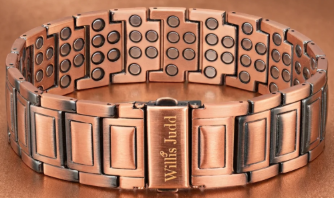

Copper bracelets have been around for years, particularly among people who believe they can ease arthritis and joint discomfort. The Willis Judd Copper Bracelet takes that familiar idea a step further by adding magnets to the design. Its Men’s Copper Magnetic Bracelet TRIPLE Power is advertised as a way to relieve pain, improve circulation and make everyday movement more comfortable. That’s quite a list of benefits for something worn around the wrist, so I looked beyond the sales pitch to see what the bracelet actually offers and whether the health claims have anything substantial behind them. There are some practical features here, but the medical promises are much harder to accept.
Table of Contents
- About the Willis Judd Copper Bracelet
- Design, Magnets and Sizing
- Does Copper Actually Relieve Arthritis Pain?
- Do the Magnets Improve Circulation or Reduce Pain?
- Is It Suitable for Everyday Wear?
- Safety Considerations
- Willis Judd Copper Bracelet Price and Value
- Returns and Customer Support
- Final Verdict
About the Willis Judd Copper Bracelet
The Willis Judd Men’s Copper Magnetic Bracelet TRIPLE Power is a wide copper-link bracelet with magnets built into its links. It is sold as jewellery, but the company puts considerable emphasis on its supposed wellness benefits. Its promotional material connects the copper and magnets with relief from arthritis, wrist pain, inflammation and circulation problems. Willis Judd describes itself as a family-owned jewellery brand, although that description comes from the company rather than independent verification. The bracelet is clearly aimed at men who like a substantial metal accessory and are also interested in alternative approaches to managing aches and stiffness. That combination may explain its appeal, but it is important to separate the product’s physical features from the health benefits used to sell it. A copper bracelet can be an accessory without necessarily being an effective treatment for the problems mentioned in its advertising.
Design, Magnets and Sizing
The TRIPLE Power model has a broad design, measuring approximately 21 to 22 mm across in the product descriptions, so it is more noticeable than a slim chain bracelet. The standard version is advertised with three magnets in each link, while Willis Judd also sells a separate upgraded option featuring six magnets per link. These are different configurations, and buyers should check which one they are selecting rather than assuming every version has the same construction. The bracelet comes with a link-adjustment tool that allows the length to be reduced for a closer fit. The UK product listing gives a maximum fit of around 21.5 cm and says longer extensions can be requested. A velvet presentation box is also included. Those are useful details, particularly for anyone buying it as a gift, although the listing does not provide independent documentation confirming the exact copper purity. The company describes the material as pure copper, but that claim should not be confused with an independently verified metal-composition certificate.
Does Copper Actually Relieve Arthritis Pain?
Copper is an essential mineral that the body needs in small amounts, but that doesn’t mean wearing copper jewellery supplies the body with useful amounts of it. This is where the bracelet’s marketing becomes questionable. The idea that copper touching the skin can ease joint pain has been repeated for a long time, but clinical research has not established that wearing a copper bracelet treats arthritis. A 2013 randomised, placebo-controlled study involving 70 people with rheumatoid arthritis compared copper bracelets with magnetic and non-magnetic wrist straps. The researchers found no meaningful improvement in pain, inflammation, physical function or disease activity from wearing the copper bracelets. That doesn’t mean someone cannot enjoy wearing copper jewellery, but it does make the claim that the metal itself can relieve arthritis symptoms difficult to support. If joint pain is the reason for considering this bracelet, the evidence is not particularly encouraging.
Do the Magnets Improve Circulation or Reduce Pain?
The magnets are probably the biggest selling point of the TRIPLE Power design. Willis Judd promotes them as a way to support circulation and ease discomfort, with the number of magnets helping distinguish the standard and upgraded versions. Neodymium magnets can produce a strong magnetic field, but strength alone doesn’t establish a medical benefit. Research into static magnets worn on the body has not shown reliable pain-relieving effects. The National Center for Complementary and Integrative Health also notes that evidence for static magnets as a pain treatment is limited and inconclusive. It is worth understanding that these are permanent magnets built into jewellery, not powered medical devices that deliver a changing electromagnetic treatment. The distinction matters because evidence relating to one type of technology cannot automatically be applied to another. I wouldn’t pay extra for the six-magnet version on the assumption that more magnets will produce better pain relief. There is no convincing clinical evidence to support that expectation.
Is It Suitable for Everyday Wear?
As a piece of jewellery, the bracelet has a fairly bold appearance. Its wide copper links are likely to suit someone who prefers noticeable wrist accessories rather than something understated. The adjustable links are another practical advantage because a bracelet that is too loose can slide around, while one that is too tight can become uncomfortable. Copper also changes appearance over time as it reacts with air, moisture and substances on the skin. Some wearers may like the darker, aged finish, while others may prefer to keep the metal looking brighter. Copper can also leave greenish marks on the skin in some circumstances. These marks are generally associated with reactions between copper and sweat or other substances on the skin, rather than proof that the bracelet is drawing toxins out of the body. Anyone with sensitive skin should pay attention to irritation and stop wearing it if a reaction develops. The design may work well as a personal accessory, but comfort and appearance will depend on wrist size and individual preference.
Safety Considerations
The bracelet does not involve batteries, charging or medication, but that doesn’t mean its magnets are suitable for everyone. People with pacemakers, implanted cardiac devices or insulin pumps should be particularly cautious because magnets can interfere with certain medical equipment. The company itself warns against using its magnetic jewellery in these circumstances and advises people who are unsure to consult a doctor. Magnetic jewellery should also be removed before an MRI scan. Anyone who has persistent joint pain, swelling or reduced movement should avoid treating the bracelet as a substitute for proper medical assessment. Arthritis and other joint conditions can require specific treatment, and delaying that care in favour of an unproven accessory could make things worse.
Willis Judd Copper Bracelet Price and Value
The UK Willis Judd listing has advertised the Men’s Copper Magnetic Bracelet TRIPLE Power from £56, reduced from £75, with the final price depending on the selected option. That is a £19 advertised saving, although promotional prices can change, so the amount shown at checkout is the one to rely on. The brand also sells a separate six-magnet version, which is priced differently. It is worth checking the exact model, magnet configuration and final price before ordering, especially when comparing offers across different Willis Judd storefronts. The bracelet comes with an adjustment tool and presentation box, which add some practical and gift-related value. However, the price is harder to justify if the main reason for buying it is pain relief. The research does not show that copper or static magnets provide the advertised benefits, and a higher magnet count does not make those claims more convincing. As jewellery, the value comes down to whether you like the design and are comfortable paying that amount for it.
Returns and Customer Support
Willis Judd’s UK returns information states that customers can request a refund or exchange within 60 days of the order date. There are conditions, though. The policy says returned products must be unused and in their original condition, including the retail packaging. That is an important detail for anyone considering the bracelet as a way to test whether magnetic therapy works for them. A policy requiring an item to remain unused does not necessarily allow someone to wear it for several weeks, assess their pain and then return it if nothing changes. Read the current returns terms before placing an order, and keep the original packaging and proof of purchase. The company provides contact options for customer enquiries, but I have not independently tested its response times or refund handling, so I wouldn’t make assumptions about how smoothly a return will go.
Final Verdict
The Willis Judd Copper Bracelet has some appealing features as a piece of jewellery. It has a broad copper-link design, adjustable sizing, an included link-removal tool and a presentation box. Someone who likes the look of copper bracelets may find it worth considering for those reasons alone. The problem is the health claims. There is no convincing clinical evidence that wearing copper or static magnets around the wrist will relieve arthritis pain, improve circulation or restore joint mobility. The available research does not support paying for this bracelet as a treatment, and the extra magnets do not change that conclusion. My view is that the Willis Judd Copper Bracelet is better regarded as a fashion accessory than a wellness product. If you’re buying it because you like the design, that is one thing. If you’re hoping it will make painful joints feel better, I would save the money for treatments with stronger evidence behind them.
Read also >>> The Merman Sea Salt Spray & Curling Sea Clay Review: Does It Really Make Straight Hair Curly?


[…] Read Also >>> Willis Judd Copper Bracelet Review: Can It Really Help With Joint Pain? […]