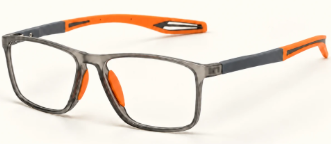

VisionSync Multifocal Glasses promise something that sounds almost too convenient: one pair of glasses that automatically adjusts to your vision, whether you’re reading a book, scrolling through your phone, working on a computer, or looking at something in the distance. No prescription, no expensive optometrist visit, and supposedly no need to keep switching between different pairs of glasses. The advertisements make it sound like a breakthrough in eyewear technology. But there’s a question the marketing doesn’t adequately answer: how exactly do these lenses adjust themselves? I looked into VisionSync’s claims, examined its product specifications, and checked the details behind its sales page. What I found raises concerns about the actual lens technology, the company’s business information, and whether customers are getting the advanced multifocal glasses they’re being promised.
What Are VisionSync Multifocal Glasses?
VisionSync Multifocal Glasses are non-prescription eyewear marketed as an all-in-one solution for people who struggle with seeing clearly at different distances. The website presents them as progressive multifocal reading glasses that can help with close-up reading, computer use, and distance vision without requiring customers to switch between pairs. It also advertises lightweight construction, flexible frames, and blue light protection. According to the product page, the lenses are made from acrylic materials and the glasses weigh approximately 16.7 grams. The website further claims that the glasses can provide 20/20 clarity wherever you go. These promises sound impressive, especially for people who want a convenient alternative to prescription eyewear. However, the product page doesn’t provide enough technical information to establish that the glasses can deliver everything being advertised.
Table of Contents
- What Are VisionSync Multifocal Glasses?
- The Automatic Focus Technology Claim
- An Independent Test Raises More Questions
- The Product Specifications Contain Unrelated Information
- The Blue Light Protection Claims
- The Company Behind VisionSync Is Not Clearly Identified
- VisionSync’s Website and Sales Tactics
- VisionSync Pricing and Refund Policy
- VisionSync vs. Real Progressive Glasses
- A Pattern I Keep Seeing
- What To Do If You Ordered VisionSync Glasses
- Frequently Asked Questions
- The Bottom Line
The Automatic Focus Technology Claim
This is where I became particularly interested in how VisionSync is marketed. The website repeatedly describes the glasses as intelligent and says the lenses automatically adjust when you look at objects at different distances. Its FAQ claims that each lens has a diopter range of +1.0 to +4.0 and that the wearer doesn’t need to make any manual adjustments. But how does this work? The website doesn’t explain the optical mechanism responsible for changing the focus, identify a specific adjustable lens technology, or provide independent measurements demonstrating that the lenses change their optical power. There is also a difference between progressive lenses and genuinely adjustable-focus lenses. Traditional progressive lenses contain fixed optical zones that provide different powers at different points across the lens. The wearer moves their line of sight through those zones. That is not the same as a lens automatically changing its strength to match the wearer’s eyes. VisionSync’s description leaves this important distinction unclear.
An Independent Test Raises More Questions
I also found a published first-person review in which someone who purchased VisionSync compared the glasses with their own prescription eyewear using a Snellen eye chart. The reviewer reported reading six lines clearly with their prescription glasses but struggling to make out more than a couple of letters near the top of the chart while wearing VisionSync. They also inspected the glasses and said they couldn’t find any adjustable optical components that would explain the advertised adaptive function. This is an individual account, not a controlled laboratory assessment, so I wouldn’t treat it as definitive proof of how every pair performs. Still, the reported results are concerning because they directly challenge the product’s central selling point. If a pair of glasses is advertised as providing clear vision at different distances, customers should reasonably expect evidence that it can do so. I couldn’t find published optical testing or independent lens measurements confirming VisionSync’s advertised performance.
The Product Specifications Contain Unrelated Information
One of the strangest things I noticed was hidden in the product specifications section. A page selling multifocal glasses suddenly describes four upgraded omnidirectional tyres, a long-lasting battery, suitability for different terrains, and dazzling lights and music. These features obviously have nothing to do with eyewear. They appear to be leftover descriptions from an unrelated product page or sales template that wasn’t properly edited before publication. This doesn’t prove that VisionSync won’t deliver anything, but it does make the website look poorly maintained. For a product that makes claims about correcting vision, I would expect the seller to provide accurate specifications rather than unrelated information that has no connection to the glasses being advertised.
The Blue Light Protection Claims
VisionSync also claims its lenses block up to 100% of blue light and protect the corneas while helping prevent eye dryness and other problems. That’s a substantial claim, but I couldn’t find independent testing showing that these particular glasses achieve the advertised protection level. There is another issue with the way this feature is presented. Blue light filtering is not the same as correcting vision, and it doesn’t establish that a pair of glasses can improve distance or near vision. The American Academy of Ophthalmology says there is no convincing evidence that ordinary blue light from digital screens damages the eyes and does not recommend special blue light glasses for routine computer use. Digital eye discomfort is more commonly associated with prolonged screen use and reduced blinking. So even if VisionSync has a blue light filtering coating, that feature doesn’t prove the glasses can deliver the visual correction promised in its advertisements.
The Company Behind VisionSync Is Not Clearly Identified
I expected the website to provide straightforward information about the company selling the glasses. Instead, its footer links introduce another business name. The Contact Us, Terms and Conditions, and Privacy Policy links direct visitors to Hilipert rather than pages hosted on the VisionSync domain. The linked terms identify Cola Technology International Co., Limited, while the contact page provides Hilipert customer support information. This raises a practical question: which business is actually responsible for the VisionSync order, customer service, and refunds? There may be a commercial relationship between the two websites, but the VisionSync sales page doesn’t clearly explain it. Customers should not have to follow several unrelated links to work out who they are buying from.
VisionSync’s Website and Sales Tactics
The product page uses several familiar promotional techniques. It advertises a 50% discount and warns that the offer may disappear at any moment. It also displays customer testimonials describing how the glasses supposedly improved everyday vision, reduced eye strain, and made it easier to see at different distances. However, the website doesn’t provide enough information to independently verify those testimonials or establish how the advertised results were measured. Another detail worth noticing is that the Buy Now links redirect visitors to a separate promotional domain, globalnewsera.com, rather than completing the purchase directly on visionsyncglasses.com. This isn’t proof of fraud, since legitimate retailers sometimes use third-party checkout and advertising platforms. But combined with the unclear business information, it makes the purchasing process less transparent than I would like.
VisionSync Pricing and Refund Policy
The website promotes a 50% discount but doesn’t clearly establish the final price in the main product information I examined. Visitors are directed through an external ordering link to continue the purchase, so the actual amount, shipping costs, and any additional charges should be checked before paying. VisionSync also advertises a 30-day money-back guarantee. However, the landing page doesn’t clearly explain all the practical conditions customers would need to understand before relying on that promise. I would want to know where returned glasses must be sent, whether opened products qualify, who pays return shipping, and which company processes refunds. Don’t assume that an advertised guarantee automatically means returning the product will be straightforward.
VisionSync vs. Real Progressive Glasses
Progressive lenses are real, established optical technology. They allow people to see at different distances through different areas of the same lens, with a gradual transition between the optical powers rather than the visible dividing line found in traditional bifocals. But there is a significant difference between properly prescribed progressive glasses and generic eyewear advertised as suitable for everyone. The National Eye Institute explains that multifocal prescription lenses can correct both near and distance vision, while ordinary reading glasses are primarily intended for close-up tasks. Prescription lenses are selected according to an individual’s visual needs, including differences between the eyes and other refractive errors. VisionSync doesn’t provide enough information to establish that its ready-made glasses offer equivalent correction. A product shouldn’t be treated as a replacement for an eye examination simply because its marketing uses the word multifocal.
A Pattern I Keep Seeing
I have investigated other viral glasses that promise to make everyday vision correction easier. In my review of Vision Pro Glasses, I looked at another product marketed as intelligent eyewear that could supposedly adjust to different vision needs. I also examined Zoometra Glasses, which use physical adjustment dials to change lens strength. These products are not identical, and their mechanisms should not be confused. But they demonstrate why I pay attention to what the lenses actually do rather than accepting broad advertising terms such as intelligent, adaptive, or multifocal. When a product makes an impressive technical promise, the seller should be able to explain and demonstrate the technology behind it.
What To Do If You Ordered VisionSync Glasses
If you’ve already purchased VisionSync, keep your order confirmation, payment receipt, advertisement screenshots, and a copy of the refund terms. When the glasses arrive, compare the product with the description and check whether the lenses perform as advertised. If the vision remains unclear or the glasses cause discomfort, stop using them and contact an eye-care professional. Don’t rely on generic eyewear for driving or other activities that require accurate distance vision. If the product doesn’t match what was advertised, contact the seller promptly and request a refund within the stated guarantee period. Keep copies of your messages and any return instructions. If the seller refuses to resolve the issue, check whether your payment provider offers a dispute or chargeback process.
Frequently Asked Questions
Do VisionSync glasses really adjust automatically?
The website says they do, but it doesn’t explain the mechanism or provide independent optical measurements confirming that the lenses automatically change their power.
Are VisionSync glasses prescription eyewear?
No. They are marketed as non-prescription glasses. They are not individually manufactured using a customer’s eye examination and prescription.
Can VisionSync glasses replace progressive prescription glasses?
There is insufficient evidence to support that claim. Properly prescribed progressive lenses are designed around an individual’s visual requirements, whereas VisionSync does not provide enough information to establish equivalent correction.
Do VisionSync glasses block 100% of blue light?
That’s what the website advertises, but I couldn’t find independent testing confirming the figure for this product.
Can I use VisionSync glasses for driving?
I wouldn’t recommend relying on them for driving. The seller has not established that the glasses provide the accurate distance correction required for safe driving.
Is VisionSync a scam?
I can’t establish that every order goes undelivered or that the glasses have no use whatsoever. However, the unsupported automatic-adjustment claims, unrelated product specifications, and unclear business information give me legitimate reasons to question the marketing and recommend caution.
The Bottom Line
VisionSync Multifocal Glasses are advertised as an advanced solution to a common problem, but the website doesn’t provide enough evidence to support its most important promises. I couldn’t verify the automatic-focus technology, the advertised 20/20 clarity, or the claim that the glasses can replace different pairs of eyewear. The unrelated specifications and confusing business links make the sales page even harder to trust. The glasses may provide some magnification, but that is a very different proposition from automatically adapting to an individual’s vision. I wouldn’t recommend spending money on VisionSync based on the claims currently available. If you need help seeing clearly at different distances, properly fitted prescription lenses remain the more reliable option.


[…] Read also >>> VisionSync Glasses Exposed: Do These “Self-Adjusting” Lenses Actually Work? […]