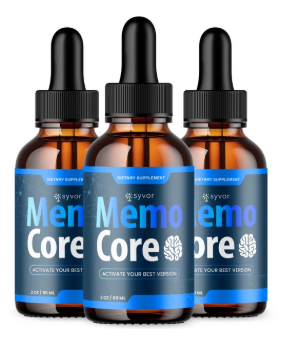

MemoCore is marketed as a brain health supplement that can improve memory, sharpen concentration, reduce brain fog, and protect against age-related cognitive decline. Its website presents a long list of familiar nootropic ingredients, including Ginkgo biloba, Lion’s Mane, Alpha GPC, and CoQ10. It also claims to be manufactured in an FDA-approved facility and promises noticeable improvements in mental performance. But when I examined the product information, I found that the company doesn’t disclose how much of each ingredient is actually included. There are also inconsistencies in its ingredient descriptions and questions about the scientific claims used to promote it. Here’s what I found before considering whether MemoCore is worth buying.
What Is MemoCore?
MemoCore is a dietary supplement marketed for memory, focus, mental clarity, and general cognitive support. The website describes it as a natural formula intended for people experiencing forgetfulness, difficulty concentrating, mental fatigue, or age-related cognitive changes. Although the page promotes it as a liquid supplement and recommends taking 1 ml twice daily, it also uses images labelled as pills. The product is advertised as suitable for adults of different ages, with particular emphasis on people experiencing memory problems. Its marketing also claims that more than 115,000 people between the ages of 35 and 80 have experienced improvements from using it, although I couldn’t independently verify that figure.
Table of Contents
- What Is MemoCore?
- MemoCore Ingredients and Dosage
- What the Research Says About MemoCore’s Ingredients
- There Is No Verified Clinical Trial on MemoCore
- The FDA Approval Claim Is Misleading
- Vinpocetine Raises a Specific Safety Concern
- Does MemoCore Work?
- MemoCore Pricing
- Manufacturer and Company Information
- MemoCore Refund Policy
- A Pattern I Keep Seeing
- What to Do If You Already Ordered MemoCore
- Frequently Asked Questions
- Bottom Line
MemoCore Ingredients and Dosage
The website lists Ginkgo biloba extract, Lion’s Mane powder, Alpha GPC, CoQ10, N-acetyl cysteine (NAC), glutathione, L-carnitine, L-tryptophan, magnesium citrate, vinpocetine, GABA, raspberry ketones, and lemon extract. Selenium also appears in the FAQ ingredient list, although it isn’t included in the main ingredient descriptions. These compounds have different proposed functions, ranging from antioxidant activity to neurotransmitter support and cognitive health. However, the website doesn’t provide the individual quantities of these ingredients or a complete Supplement Facts panel that would allow customers to assess the formula properly. Knowing that a supplement contains Alpha GPC or Lion’s Mane isn’t enough to establish whether it provides an amount comparable to those used in research. The recommended serving is 1 ml twice daily, but the company doesn’t explain how much of each active ingredient that serving delivers. There is also no clear explanation of the extract strengths or standardization used for the botanical ingredients.
What the Research Says About MemoCore’s Ingredients
Some MemoCore ingredients have been investigated for possible cognitive benefits, but the findings are not as conclusive as the website’s marketing suggests. Ginkgo biloba, for example, has been studied extensively for memory and cognitive decline. However, the National Center for Complementary and Integrative Health says there is no conclusive evidence that it prevents or slows dementia, and its effects on cognitive performance in healthy people remain uncertain. Lion’s Mane has attracted research interest because of compounds associated with nerve growth and neuroprotection, but human trials remain relatively small and have produced mixed results. Alpha GPC is involved in choline metabolism and acetylcholine production, but research suggesting possible cognitive benefits in certain clinical populations doesn’t establish that it improves memory in healthy adults or prevents Alzheimer’s disease. These findings are about individual ingredients, not MemoCore itself. Without knowing the amounts and forms used in the product, it is difficult to determine whether the research is relevant to its actual formula.
There Is No Verified Clinical Trial on MemoCore
I couldn’t locate a published, peer-reviewed human clinical trial testing MemoCore as a finished supplement. The website refers to clinically studied ingredients and scientific formulation, but it doesn’t provide a product-specific clinical study demonstrating that the complete formula improves memory, concentration, or mental clarity. This is a significant distinction. A study involving a particular Ginkgo extract or a measured quantity of Alpha GPC cannot be used as proof that a mixture containing undisclosed amounts of those ingredients produces the same results. I would expect a supplement making broad cognitive performance claims to provide evidence on its actual formulation, rather than relying primarily on research conducted on individual compounds.
The FDA Approval Claim Is Misleading
MemoCore’s website repeatedly uses phrases such as “FDA Approved” and “FDA Certified Facility” to promote the product’s manufacturing credentials. These descriptions can give customers the impression that the supplement has received regulatory approval, but that isn’t how dietary supplement regulation works in the United States. The FDA does not approve dietary supplements for safety and effectiveness before they are marketed. Facilities that manufacture, process, package, or hold dietary supplements may be required to register with the agency, but registration does not mean the FDA has approved the facility or endorsed the products made there. The company also claims that MemoCore is manufactured in the United States under GMP standards, but I couldn’t independently verify the manufacturer’s identity or the specific facility responsible for production.
Vinpocetine Raises a Specific Safety Concern
One ingredient deserves particular attention: vinpocetine. The website presents it as a compound that increases blood flow to the brain and improves memory and concentration. However, the FDA has issued a safety warning advising pregnant women and women who could become pregnant not to take dietary supplements containing vinpocetine. The agency reviewed evidence associating the compound with adverse reproductive effects, including possible miscarriage and harm to fetal development. The FDA has also questioned whether vinpocetine qualifies as a dietary ingredient under US supplement regulations because it is synthetically produced rather than naturally occurring in the plants from which it is derived. The MemoCore page does not prominently address this specific warning. Ginkgo biloba also deserves caution because it may increase bleeding risk when taken with anticoagulant medications such as warfarin. Since MemoCore doesn’t disclose the amount of either ingredient, customers cannot properly assess their exposure from the website’s information.
Does MemoCore Work?
There isn’t enough evidence to conclude that MemoCore delivers the memory and concentration improvements advertised on its website. Its ingredient list includes compounds that have been investigated for cognitive or neurological effects, but the research is mixed and often limited to specific extracts, doses, or patient populations. The lack of individual ingredient quantities makes it even harder to assess whether the formula resembles the preparations used in those studies. I also found no clinical trial establishing that MemoCore improves memory, reverses cognitive decline, or protects users against dementia. The product may contain ingredients with biological activity, but that is not the same as demonstrating that the finished supplement works as advertised.
MemoCore Pricing
The website displays a promotional price of $49 per bottle, reduced from a stated regular price of $157. It also recommends purchasing six bottles for people seeking longer-term cognitive support. However, the page doesn’t provide a sufficiently clear breakdown of all package options, shipping charges, and final checkout totals in the information I could verify. Customers should check the actual checkout page carefully before paying, particularly if the final amount differs from the advertised price. The website identifies BuyGoods as its payment-processing platform, but that does not independently establish the quality or effectiveness of MemoCore.
Manufacturer and Company Information
MemoCore’s website claims that the supplement is manufactured in the United States, using natural ingredients sourced from local growers and facilities operating under GMP standards. However, I couldn’t establish the legal name of the manufacturer, identify the specific production facility, or independently verify the company’s manufacturing claims. The website also provides little information about the business responsible for the product itself. A payment processor such as BuyGoods may handle transactions, but that doesn’t replace the need for customers to know who manufactures and stands behind the supplement. I would want to see a verifiable business identity, a complete product label, and independent quality-testing documentation before placing much confidence in these claims.
MemoCore Refund Policy
The website advertises a 60-day, 100% money-back guarantee. It says customers who are dissatisfied with the product can request a full refund within 60 days of their original purchase, even if they haven’t experienced the advertised benefits. However, the publicly displayed information doesn’t explain the complete return procedure, including the return address, whether opened bottles must be sent back, or whether customers are responsible for return shipping. I would save a copy of the guarantee and confirm these details with the seller before ordering. A refund promise is useful only when customers can understand and follow the conditions for claiming it.
A Pattern I Keep Seeing
I have investigated several brain supplements that rely heavily on ingredient names and broad cognitive-health claims without providing enough information to establish what customers are actually getting. I encountered a similar evidence problem when examining MemoryOn, where the claims made about memory improvement also went beyond what could be established from the finished product’s available evidence. MemoCore raises the same basic question: how can customers judge a supplement’s potential when its ingredient quantities and product-specific clinical results aren’t available?
What to Do If You Already Ordered MemoCore
If you’ve already purchased MemoCore, keep your order confirmation, payment receipt, and screenshots of the product page showing the advertised ingredients, price, and refund guarantee. When the bottle arrives, examine its physical label and check whether it provides a complete Supplement Facts panel with individual ingredient quantities. If the label differs from the website’s description, contact the seller and request clarification before using it. If you decide to seek a refund, contact customer support within the advertised 60-day period and ask for the return instructions in writing. Anyone who is pregnant, could become pregnant, takes blood-thinning medication, or uses other prescription medicines should discuss the formula with a healthcare professional before taking it.
Frequently Asked Questions
Is MemoCore FDA approved?
No evidence establishes that MemoCore itself has FDA approval. The website’s references to FDA-registered manufacturing facilities should not be confused with FDA approval of the supplement.
How do you take MemoCore?
The website recommends taking 1 ml twice daily. However, it doesn’t provide individual ingredient quantities per serving, making it difficult to assess the formula’s strength.
Does MemoCore contain Lion’s Mane?
Yes. Lion’s Mane powder is included in the website’s ingredient descriptions. However, the company doesn’t disclose its quantity or standardization.
Does MemoCore prevent Alzheimer’s disease?
There is no clinical evidence establishing that MemoCore prevents, treats, or reverses Alzheimer’s disease. It should not be used as a substitute for medical assessment or treatment.
Does MemoCore have side effects?
The company describes the product as safe and natural, but that doesn’t establish that it is free from side effects. Its inclusion of vinpocetine and Ginkgo biloba raises specific safety and interaction concerns.
Is MemoCore worth buying?
I wouldn’t recommend purchasing it based on the available information. The undisclosed ingredient quantities, lack of product-specific clinical evidence, and unverified manufacturing claims make it difficult to assess its value or reliability.
Bottom Line
I wouldn’t recommend MemoCore in its current form. Its website makes broad promises about memory, focus, and long-term brain health, but doesn’t provide the ingredient quantities or finished-product clinical evidence needed to support those claims. The FDA approval language is also misleading, and the presence of vinpocetine deserves a more prominent safety disclosure. I cannot conclude that the supplement is fraudulent based on these findings alone, but I don’t see enough transparency or reliable evidence to justify its marketing claims or the advertised price. I would look for a product with a complete Supplement Facts label, identifiable manufacturer, independent quality testing, and evidence that matches its actual formulation before spending money on it.