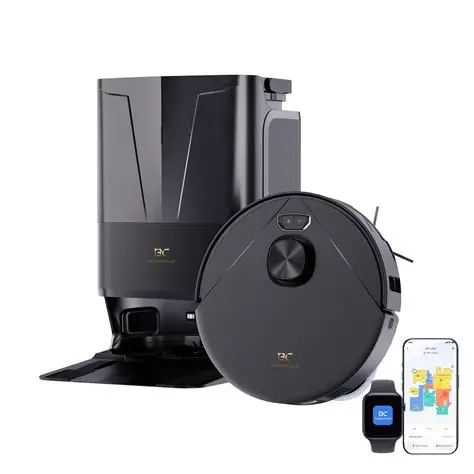

Another robot vacuum promising to “take over cleaning for good” has been making the rounds online, and the Bcdroid A10 Ultra is one of the louder ones in that space. The ads lean heavily into the idea of a fully hands-off home, where floors stay clean without you lifting a finger.
That kind of promise always sounds good in theory.
But once you look at how robot vacuums actually perform inside real homes, things tend to get a bit less perfect than the marketing suggests.
Quick Take
- Marketed as a high-end AI robot vacuum and mop system with advanced automation
- Claims extremely strong suction, smart obstacle avoidance, and self-cleaning dock features
- Feature set is real in concept but very similar to other flagship robot vacuums already on the market
- Real-world performance depends heavily on layout, clutter, and home conditions
- Overall impression: strong maintenance tool, not a full replacement for manual cleaning
Table of Contents
- Quick Take
- What It Is Supposed to Do
- The Marketing Feels Bigger Than the Experience
- Where It Actually Fits Well
- What It’s Actually Like to Use It
- A Pattern I Keep Seeing
- Is the Bcdroid A10 Ultra Legit?
- Conclusion
What It Is Supposed to Do
The Bcdroid A10 Ultra is positioned as a premium robot vacuum and mop combo designed to handle most floor cleaning tasks with minimal input.
The marketing highlights strong suction power, AI navigation, smart mapping, automatic mop washing, dust collection, and self-maintaining dock systems. The idea is simple: set it up once and let it quietly manage your floors in the background.
This isn’t a new direction anymore. Most high-end robot vacuums are now trying to reach this same “almost fully automated cleaning system” level.
The real question is how close they actually get when placed in a normal household.
The Marketing Feels Bigger Than the Experience
The advertising paints a very controlled picture. Clean floors. Empty rooms. Perfect navigation paths. No clutter. No cables. No surprises. It’s smooth, predictable, and almost too easy. Real homes don’t work like that. There are always small things on the floor, furniture in awkward places, rugs that shift, and random obstacles that change how a robot moves through a space. That’s usually where expectations start to shift. Because what looks effortless in ads often becomes something that still needs occasional adjustment in real use.
Where It Actually Fits Well
To be fair, robot vacuums like this do have real value when used in the right way.
They work best for:
- keeping already-clean floors maintained
- handling dust and light daily debris
- reducing how often you need full manual vacuuming
- managing pet hair in structured spaces
In those situations, they can genuinely take some pressure off your cleaning routine. The issue starts when people expect deep cleaning or complete independence from maintenance. That’s still not what this category consistently delivers.
What It’s Actually Like to Use It
This is where things become more grounded. Robot vacuums have improved a lot in navigation, mapping, and obstacle detection. The Bcdroid A10 Ultra sits in that modern generation where automation is genuinely impressive compared to older models.
But even with all that, real usage still comes with limitations.
You still see situations like:
- missed spots depending on room layout
- occasional confusion around furniture or clutter
- inconsistent edge cleaning
- different behavior depending on lighting or obstacles
- the need for occasional remapping or adjustment
It’s not that it stops working. It’s that it doesn’t always behave like a fully predictable system. And that’s an important difference, because the marketing tends to present it as if those inconsistencies don’t exist.
A Pattern I Keep Seeing
The Bcdroid A10 Ultra fits into a wider pattern that shows up across a lot of modern smart home products. It starts with a real frustration people already have: cleaning floors, scrubbing surfaces, managing daily chores. Then the product is framed as the thing that finally removes that effort completely.
I’ve seen the same structure in products like PurePod Produce Cleaner and MyMyde Herbal Diffuser. Different category, same promise.
Fast results. Minimal effort. Near-instant transformation.
And while these products can improve convenience, the marketing usually pushes them a step beyond what they realistically do day to day.
Is the Bcdroid A10 Ultra Legit?
There’s nothing that suggests the Bcdroid A10 Ultra is a fake product. It clearly sits within the modern robot vacuum category and follows the same feature direction as other premium systems.
The real issue is expectation. Because once a product is framed as a full replacement for floor cleaning, it sets a standard that even good robot vacuums struggle to consistently meet.
In reality, this feels more like a high-end maintenance tool than a fully autonomous cleaning solution.
Conclusion
The Bcdroid A10 Ultra is part of the new wave of robot vacuums that are genuinely impressive compared to older generations. It brings together strong automation features, improved navigation, and self-maintenance systems that can reduce daily cleaning effort in a noticeable way.
But once you strip away the marketing language, it still operates within real-world limits that haven’t fully disappeared yet. It helps. It automates. It reduces workload. But it doesn’t fully replace hands-on cleaning the way the ads tend to suggest.
At its core, this feels less like a fully independent cleaning machine and more like a very capable helper that works best when you understand its limits.
Also Read my honest review on Ventix Vacuum