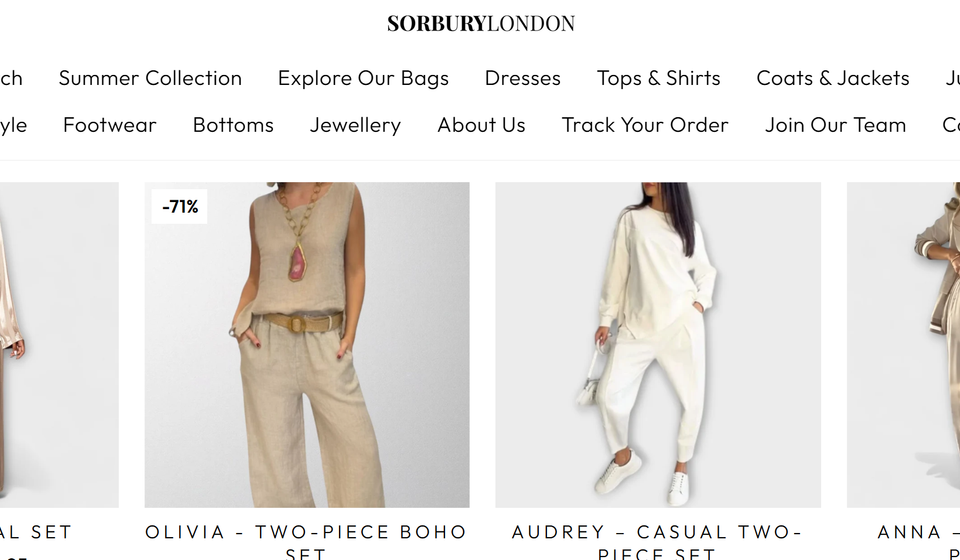

“Margaret” signs off the Sorbury London homepage with a heart emoji, thanking you for being “part of the Sorbury London family” during their biggest sale of the year. Up to 80 percent off. Stock running low. Styles that “will not be restocked.” It’s a nice touch, the founder’s letter. Most of the stores in this series don’t bother writing one. Most of them also don’t list an actual street address and a Dutch business registration number, which Sorbury London does. That combination made this one worth a closer look than usual, and it turned into the most interesting investigation of this whole series so far, because the trail didn’t stop at Sorbury London. It led somewhere else entirely.
Quick takeaway
- Verdict: Likely scam, and it may not even be operating under one name
- Sells: Women’s clothing, marketed as a British boutique
- Domain: Registered June 2026, expires June 2027, a few months old at most
- Address on file: Veldhoven, the Netherlands. Not London
- KVK (Dutch Chamber of Commerce) number listed: 99788497, couldn’t confirm it’s actually tied to this business
- Support: One email inbox
- The find: Real Trustpilot reviewers for a different store, Marbury London, say outright that the same operation runs as Sorbury London too, ships from China instead of the UK, and has sold counterfeit designer bags
- Do: Skip it. Already bought something? Get your bank involved now, not later
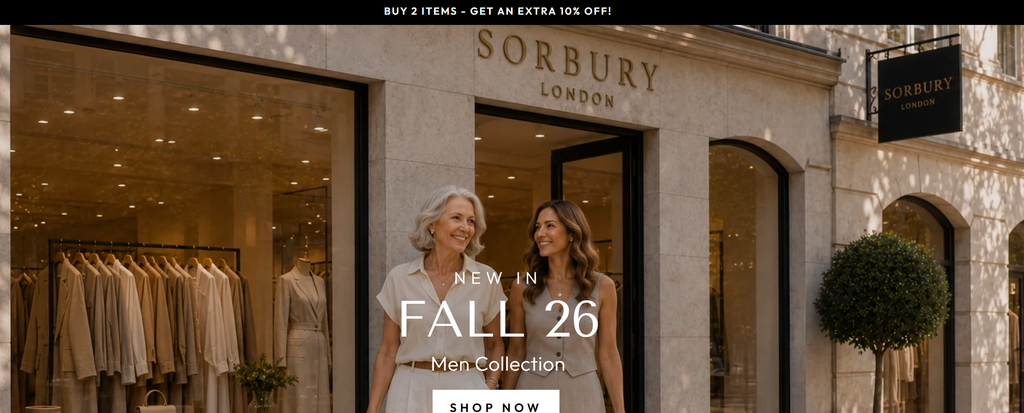
Table of Contents
- Quick takeaway
- What Sorbury London is selling
- Meet Margaret, Sorbury London’s founder nobody can find
- Sorbury London: a boutique with a history, on a domain with none
- The KVK number that almost impressed me
- Then Sorbury London’s search results took a turn
- “Nonexistent customer support” turns out to be an understatement
- The sale is the least original part of this whole store
- The playbook, for next time
- Frequently Asked Questions
- Conclusion
What Sorbury London is selling
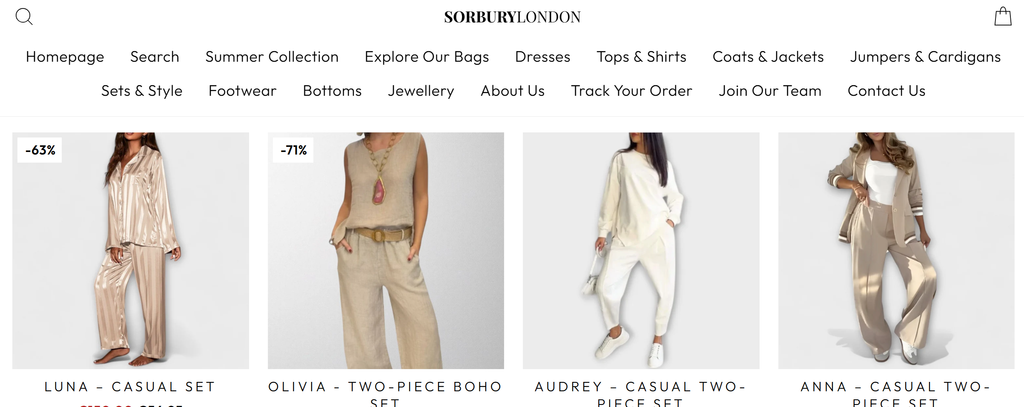
Women’s clothing: blouses, knitwear, and dresses, pitched as “modern classics” that blend “classic British sophistication with contemporary simplicity.” The site doesn’t break the catalog down by category beyond that, and it never names a single fabric, factory, or supplier behind any of it. It’s a general womenswear boutique in the way the copy describes it, and nothing more specific than that.
Meet Margaret, Sorbury London’s founder nobody can find
Start with the story the site is selling. Sorbury London is “founded on one simple belief,” effortless style, timeless elegance, clothes for women who want to feel “confident, graceful, and beautifully yourself.” It’s warm. It’s specific in tone and vague in every fact that would actually matter. No last name for Margaret. No city where the label started. No mention of a single fabric mill, factory, or design studio, just “carefully selected” fabric and “thoughtfully designed” pieces, phrases that fit any clothing brand you can imagine.
Then you get to the contact section, and the story runs into an address: De Run 4210, 5503LL Veldhoven, the Netherlands. Not London. A brand built entirely on “classic British sophistication,” shipping, apparently, from a business park in the south of the Netherlands.
Sorbury London: a boutique with a history, on a domain with none
Here’s a fun contradiction. Sorbury London’s website was registered in June 2026, on a standard one-year term. Margaret’s letter talks about the “Sorbury London family,” the kind of language a brand earns after building a following over time. The domain has been alive for a few months. Whatever family this is, it’s a very new one.
The KVK number that almost impressed me
Most of the stores in this series don’t give you anything to check beyond a WHOIS lookup. Sorbury London hands over a KVK number, 99788497, the Dutch equivalent of a business registration number, required by law to appear on Dutch companies’ websites and invoices. That’s a specific, checkable detail, and for a second it looked like a point in the store’s favor.
I went looking for it. I couldn’t pull up a match confirming that number belongs to a business trading as Sorbury London. That doesn’t prove the number is fake. It just means a business ID sitting on a page is worth exactly as much as you can verify it to be, and right now, that’s not much.
Then Sorbury London’s search results took a turn
I ran the same check I run on every store here: the name, plus “scam,” “reviews,” “complaint.” What came back wasn’t about SorburyLondon.com at all. It was Trustpilot, and it was reviews for a completely different website: Marbury London. Reviewers there brought up Sorbury by name, unprompted.
One review title says it plainly: “Avoid Marbury London / Sorbury London.” The review itself doesn’t hedge either. Cheap clothing, sizing that runs nothing like advertised, made in China, marketed like a London label, and a return process that means shipping the item back yourself, to somewhere that isn’t the UK. A second reviewer on the same page, in a completely separate complaint that never mentions Sorbury at all, makes the identical point about Marbury: all the marketing says London, the actual address is the Netherlands.
Same country. Same complaint. Two different storefronts.
Marbury London’s Trustpilot page isn’t wall-to-wall one-star reviews, to its credit, some buyers got exactly what they ordered and said so. But scroll far enough and a pattern sets in. Handbags sold as designer pieces, Longchamp came up more than once, that turned out to be obvious fakes. Weeks of waiting for packages. Return shipping costs landing on the customer’s card for a country they never expected to be mailing anything to. And sitting right there on the page is a notice from Trustpilot itself: they removed a batch of fake reviews for this company. Not my read of the situation. The platform’s own words.
I can’t hand you a shared business filing proving Sorbury and Marbury are legally the same entity, and I’m not going to pretend I can. What I can tell you is that real people, writing independently, on different days, about different orders, have already drawn that line themselves.
“Nonexistent customer support” turns out to be an understatement
Sorbury’s own contact page is a single email address. No phone number, no live chat, nothing else. On its own that’s just thin. Read against the Marbury complaints, it starts to look like a preview: people paying their own money to ship returns to the Netherlands, waiting weeks for any reply, sometimes only hearing back after complaining publicly. One inbox rarely survives contact with an actual problem.
The sale is the least original part of this whole store
“Our biggest seasonal event of the year.” Up to 80 percent off. “Once these styles sell out, they will not be restocked.” That’s a discount stacked directly on top of a scarcity warning, and it’s built to make you decide fast instead of checking first. Real stores run real clearance sales, that part isn’t automatically suspicious on its own. But set next to a two-month-old domain, a British brand shipping from a Dutch address, and reviews connecting a sister storefront to fake designer handbags, “shop now before it’s gone” stops sounding like a seasonal event and starts sounding like the thing standing between you and finding all of this out for yourself.
The playbook, for next time
These sites are built to be thrown away. A one-year domain registration with zero history is cheap to abandon the moment it stops working, and cheap to relaunch under a new name.
They’re rarely operating solo. This isn’t a hunch here, it’s documented: real customers already tied Sorbury to Marbury by name, in their own words. It’s the same structure behind Azzimani, Macherkraft, Meuisoe, and Achandise, different label, same machine underneath.
The photos don’t always show what actually ships. Marbury’s reviewers describe bags sold as designer pieces that turned out to be counterfeit, dressed up with imagery that implied the real thing.
A good ad closes the deal before you even land on the site. By the time you’re browsing the storefront, Instagram or Facebook already did the convincing.
The discount carries the entire pitch. No legitimate business runs “too good to be true” markdowns across an entire catalog without cutting something, quality, authenticity, or whether the order ships at all.
The countdown clock exists to stop you from doing this exact thing. Scarcity language works by getting you to buy before you check. Check anyway.
Frequently Asked Questions
Is SorburyLondon.com a scam?
Everything checkable points that way, and it doesn’t appear to be operating alone. Real Trustpilot reviewers have already tied it by name to Marbury London, a store with a documented history of shipping from China, selling counterfeit goods, and pushing return costs onto customers.
Is Sorbury London actually a London company?
No. Its own listed address is in Veldhoven, the Netherlands.
How do you know Sorbury and Marbury are connected?
There’s no shared business filing to point to. What exists is independent Trustpilot reviewers naming both brands while describing the same complaint, on different days, in different words, which is real testimony rather than a guess pulled from a content-mill blog.
Does the KVK number mean this is a real, registered business?
It means the format is real and legally required for Dutch companies. It couldn’t be confirmed that this specific number is assigned to this specific business, so treat it as unverified rather than reassuring.
What do I do if I already ordered from Sorbury London?
Contact your bank or card issuer now, save the order confirmation and any messages, and dispute the charge if what arrives doesn’t match what you paid for. Based on how the Marbury complaints read, be ready for a return process that may ask you to ship something out of the country, at your own expense.
Conclusion
Sorbury London has more polish than most stores in this series, a founder’s letter, warm copy, a real address, a business registration number. Dig one layer down and none of it holds up the way it’s supposed to. The domain is a few months old, dressed up as an established boutique. The address undercuts the entire British branding. And customers have already connected it, in public, to another storefront accused of shipping counterfeit handbags from China and making returns as expensive as possible. The extra effort on the front page doesn’t make this one safer. It just means someone spent more time on the story before the story fell apart. Skip it.
