
Ocevara sells plus-size swimsuits with the kind of urgency you’d expect from a store trying to clear out last season’s stock: “LAST DAY SALE,” “50K+ SOLD,” up to 50 percent off storewide. It also has one of the more detailed About Us pages I’ve come across in this series, a whole breakdown of its design team, its website team, and its customer service staff. That level of detail is unusual for a store this size, and it’s part of why this one is worth walking through carefully. Short version: Ocevara.com is a likely scam, and the site’s own pages hand you most of the reasons why.
Quick takeaway
- Verdict: Likely scam
- Sells: Plus-size swimwear, bikinis, tankinis, one-pieces, and cover-ups
- Domain: Registered March 2026, expires March 2027, about six to seven months old
- BBB status: Not listed
- Independent trust score: 12.1 out of 100 from Scam Detector, flagged as untrustworthy
- Address given: An apartment building in Suzhou, Jiangsu Province, China
- Customer support: Claims a 10-person, 24/7 support team, but only offers one email channel
- Discount: Up to 50 percent off storewide, with individual product pages pushing further “last day” markdowns on top
- Bottom line: Skip it, and if you already ordered, get your bank involved sooner rather than later
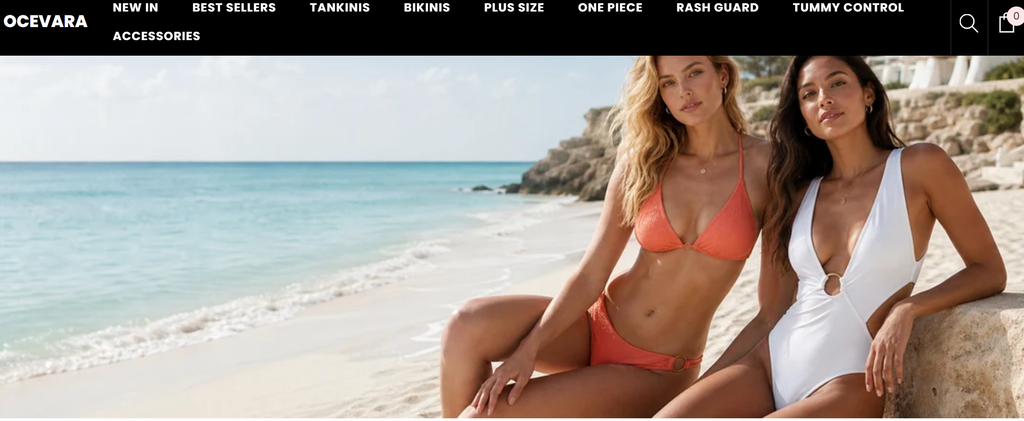
Table of Contents
- Quick takeaway
- What Ocevara.com is selling
- A detailed company story that doesn’t match a young domain
- The listed address raises its own question
- What an independent scanner actually found
- Ocevara’s own product pages have a tell
- Frequently Asked Questions
- How stores like this operate
- Final Verdict
What Ocevara.com is selling
Swimwear, specifically aimed at plus-size shoppers: tankinis, bikini sets, sculpting one-pieces, and cover-ups, priced mostly in the $30 to $45 range before discounts. The pitch on individual product pages leans hard into body confidence, tummy coverage, flattering cuts, the kind of copy that speaks directly to someone who’s struggled to find a swimsuit that fits well. That’s a real, sympathetic need, which is exactly why it works as a hook whether the swimsuit that shows up is decent or not.
A detailed company story that doesn’t match a young domain
Most stores in this series give you a paragraph of vague inspiration and call it an About page. Ocevara goes further: a named company structure, a five-person design team, a five-person website team, and a ten-person customer service team offering “24/7 email support.” That’s oddly specific for a domain that’s only been registered since March 2026. A real company with a 20-person staff usually has more of a public footprint than a Shopify store with a single About page, no LinkedIn presence, no press, nothing beyond what the site says about itself.
The listed address raises its own question
Ocevara gives an actual street address, an apartment in a residential complex called Fuqiang Xinyuan in Suzhou, Jiangsu Province, China. Listing a real address is more than a lot of stores in this series bother with. But it also sits oddly next to the site’s own framing: the About page says the target customer is American women, and the brand markets itself entirely in English, with US-style sizing and dollar pricing. There’s nothing wrong with a business operating internationally. The mismatch is between a residential address and a company claiming a full design, tech, and support staff working out of it.
What an independent scanner actually found
Scam Detector’s automated check puts Ocevara.com at 12.1 out of 100, tagging it as untrustworthy and high risk based on a set of aggregated site and domain signals. That’s not a confirmed fraud report, it’s a risk score, but a number that low from an independent tool lines up with everything else here rather than contradicting it.
Ocevara’s own product pages have a tell
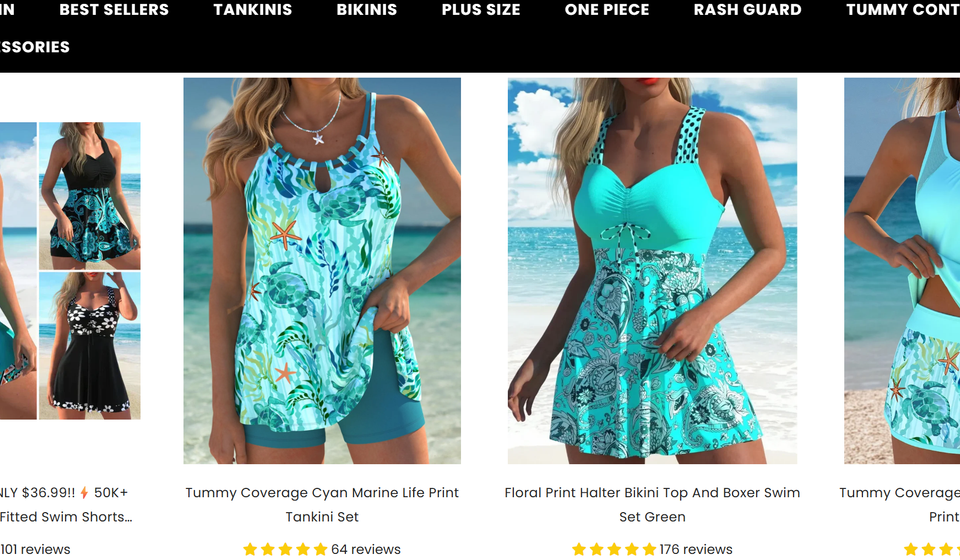
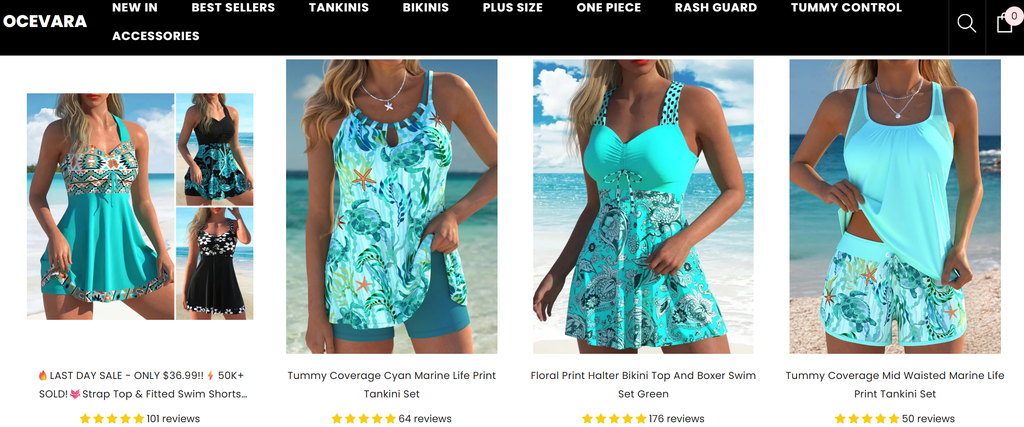
Browsing Ocevara’s actual storefront turns up something worth pointing out directly: product listings with review counts that look inflated for a brand this new, one page showing 175 reviews, another 101, another 64, and at least one product page where the description and the “choose options” section reference a completely different product name than the one in the title. That’s the kind of mismatch that shows up when product listings are copied in bulk from a template or a supplier feed rather than built one at a time, and it undercuts the “50K+ SOLD” and five-figure review counts plastered across the site.
Frequently Asked Questions
Is Ocevara.com a scam? Everything checkable points that way: a young domain with an oversized claimed staff, a residential address behind an “American brand” pitch, a 12.1/100 score from an independent scanner, and product pages with mismatched details that suggest templated listings rather than a real, individually managed catalog.
Does Ocevara.com really have a 20-person team? There’s no way to verify that from outside the site. A company that size usually leaves some trace beyond its own About page, and Ocevara doesn’t appear to have one.
Is the address on Ocevara.com real? It’s a real-looking residential address in Suzhou, China. What’s unverifiable is whether a company with the staff described on the About page is actually operating out of it.
What should I do if I already ordered from Ocevara.com? Contact your bank or card issuer, save your order confirmation and any product screenshots, and dispute the charge if what arrives doesn’t match the listing or never shows up. A credit card gives more leverage than a debit card or bank transfer.
How do I spot a store like this before ordering? Look for a mismatch between how detailed the company story is and how young the domain actually is, check whether product review counts feel realistic for the site’s age, and see if you can verify any of the specific claims, staff size, address, years in business, anywhere outside the store’s own pages.
How stores like this operate
The website itself is disposable. A one-year registration with a detailed but unverifiable company story is easy to walk away from the moment it draws too much attention.
It can link to a broader scam network. Stores like this rarely run alone. The same operators tend to run multiple near-identical storefronts, swapping names and templates, which is the pattern behind Azzimani and SorburyLondon.
Product images are often lifted or AI generated. Combined with review counts and product descriptions that don’t match the listings they’re attached to, it points to a catalog assembled in bulk rather than curated by an actual design team.
Paid social ads manufacture trust. A polished ad on Instagram or Facebook, especially one aimed at a specific audience like plus-size shoppers who’ve struggled to find well-fitting swimwear, builds credibility before anyone lands on the actual site.
Discounts that don’t survive a basic reality check. Prices advertised at extreme markdowns are a common bait tactic. Real businesses cannot consistently offer “too good to be true” discounts across wide product categories without cutting corners, selling counterfeits, or running a straight non-delivery scheme.
Countdown timers and “last day” banners create FOMO. A “LAST DAY SALE” that never actually ends is designed to get you to buy before you check any of the things covered above.
Final Verdict
Ocevara.com reads as a likely scam. The About page oversells a company structure that a six-month-old domain has no independent footprint to back up, the listed address doesn’t match the scale of business being described, an outside scanner puts it at 12.1 out of 100, and the storefront itself has product listings with details that don’t line up. The plus-size swimwear pitch is aimed at a real need, which is exactly what makes it worth being careful here rather than less. I’d skip ordering from this one.