Shiptester.com advertises a $500 gift card for completing a few quick steps. It sounds like one of those easy product-testing opportunities where you answer a few questions and receive a reward for your time. But there’s a catch: the offer doesn’t appear to be a straightforward product-testing programme. The available evidence points instead to a gift-card promotion designed to send visitors into an affiliate marketing funnel.
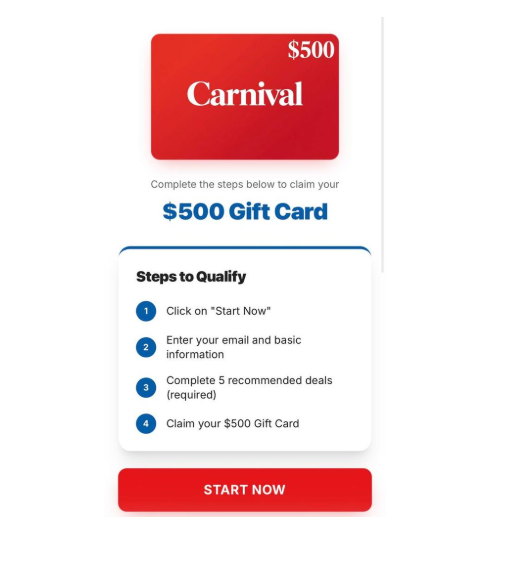
Table of Contents
- A Closer Look at Shiptester.com
- How the Shiptester.com Offer Works
- The Warning Signs I Would Pay Attention To
- What Happens to Your Information?
- What a Genuine Product-Testing Offer Should Look Like
- What to Do If You Already Used Shiptester.com
- Frequently Asked Questions
- The Bottom Line
A Closer Look at Shiptester.com
The $500 gift card is the main attraction
The website’s page title is “Get A $500 Gift Card | Ship Tester”, and its description promises that visitors can qualify by completing a few quick steps. It even says the offer is free to enter, requires no credit card and takes about two minutes. That’s a pretty attractive pitch, especially when the site gives the impression that you’re being invited to test products in exchange for a valuable reward. The problem is that the actual process doesn’t resemble a normal product-testing programme. There is no clear explanation of which products you would be testing, who is running the programme or how the gift card is funded.
The claim button takes visitors somewhere else
This is where things become more interesting. An inspection of the website’s claim button found that it leads to a tracking link on giftclick.org rather than taking visitors to the website of the retailer supposedly providing the gift card. That matters because the retailer’s name and the promised reward are doing the convincing, while the actual destination is an affiliate marketing network. There is no clear indication that the named retailer operates or officially sponsors the promotion.
So, what is Shiptester actually offering?
The available information points to a lead-generation offer rather than a genuine product-testing opportunity. These campaigns attract visitors with a large reward, then direct them towards surveys, sign-up forms and sponsored offers. The operator can earn money when visitors register, subscribe or complete qualifying actions. In other words, the visitor’s participation is what generates revenue, not the testing of products.
How the Shiptester.com Offer Works
The process is worth understanding because the initial gift card advertisement doesn’t tell the whole story.
- You arrive through an advertisement or message. The offer may appear in a social media promotion, email or text message promising a gift card or an opportunity to test products.
- The website presents the reward. Shiptester.com advertises a $500 gift card and makes the process sound quick and simple.
- You click the claim button. Instead of taking you to the retailer, the button redirects through an affiliate tracking link.
- You are introduced to additional offers. These can involve surveys, sponsored registrations, free trials, subscriptions, apps or other promotional activities.
- You may be asked for personal information. Depending on the offers presented, this can include your email address, phone number, name, home address and other details.
- The promised reward remains out of reach. The process can involve completing additional requirements before a visitor is told they qualify. There is no reliable evidence that completing these activities will result in the advertised gift card.
The important thing to understand is that completing a survey or registering for a sponsored offer is not the same as qualifying for a guaranteed reward. Each additional step can create another opportunity for the operator or its marketing partners to earn money from your participation.
The Warning Signs I Would Pay Attention To
A very generous reward for almost no effort
A $500 gift card in exchange for a couple of minutes of your time is an unusually generous offer. Legitimate giveaways do exist, but they normally explain who is sponsoring the promotion, what the eligibility requirements are and how winners are selected. Shiptester.com’s short promotional description doesn’t provide enough information to establish those details.
The retailer isn’t running the promotion
A familiar retailer’s name or logo can make an unfamiliar website look more trustworthy than it really is. But the name appearing in an advertisement doesn’t establish a business relationship. The claim button’s reported redirection to giftclick.org is especially important here because it takes visitors away from the retailer rather than allowing them to claim a reward through an official store channel.
The product-testing angle is unclear
A genuine product-testing programme should explain what participants will test, how products are supplied, what feedback is expected and who is organising the programme. Shiptester.com’s advertised offer focuses on the gift card instead. Without those basic details, it’s difficult to see what the visitor is actually being recruited to do.
The website has very little history
Shiptester.com was registered in November 2026, so it has very little domain history behind it. Its registration details are privacy-protected, which isn’t unusual by itself, but there is also little established independent reputation information available. A newly registered domain isn’t automatically fraudulent, but it gives visitors very little history to rely on when deciding whether to trust an offer.
The website has received a very poor reputation assessment
Gridinsoft classified Shiptester.com as a suspicious shop and gave it a 1/100 trust score in its November 3, 2026 assessment. Its report highlighted the domain’s recent registration, limited independent reputation data and suspicious patterns. Automated reputation scores aren’t proof of fraud on their own, but this assessment adds to the concerns already raised by the gift card offer and its affiliate redirect.
What Happens to Your Information?
This is one of the less obvious problems with these promotions. Visitors may assume that they’re simply answering a few questions to qualify for a reward, but sponsored offer funnels can collect considerably more information along the way. Depending on the forms and offers presented, that information may include contact details, demographic information and shopping preferences. Some promotions also involve sharing information with marketing partners.
That can lead to unwanted promotional emails, text messages and phone calls. It can also expose visitors to additional offers that involve paid trials or subscriptions. If you provide payment details to sign up for one of these offers, you need to pay attention to the cancellation terms. A free trial can become a recurring expense if you forget to cancel before the trial period ends.
What a Genuine Product-Testing Offer Should Look Like
There is nothing wrong with companies asking customers to test products or participate in surveys. The important thing is knowing who is behind the programme and what you’re agreeing to. A legitimate promotion should identify the company organising it, explain the reward conditions and provide clear eligibility rules. If a retailer is supposedly sponsoring the giveaway, you should be able to find the promotion through its official website, app or verified social media accounts.
You should also be able to understand the requirements before handing over personal information. A promotion that keeps sending you through unrelated sponsored offers, paid trials and registrations is a very different proposition from a straightforward product-testing opportunity.
What to Do If You Already Used Shiptester.com
If you’ve already visited the website, what you should do next depends on how far you went. Simply opening the page is different from submitting your personal details or registering for sponsored offers.
- If you only visited the website: Close it and avoid clicking further claim buttons or promotional links.
- If you submitted your email address or phone number: Be prepared for unwanted marketing messages. Watch out for follow-up emails and texts pretending to be about your gift card.
- If you registered for sponsored offers: Check which companies you signed up with and review their cancellation requirements.
- If you started free trials: Cancel any subscriptions you don’t want and keep confirmation of the cancellation.
- If you provided payment details: Check your bank or card statements for unfamiliar charges. Contact your payment provider if you notice anything suspicious.
- If you reused a password: Change it anywhere else you used the same password, particularly on important accounts.
Don’t pay anyone who contacts you claiming they can release your missing gift card for a processing fee or delivery charge. That could simply be another attempt to take advantage of the situation.
Frequently Asked Questions
Is Shiptester.com a legitimate product-testing website?
I wouldn’t treat it as a legitimate product-testing opportunity. Its advertised $500 gift card leads into an affiliate marketing route, and the website doesn’t clearly explain a genuine product-testing programme.
Is the $500 gift card real?
There is no reliable evidence that visitors will receive the advertised gift card. The claim button reportedly redirects to an affiliate tracking domain rather than the retailer supposedly providing the reward.
Does Shiptester.com sell products?
The page we examined promotes a gift card rather than a conventional product catalogue. Its name may suggest a product-testing service, but the advertised process is centred on completing promotional offers.
Is Shiptester.com connected to the retailer whose gift card it advertises?
No verified connection has been established. Visitors should check the retailer’s official website or verified social accounts rather than assuming the promotion is genuine.
Can completing the sponsored offers cost money?
Yes. Some sponsored offers may involve paid subscriptions, free trials that later renew, credit applications or other commitments. Read the terms carefully before signing up for anything.
The Bottom Line
Shiptester.com makes a $500 gift card sound like an easy reward for spending a couple of minutes completing a few steps. But the offer becomes much less convincing when you look at where the claim button leads. Instead of taking visitors to the retailer supposedly providing the gift card, it sends them through an affiliate tracking domain.
The lack of a clearly explained product-testing programme, the very recent domain registration and the poor independent reputation assessment all add to the concerns. More importantly, visitors could end up sharing personal information or signing up for sponsored offers without ever receiving the reward that attracted them in the first place.
I would avoid Shiptester.com. Don’t submit personal information, register for its sponsored deals or provide payment details in the hope of unlocking the advertised $500 gift card.
Read also >>> Walmart-9s8.pages.dev Review: Do You Really Get a $750 Walmart Gift Card?