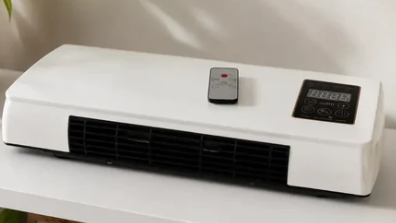

There’s something quite appealing about the Cozy Cove Pro Heater. It’s small, doesn’t take up much space, comes with a remote control, and supposedly warms a room in just five minutes. The seller even claims it can handle spaces as large as 549 square feet while helping you save up to 30% on electricity bills. That’s quite a lot to promise from a heater that costs around $100. I started looking more closely at those claims, particularly the advertised heating capacity, and found a few things worth discussing. For one, the heater is rated at just 400–800 watts, which seems rather modest for the size of room it’s supposed to warm. I also noticed that the same seller has another product called CoolCove with almost identical specifications. So before you get carried away by the advertising, let’s take a closer look at what Cozy Cove Pro actually offers.
Table of Contents
- What Is Cozy Cove Pro?
- Can It Really Heat 549 Square Feet?
- The 800-Watt Question
- The 30% Electricity Savings
- Cozy Cove Pro and the CoolCove Connection
- Who Is Selling It?
- Safety Features
- How Much Does It Cost?
- The 90-Day Money-Back Guarantee
- Better Alternatives
- Final Verdict
What Is Cozy Cove Pro?
Cozy Cove Pro is a compact electric ceramic heater designed to provide extra warmth without taking up much room. It can apparently sit on a tabletop or be mounted on a wall, and the package is advertised as including a remote control, mounting accessories and a user manual. The heater measures approximately 19.3 × 7.9 × 4.5 inches and weighs around 2.7 pounds, so it’s considerably smaller than many traditional space heaters. The general idea is to give people a convenient way to warm up a room without having to install a larger heating system. Nothing particularly unusual there. Small ceramic heaters have been around for years, and they’re useful for providing warmth in smaller spaces. What caught my attention was how much heating power Cozy Cove Pro claims to deliver despite its relatively small size.
Can It Really Heat 549 Square Feet?
According to the sales page, Cozy Cove Pro can heat an area of up to 549 square feet. That’s a fairly large room, and the seller also suggests that the heater can make the space comfortable in approximately five minutes. Now, I’m not saying a small heater can’t make a noticeable difference. If you’re sitting near an 800-watt heater in a small room, you’ll certainly feel some warmth coming from it. But heating the space around the appliance and bringing an entire 549-square-foot room up to a comfortable temperature are two very different things. The listing doesn’t explain the conditions behind that coverage figure, and I couldn’t find an independent test showing the heater doing what the advertising promises. There’s no clear demonstration of the room size, starting temperature or how long it takes to reach a comfortable temperature. Without those details, it’s difficult to know what buyers should realistically expect.
The 800-Watt Question
The power rating makes the large-room claim even more interesting. Cozy Cove Pro is advertised as operating between 400 and 800 watts. For comparison, many familiar portable space heaters have a maximum setting of around 1,500 watts. That doesn’t mean a lower-wattage heater is automatically a bad purchase. In fact, an 800-watt model could be perfectly useful if you only want a little extra warmth in a small room or near your workspace. The problem is that Cozy Cove Pro isn’t being marketed as just a small personal heater. It’s being presented as something capable of warming a much larger area, and that’s where I would like to see some convincing proof. The seller hasn’t really explained how this particular unit manages that level of coverage. If you’re expecting it to replace a conventional room heater, you may end up disappointed.
The 30% Electricity Savings
The promise of saving up to 30% on electricity bills is another selling point that deserves a closer look. The explanation is that you can use Cozy Cove Pro to heat the room you’re actually occupying instead of running a larger heating system throughout the house. That idea isn’t unreasonable. Heating one room instead of several can sometimes reduce overall energy use, depending on the heating system and how the household operates. But the saving doesn’t come automatically just because a heater is small. Cozy Cove Pro still uses electricity to produce heat, and how much it costs to run depends on its wattage, operating time and your electricity rate. I couldn’t find any proper calculation showing where the 30% figure comes from. Is that based on a comparison with central heating, another portable heater or something else entirely? The sales page doesn’t make it clear. I’d be careful about buying it because you expect a particular reduction in your electricity bill.
Cozy Cove Pro and the CoolCove Connection
Here’s something I didn’t expect to find while looking into this product. The company selling Cozy Cove Pro also has a sales page for another appliance called CoolCove. At first glance, they appear to be different products, but their specifications are remarkably similar. Both listings describe appliances measuring almost exactly the same size, weighing around 2.7 pounds and operating between 400 and 800 watts. They also advertise the same 549-square-foot coverage, 113°F heating temperature, remote control and wall-mounted or tabletop design. That’s a lot of similarities to overlook. Are these two different products, or is the same appliance being marketed under two names? I couldn’t find a clear explanation from the seller. It may simply be a case of different branding for the same underlying device, but I’d want to know exactly which model I was ordering. When a product has a fairly ambitious sales pitch, being able to identify the actual appliance and manufacturer shouldn’t be difficult.
Who Is Selling It?
Cozy Cove Pro is sold through Onninest, which provides a customer support email address and phone number. That’s useful, but it doesn’t answer one important question: who actually makes the heater? The sales material focuses heavily on the Cozy Cove Pro name and its advertised features, yet I couldn’t establish a clear manufacturer identity from the information reviewed. This matters more than it might with an ordinary household accessory. We’re talking about an electrical appliance that produces heat, so buyers should be able to identify its manufacturer, model number and warranty arrangements. I’d also like to see proper documentation for its electrical safety certifications. A branded product name and a nice-looking sales page don’t tell us much about the company responsible for manufacturing the appliance.
Safety Features
The seller says Cozy Cove Pro includes overheat protection and automatic shut-off. Other promotional material mentions overload and short-circuit protection, which are all features worth having in a portable heater. However, I couldn’t verify a specific UL, ETL, CSA or equivalent safety certification for this model. That doesn’t establish that the heater is unsafe, but I wouldn’t simply take the safety claims on the sales page as proof that the appliance has been independently tested. Before buying, I’d ask Onninest for the exact model number and documentation showing which safety standards it meets. And regardless of how small a heater looks, it still needs proper clearance from curtains, bedding and other combustible materials. A compact design doesn’t remove the usual precautions that come with using an electric heater.
How Much Does It Cost?
The price listed during the review was $99.99 for one Cozy Cove Pro. The seller also offered two units for $159.98 and three for $179.97, making the bundles look considerably cheaper per heater. I can see why that might be tempting if you’re thinking about warming several rooms. But I’d be reluctant to order multiple units before finding out whether even one can deliver the advertised performance. The sales page also uses discount offers to make the purchase feel like an opportunity worth grabbing. My advice would be to ignore the pressure and look at the actual product first. A discounted heater that doesn’t warm your room properly isn’t much of a bargain.
The 90-Day Money-Back Guarantee
Onninest advertises a 90-day return period, which sounds reassuring until you get into the actual conditions. According to its published return policy, customers need to contact support for a return authorisation number, send the product back unused and in its original packaging, and use the return address provided by customer service. The policy also allows a 10% restocking fee and potentially a reconditioning charge. Refunds may take up to 90 days after the returned item reaches the returns facility and is processed. One thing I’d particularly want clarified is what happens if you actually plug in the heater and discover that it doesn’t perform as advertised. The requirement that the product be unused could make that awkward. Before ordering, I’d ask the company in writing whether a heater that has been tested can still be returned, who pays for return shipping and what fees might be deducted. A 90-day guarantee sounds good, but the conditions are what really matter.
Better Alternatives
If you’re looking for a heater that you can rely on, I’d start by comparing established models from brands such as Lasko, De’Longhi and Dreo. They offer identifiable products with published specifications, and you can compare their heating capacity, safety features and warranty information before spending your money. Depending on the room, a conventional 1,500-watt heater may be a better option if you need substantial warmth. Of course, it will also use more electricity when operating at full power, so it’s important to consider your running costs. If you only need a little warmth around your desk or in a small enclosed space, a lower-wattage heater might be enough. The important thing is to buy according to the size of the space you want to heat, rather than relying on an impressive coverage figure that hasn’t been properly demonstrated.
Final Verdict
I can understand why Cozy Cove Pro might catch someone’s attention. It’s compact, looks convenient and promises to do quite a lot without using as much electricity as a conventional heater. But the more I looked into it, the less comfortable I became with the sales claims. The 549-square-foot coverage sounds ambitious for an 800-watt appliance, and I couldn’t find independent testing showing that it can heat such a large space in five minutes. The nearly identical CoolCove listing also leaves me wondering why the same seller appears to be marketing such similar appliances under different names. Then there’s the lack of verifiable safety certification information and a return policy that isn’t quite as straightforward as the 90-day guarantee makes it sound. I wouldn’t go as far as calling Cozy Cove Pro a proven scam, but I certainly wouldn’t rush to buy it either. At around $100, there are better-documented heaters worth considering, and I’d rather spend my money on one with clearer specifications and a more established track record.
Read also >>> Calminity Frequency Generator Review: My Honest Experience


[…] Read Also >>> Cozy Cove Pro Heater Review: Is This Little Heater Really as Powerful as It Claims? […]