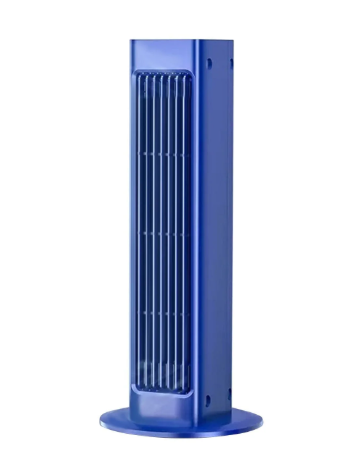

The Qinux BreezaMax is one of those products that shows up everywhere once the algorithm picks it up. You see the ads, and it instantly feels like a game changer. Small device, no installation, “instant cooling,” and this idea that you can turn any room into a comfortable space without AC bills or setup.
The way it’s presented makes it sound like a breakthrough in personal cooling.
But once you strip the marketing down and look at what’s actually inside these kinds of devices, the story becomes a lot more familiar.
Quick Take
- Marketed as a portable cooling device with strong airflow and fast temperature relief
- Real-world function is closer to a compact fan or evaporative cooler
- No compressor or true refrigeration system like an actual air conditioner
- Works best as personal airflow, not room cooling
- Overall impression: usable as a fan-style gadget, but heavily overhyped in advertising
Table of Contents
- Quick Take
- What Is Qinux BreezaMax?
- What It’s Like in Real Use
- The Marketing vs Reality
- What People Tend to Notice After Buying
- A Pattern I Keep Seeing
- Is Qinux BreezaMax Legit?
- Conclusion
- FAQ
What Is Qinux BreezaMax?
The Qinux BreezaMax is promoted as a portable cooling solution designed to make hot environments more comfortable without the need for traditional air conditioning.
The marketing usually focuses on ideas like rapid cooling, energy efficiency, quiet operation, and the ability to “cool any room” using advanced airflow technology. In some versions of the ads, it is even positioned in a way that makes it feel like a mini air conditioner replacement. That framing is where most of the confusion starts.
A real air conditioner relies on a compressor system and refrigerant cycle to remove heat from a space. Devices in this category don’t have that kind of system, which already tells you a lot about what they can and cannot realistically do.
What It’s Like in Real Use
In practice, what you’re getting is closer to a personal cooling fan with some added features like water-assisted airflow or bladeless-style design depending on the model version being sold.
It can create a noticeable breeze when used up close, especially in dry or moderately warm environments. Sitting directly in front of it, you’ll feel relief in the same way you would with a strong desk fan. The limitation shows up the moment you expect it to affect an entire room.
Air movement is not the same as temperature control. It doesn’t remove heat from the space. It just circulates air around it. So while it can feel more comfortable locally, the room itself doesn’t actually cool down in any meaningful way.
Humidity also plays a big role. In more humid conditions, evaporative-style cooling (if that’s part of the model) becomes less effective, which makes the “cooling” effect feel even weaker.
The Marketing vs Reality
The advertising tends to lean heavily on dramatic claims, like rapid cooling or transforming hot rooms into comfortable environments quickly. That’s where expectations get inflated. What you don’t usually see in those videos is context. Real room conditions, humidity levels, distance from the device, or the fact that airflow-based cooling only works within a very limited range.
It creates the impression of a full cooling system when the actual function is much simpler.
What People Tend to Notice After Buying
Most feedback patterns around products in this category follow a similar line. People who expected full room cooling usually end up disappointed because the performance doesn’t match the “air conditioner replacement” framing.
People who treat it like a personal fan or desk cooling device tend to find it more acceptable, especially for short-term relief or direct airflow.
There’s also a recurring complaint pattern around pricing versus performance, where similar devices can often be found under different branding at much lower cost.
A Pattern I Keep Seeing
This is the same kind of pattern I’ve seen with other heavily marketed home gadgets like the Dyson HushJet Mini Cool, and similar “portable cooling” devices.
The product usually does something basic well enough. It moves air, it cleans light mess, it performs a single function.
The problem starts when marketing stretches that one simple function into something much bigger. A basic fan becomes “portable air conditioning.” A simple vacuum becomes “fully autonomous cleaning.” A small upgrade gets framed like a lifestyle change.
Is Qinux BreezaMax Legit?
It appears to be a real physical product category rather than something fake or non-functional.
It can move air, provide localized cooling comfort, and work as a personal fan-style device.
The problem is the positioning. When something is marketed in a way that implies full-room cooling or air conditioner-level performance, it sets expectations that the hardware itself isn’t designed to meet.
Conclusion
The Qinux BreezaMax is best understood as a compact personal cooling gadget rather than any kind of air conditioning solution.
It can offer comfort when used up close, especially in hot weather, but it doesn’t change the actual temperature of a room the way the marketing often suggests.
Once you separate the real function from the advertising language, it becomes a much simpler product. Useful in a limited way, but nowhere near the powerful cooling solution it’s often made out to be.
FAQ
Does Qinux BreezaMax actually cool a room?
No, it doesn’t lower room temperature like an air conditioner. It mainly moves air around to create a cooling sensation.
Is it the same as an AC unit?
No. It lacks a compressor and refrigerant system, which are required for real air conditioning.
Does it work as a personal cooler?
Yes, it can feel effective when used directly in front of you.
Is it worth buying?
Only if you expect a personal fan-style cooling device, not a full room cooling system.