
Cloudy headlights are one of those little car problems that can make the whole vehicle look older. Mine had started looking pretty rough, so when I came across QIFOR Automotive Headlight Restoration Kit being advertised as a quick way to bring cloudy and yellowed headlights back, I thought I’d give it a shot. I wasn’t expecting a brand-new headlight, but I was expecting a pretty obvious difference. The ads make the process look almost ridiculously easy. Clean the headlight, apply the product, let it dry, and you’re supposed to end up with a much clearer lens. That wasn’t really what happened for me.
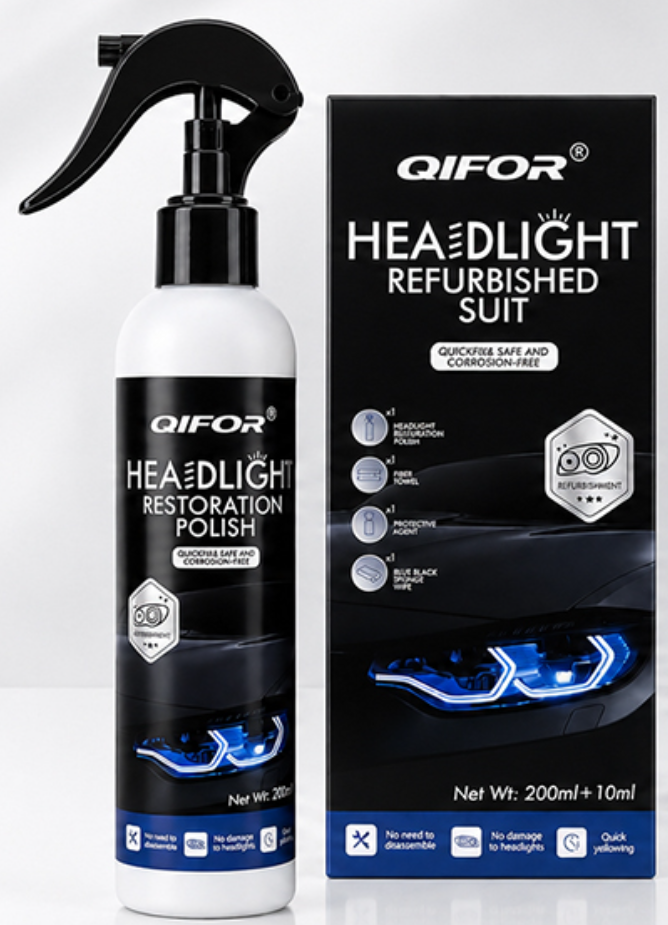
Table of Contents
- What Is QIFOR Automotive Headlight Restoration Kit?
- My Experience Using QIFOR
- The QIFOR Marketing, Ads and Videos
- Looking at Other Independent Reviews
- Pros and Cons
- A Pattern I Keep Seeing With These Products
- Smarter Alternatives
- What To Do If You Ordered QIFOR
- Conclusion
- 15 Tips on How to Shop Safely Online
What Is QIFOR Automotive Headlight Restoration Kit?
QIFOR Automotive Headlight Restoration Kit is a DIY headlight cleaner and coating kit made for headlights that have become cloudy, yellowed or oxidized. The kit comes with a yellowing removal solution, a much smaller bottle of crystal plating solution, a sponge and a towel. QIFOR says the coating provides UV protection and is designed to restore the appearance of the headlight without needing power tools.
So the idea is pretty simple. You clean up the oxidation that’s making the plastic look dull, then apply the coating to finish the job and protect the surface. That’s the part that sounded good to me. I didn’t want to spend hours sanding headlights or pull out a bunch of equipment just to make them look better.
My Experience Using QIFOR
I tried QIFOR because I kept seeing it advertised as a quick way to restore cloudy headlights. I figured if it could make mine noticeably clearer without all the usual sanding and polishing, it was worth trying. The application wasn’t the problem. It was actually pretty straightforward, and I didn’t feel like I needed to be some kind of car detailing expert to use it. The problem came when I stepped back and looked at the headlight. There was a difference, but it wasn’t the dramatic difference I was expecting. The headlight was still cloudy afterward, and I could still see the haze that made me want to restore it in the first place.
So I tried it again. Then again. After three applications, I was still looking at a hazy headlight. That’s when I stopped trying to convince myself that another application was going to suddenly transform it. I can say the product did something. I can’t honestly say it restored the headlight the way I expected it to. I didn’t buy it because I wanted my headlights to look slightly better. I bought it because the whole selling point was restoring the cloudy appearance.
The QIFOR Marketing, Ads and Videos
This is where I think expectations can get a little out of control. The product is presented as a simple solution for oxidized and yellowed headlights, with the promise of restoring the original appearance and leaving behind a protective coating. QIFOR also says the ceramic coating chemically bonds to the headlight and provides UV protection for as long as you own the vehicle. That’s a pretty big promise for something you’re applying at home with a sponge.
The videos and promotional material make the transformation look quick and satisfying. You start with a cloudy headlight and end up with something that looks dramatically clearer. That’s exactly the kind of before-and-after that makes you think, “Okay, I’ll try that.” But my headlight didn’t make that kind of jump. That’s why I think it’s important to separate the idea of the product from the result you’re actually going to get. A quick DIY treatment sounds great, but if your headlights are heavily oxidized or the damage goes deeper than the surface, wiping on a restoration fluid isn’t necessarily going to make them look new.
Looking at Other Independent Reviews
I went looking for other people who had actually used QIFOR because I wanted to see whether my experience was unusual. It wasn’t. There are definitely people who like it. Some users say it made their headlights noticeably clearer and that the process was quick and easy. There are also customers who say it worked, but not perfectly. One recent review described the cleaner as working but complained that the crystal coating was thick and left streaks during application.
Then there are the reviews that sounded much closer to my experience. One verified Walmart customer said the product “worked a little bit.” Another said they used it three times and the headlight still looked cloudy. There’s also a customer who said the headlights were better than before but still weren’t fully clear.
The TikTok Shop reviews are mixed too. There are plenty of people saying they loved the result, but there are also verified buyers saying it only helped a little and didn’t really clear their headlights. So I’m definitely not going to say QIFOR never works. Some people clearly have had a good experience with it. I just wouldn’t buy it expecting every cloudy headlight to come out looking brand new.
Pros and Cons
What I Like
The application is simple. You don’t need a power tool, and you don’t have to spend hours learning some complicated restoration process. I also liked that the kit gives you both the cleaning solution and the coating, so you’re not buying a bunch of separate products just to get started.
What I Don’t Like
The result wasn’t strong enough for me. After three applications, I still had a hazy headlight. That’s a big problem when the entire reason I bought the kit was to get rid of that haze. I also wouldn’t put too much faith in the dramatic before-and-after effect shown in the marketing. Your results can depend heavily on the condition of the headlights to begin with.
A Pattern I Keep Seeing With These Products
I’ve noticed this same thing with a lot of products pushed through short videos and social media ads. The demonstration looks amazing, so you expect the same result when you try it yourself. I’ve seen that pattern with products like Lazzda Fast Degreaser Spray and Nu Finish Car Polish. The marketing creates big expectations, but the real experience can be very different. QIFOR was similar for me. It did make some difference, but after three applications, the headlight was still hazy.
Smarter Alternatives
If you’re dealing with genuinely cloudy headlights and want a more established restoration approach, I’d look at something like the 3M Headlight Lens Restoration System instead of assuming every no-tools kit is going to give you the same result. The 3M system involves more physical restoration work, so it isn’t as quick or effortless as QIFOR. But that’s also the point. Sometimes getting a seriously oxidized headlight clear again requires actual polishing and restoration rather than simply applying a liquid.
If your headlights are only mildly hazy, QIFOR may be enough. If they’re badly yellowed and cloudy, I’d personally spend more time comparing proper restoration kits before buying.
What To Do If You Ordered QIFOR
If you’ve used it and your headlights still look cloudy, don’t keep applying it over and over hoping that the fourth or fifth attempt will suddenly fix everything. Take some clear before-and-after photos and compare the result honestly.
If you aren’t happy, check the return policy of wherever you bought it and contact the seller or marketplace as soon as possible. Keep your order confirmation, packaging and photos until the issue is resolved.
And if you never received the product, don’t let the seller drag the process out indefinitely. Check the tracking information, contact the seller, and use the marketplace’s buyer protection or payment dispute process if the seller doesn’t resolve the problem.
Conclusion
I’m glad I tried QIFOR because now I know what I’d personally look for next time. I wouldn’t buy another bottle just because I saw another impressive before-and-after video. I’ve already done three applications and still had a cloudy headlight. At some point, you have to stop trying to make a product work and admit that it isn’t giving you the result you wanted.
If your headlights are only a little dull, QIFOR might be worth the relatively easy application. But if you’re looking at seriously cloudy headlights and hoping for that dramatic “new headlights” transformation, I’d skip it. I’d rather put that money toward a proper restoration kit and spend a little more time doing the job properly.
15 Tips on How to Shop Safely Online
- Don’t buy something just because the video looks convincing. A good demonstration is still an advertisement.
- Look for reviews outside the seller’s own website. That’s where you’re more likely to see the less flattering experiences.
- Read the one-star and three-star reviews. Five-star reviews tell you what people loved. Lower ratings often tell you where the product falls short.
- Pay attention to repeated complaints. One unhappy customer can be an isolated experience. Ten people complaining about the same problem is different.
- Check exactly what comes in the package. Don’t assume a product includes everything shown in an advertisement.
- Look at the return policy before ordering. It’s much easier to deal with a bad purchase when you already know how returns work.
- Don’t assume a countdown timer means the deal is ending. Some websites use timers that reset or keep running.
- Be careful with huge discounts. A product being “80% off today only” doesn’t automatically mean you’re getting a bargain.
- Check who is actually selling the product. A familiar-looking brand name doesn’t always mean you’re buying directly from the manufacturer.
- Don’t ignore vague product descriptions. If you can’t figure out exactly what you’re buying, that’s a good reason to slow down.
- Search the exact product name before paying. You might find complaints, independent reviews or a much cheaper listing elsewhere.
- Take screenshots of important claims. If the advertisement promises something specific, save it before placing your order.
- Keep your order confirmation and tracking information. Don’t delete them as soon as the package arrives.
- Use payment methods with buyer protection when possible. Having a way to dispute a transaction can make a bad purchase much easier to deal with.
- If your gut says something feels wrong, stop. You don’t have to complete a purchase just because you’ve already spent ten minutes looking at the sales page.
