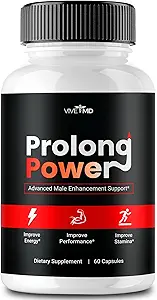
Prolong Power Supplement Review: Does This Male Enhancement Pill Really Work or Is It Hype?

If you’ve been seeing ads about boosting stamina, confidence, and performance naturally, chances are you’ve come across Prolong Power.
It’s being pushed as a simple solution for energy, libido, and endurance. No prescriptions. No complicated routines. Just a daily supplement that supposedly brings everything back.
I’ve seen this type of positioning before, so I decided to dig into it properly.
And honestly, within a few minutes, it started to feel very familiar, especially compared to products like Adora Delight Weight Loss Patch and Slimpic where the marketing does most of the heavy lifting.
Quick verdict
- Real supplement product, but heavily marketing-driven
- Uses “natural testosterone” and performance claims without product-specific clinical proof
- Aggressive urgency tactics and discount framing
- Limited transparency behind the brand
- Expectations set much higher than what the ingredients realistically support
Table of Contents
- Quick verdict
- What Prolong Power Claims To Do
- Domain Age and Transparency
- The Marketing Pattern (This Is Where It Gets Obvious)
- Pricing Tricks and Urgency Tactics
- The “Natural Formula” Positioning
- Ingredient Positioning (Where Expectations Stretch)
- Authority Signals and Trust Layer
- Funnel Structure (Very Clear Once You See It)
- Real Customer Feedback (Outside the Funnel)
- Red Flags That Kept Showing Up
- My Final Take
What Prolong Power Claims To Do
The claims are direct and hard to miss.
Prolong Power is marketed to:
- boost libido and sexual desire
- improve stamina and endurance
- support testosterone levels
- enhance blood flow and performance
- increase overall male vitality
On paper, it sounds like a complete solution. But when you step back, these are very broad claims, and they’re not backed by clinical studies on the product itself.
Domain Age and Transparency
One of the first things I checked was the domain setup. The main domains tied to Prolong Power were created around July 2024, which makes them relatively new.
That alone isn’t a dealbreaker, but here’s what stood out:
- ownership details are hidden
- multiple domain variations are being used
- very little clear company information is available
This is something I’ve seen repeatedly in supplement scam investigations, where the product exists, but the brand behind it stays vague.
It usually points to a marketing-first setup rather than a long-term brand.
The Marketing Pattern (This Is Where It Gets Obvious)
What stood out most wasn’t the supplement. It was how it’s being sold. The messaging follows a very clear structure:
problem → frustration → simple solution → fast results
You’ll notice phrases around:
- confidence issues
- performance concerns
- aging effects
Pricing Tricks and Urgency Tactics
This is one of the biggest giveaways.
You’ll often see:
- a high “regular price” crossed out
- heavy discounts (sometimes over 70% off)
- bundle deals pushed immediately
- countdown timers or “limited stock” messaging
If you refresh the page, the urgency resets. That tells you it’s not real scarcity. It’s a conversion tactic. The goal is simple: get you to buy before you think too much about it.
The “Natural Formula” Positioning
Another thing Prolong Power leans on heavily is the “natural” angle.
You’ll see messaging around:
- herbal ingredients
- no side effects
- safe daily use
This builds trust quickly. But natural doesn’t automatically mean effective, especially when there’s no clear dosage breakdown or product-level testing.
Ingredient Positioning (Where Expectations Stretch)
The formula includes common ingredients like:
- maca
- ginseng
- L-arginine
- saw palmetto
These are widely used in male health supplements.
Individually, they may support:
- circulation
- energy
- libido
But here’s the issue. There’s no solid evidence that this specific combination, in this product, delivers the kind of results being advertised.
That gap between ingredient potential and product claims is doing a lot of the work here.
Authority Signals and Trust Layer
The pages also use credibility cues like:
- “FDA-approved facility”
- “GMP certified”
- “made in USA”
These sound reassuring. But they refer to manufacturing standards, not the product being clinically proven or approved. It’s a subtle distinction, but an important one.
Funnel Structure (Very Clear Once You See It)
When you step back, the structure becomes obvious.
- bold promise (better performance)
- emotional trigger (confidence, masculinity)
- scientific-sounding explanation
- urgency pricing
- multi-bottle upsell
It’s designed to move you quickly from interest to purchase.
Real Customer Feedback (Outside the Funnel)
Once you look beyond the official pages, things become less clear.
- very limited independent reviews
- mixed user experiences
- no consistent, verifiable results
Some users report mild effects. Others report nothing noticeable.
That inconsistency is typical for supplements like this.
Red Flags That Kept Showing Up
A few things repeated throughout my research:
- relatively new domain (07/2024)
- hidden ownership and limited transparency
- aggressive pricing and urgency tactics
- no product-specific clinical trials
- ingredient claims stretched into bigger promises
These are patterns I’ve seen repeatedly across products like Lifesstream Metabolic Daily and Red Boost
My Final Take
After digging into it, Prolong Power feels less like a breakthrough product and more like a well-structured marketing system. The ingredients are standard.
The claims are strong. But the real engine behind it is how it’s being sold.
If you strip away the urgency, the badges, and the storytelling, what’s left is a typical herbal supplement being positioned as something much bigger than the evidence supports.