
Do you deal with tingling, burning, or numbness in your hands and feet, and just came across NervoLyn promising to fix it naturally? Just like you, I saw the ads. A neurologist supposedly traveled to Italy, found a rare plant, and built a supplement around it to help his own wife. No prescriptions, no side effects, just a natural fix for something that makes everyday life harder.
Sounds like exactly what someone dealing with nerve pain would want to find. But after looking into dozens of supplements that use this exact playbook (like our review of Osanix, which used AI-generated doctor endorsements and a similarly emotional pitch), a personal founder story, a natural miracle plant, a promise to fix what medication can’t, I’ve learned that the products with the most emotional backstory are usually the ones I need to check the hardest.
So I did. And what I found isn’t just a case of exaggerated marketing. There’s a fake regulatory claim in here, and something involving Tom Hanks and Dr. Oz that you need to see before you buy anything.
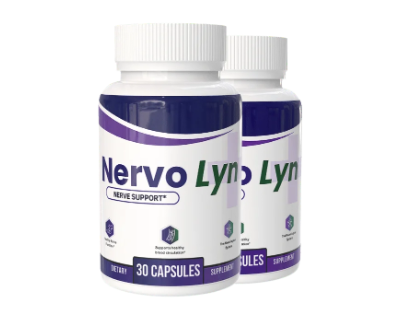
Table of Contents
- What Is NervoLyn?
- Does NervoLyn Actually Have FDA Approval?
- The Founder Story Doesn’t Hold Up
- Wait, Tom Hanks and Dr. Oz Are In On This Too?
- There Are So Many NervoLyn Websites
- Is NervoLyn a Scam, or Just Overhyped?
- NervoLyn FAQ
- Conclusion
What Is NervoLyn?
NervoLyn is marketed as a plant-based capsule supplement for nerve health. Different sellers list different ingredients, but names that show up repeatedly include alpha lipoic acid, magnesium glycinate, coenzyme Q10, turmeric, L-carnitine, and butcher’s broom. Some versions also mention mecobalamin, a form of vitamin B12.
The pitch across every site is basically the same: reduce tingling, numbness, and burning, address “root causes” instead of masking symptoms, and do it without prescription side effects.
Does NervoLyn Actually Have FDA Approval?
No, and one of their own websites is lying about it. One official-looking NervoLyn site states plainly that the product is “backed by FDA approval.” That’s false. Dietary supplements don’t get FDA approval. The agency doesn’t evaluate supplements for safety or effectiveness before they hit the market the way it does with actual medications, and it never has. A different NervoLyn site, selling what’s supposed to be the exact same product, actually states the opposite: not FDA-approved, which happens to be the accurate, standard disclosure every legitimate supplement company uses.
So two sellers of the same product, contradicting each other on a basic regulatory fact. One of them is straight up lying about federal approval to sell something to people managing real nerve damage. That’s not a gray area, and it told me everything I needed to know about how seriously to take the rest of the site.
The Founder Story Doesn’t Hold Up
Remember Dr. James Haleford, the neurologist who traveled to Liguria, Italy, and found a rare flowering plant after watching his wife Elena suffer through neuropathy?
I went looking for him. Not a trace. No medical license record, no professional profile, no mention of him anywhere outside NervoLyn’s own marketing copy. A real neurologist with a story this specific, and this sympathetic, should leave some kind of footprint online. He leaves none.
This is a familiar move in supplement marketing. Build a founder with a personal, painful reason for creating the product, attach a made-up-sounding discovery in a faraway location, and let the emotional weight of the story do the convincing so nobody checks the ingredients too closely. It works because it’s the kind of thing that would be true of a real product too. The difference is a real story survives a Google search.
Wait, Tom Hanks and Dr. Oz Are In On This Too?
NervoLyn advertising has used AI-generated video depicting Tom Hanks and Dr. Oz appearing to personally discuss the product, along with footage using the likeness of Dr. Yoshinori Ohsumi, an actual Nobel Prize-winning cell biologist. None of these three people have any real connection to NervoLyn. There’s no credible evidence any of them endorsed it, participated in it, or know it exists.
Tom Hanks has been dealing with this exact problem for years now. He’s publicly warned fans multiple times that scammers have used AI to fabricate his face and voice promoting “miracle cures and wonder drugs” he has nothing to do with, and he’s said outright that he only follows his own board-certified doctor’s advice for his own health. He didn’t say this about NervoLyn by name. He’s said it about this entire category of ad, the fake-celebrity-doctor-cure genre that NervoLyn’s marketing sits squarely inside.
And Dr. Yoshinori Ohsumi winning a Nobel Prize for research into autophagy is real. Putting his face at the start of a neuropathy ad borrows scientific credibility he never agreed to lend. That’s not a company overselling their product. That’s building the entire pitch around people who never said yes.
There Are So Many NervoLyn Websites
I counted at least six different domains selling NervoLyn, all with slightly different URLs: things like en-en-us-nervolyn.com, en-us–nervolyn.com, eng-nervolyn.com, and nervulyn.com (note the different spelling). Each site has its own version of the pitch, its own ingredient list, and in at least one case, its own false regulatory claim.
This pattern, lots of oddly-named, near-duplicate domains selling the same product, usually means one of two things: either multiple unrelated resellers are all slapping the same brand name on different formulas, or one operation is running several landing pages so that when one gets flagged or banned by an ad platform, the others keep running. Either way, there’s no single “NervoLyn company” you can hold accountable, and no way to know which version of the ingredient list, if any, matches what actually ships to you.
Is NervoLyn a Scam, or Just Overhyped?
After everything I found, I’d call this a scam. Not overhyped, not “your mileage may vary.” A scam. Overhyped is a company implying more than the evidence supports. NervoLyn does that too, “root causes” language for a condition none of these ingredients are established to treat. But that’s the least of it here. The concerns stack up fast:
• A direct, false claim of FDA approval on an official-looking site
• A founder story built around a doctor who leaves no trace anywhere else online
• AI-generated video using Tom Hanks, Dr. Oz, and a Nobel laureate’s likeness, none of whom have any real connection to this product • At least six near-identical domains selling different versions of the same “NervoLyn,” some contradicting each other on basic facts
Any one of these on its own might be sloppy marketing. All of them together, aimed at people in real pain, aren’t a marketing mistake. That’s deliberate.
NervoLyn FAQ
Is NervoLyn FDA approved? No. No dietary supplement is FDA approved in the way medications are. At least one NervoLyn website falsely claims FDA approval, which is a red flag on its own.
Does NervoLyn actually treat neuropathy? There’s no independent clinical evidence that this specific product treats neuropathy or nerve damage. Some individual ingredients, like alpha lipoic acid, have been studied for nerve-related conditions in general, but that’s not the same as evidence this product works.
Is Dr. James Haleford a real doctor? I could not independently verify that a neurologist by this name, or the story attached to him, actually exists.
Did Tom Hanks or Dr. Oz really endorse NervoLyn? No. There’s no credible evidence either of them has any connection to this product. NervoLyn advertising has used AI-generated video depicting both of them, along with a real Nobel Prize-winning scientist, without their involvement or consent.
Why do different NervoLyn websites list different ingredients? Because NervoLyn appears to be sold through multiple unrelated or loosely connected storefronts rather than one consistent company, which means you can’t be sure what’s actually in the bottle that ships to you.
You might also see this listed as: Nervo Lyn, NervoLyn Advanced Formula, Nervolyn nerve support.
Conclusion
The real neurologist in this story doesn’t exist. The real doctor who does exist, the Nobel laureate, never agreed to be in the ad. And the one thing that is real, your nerve pain, deserves an actual doctor’s attention, not a capsule sold under six different website names with a made-up backstory attached to each one.
If a product needs to borrow Tom Hanks’s face to convince you, it’s telling you something about what it can’t convince you of on its own.
Also Read >>> Sandu Herbals Shilajit for Men Review: Does It Really Work?

[…] move before. Give the product an origin story instead of a data sheet, same trick we caught in our NervoLyn review, where a fabricated neurologist’s backstory did the same job a fake village does here. A […]