
NervEase is being promoted as a natural supplement for people dealing with sciatica, neuropathy, tingling, and persistent nerve discomfort. Its advertisements suggest that a combination of herbal ingredients can calm irritated nerves, reduce inflammation, and help people move around more comfortably. I can understand why that would appeal to someone who has been dealing with burning sensations or shooting pain for months, particularly when conventional treatments haven’t provided enough relief.
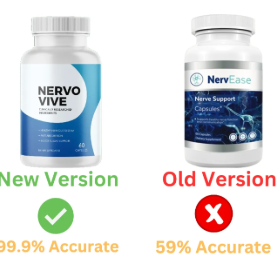
But NervEase has a problem that goes beyond the usual supplement claims. I found several websites selling products under the same name, and they don’t all agree on what’s inside the bottle. Some advertise five herbal ingredients, while others list vitamins and antioxidants instead. There are also conflicting dosage instructions and refund promises. In this research-based NervEase review, I’ll examine those inconsistencies, the evidence behind the ingredients, and what customers have reported before deciding whether the supplement is worth buying.
Quick Takeaway
- Product: NervEase, a dietary supplement advertised for sciatic nerve health and neuropathy support.
- Ingredients: Vary between websites, with some listing five botanicals and others advertising alpha-lipoic acid, B vitamins, and additional compounds.
- Price: Advertised from $39 per bottle on one website to $79 per bottle in certain packages elsewhere.
- Clinical evidence: No verified clinical trial demonstrating that the finished NervEase supplement treats sciatica or neuropathy.
- Customer feedback: Independent complaints include lack of results and difficulties obtaining refunds, although not every review can be tied to the same seller.
- Verdict: I wouldn’t recommend purchasing NervEase without first establishing which formula and company you’re actually dealing with.
Table of Contents
- Quick Takeaway
- Different NervEase Websites Are Advertising Different Formulas
- The Ingredients Don’t Prove It Can Repair Damaged Nerves
- The Dosage Instructions and Refund Promises Don’t Match
- I Found Complaints About Refunds and Poor Results
- The FDA and Laboratory Testing Claims Need Proper Documentation
- I’ve Seen Similar Problems With Other Nerve Supplements
- Is NervEase a Scam? My Verdict
Different NervEase Websites Are Advertising Different Formulas
The ingredient lists were the first major inconsistency I found. NervEaseLab.com and NerveaseOfficial.com describe a five-botanical formula containing passionflower, marshmallow root, corydalis, prickly pear extract, and California poppy. They provide individual quantities, including 145 mg of passionflower and 100 mg of corydalis per two-capsule serving. However, Nervease.net advertises alpha-lipoic acid, turmeric, lutein, benfotiamine, and vitamin B12, with much larger ingredient amounts. Another website, Nerveasee.com, lists acetyl-L-carnitine, magnesium, and capsaicin alongside other nerve-support compounds. These aren’t minor differences in packaging or marketing language. They’re substantially different formulations being presented under the same product name. I couldn’t establish that all these websites belong to one manufacturer or that the products are interchangeable. Until a buyer knows which bottle they’re actually ordering, claims about NervEase’s ingredients become difficult to assess.
The Ingredients Don’t Prove It Can Repair Damaged Nerves
Looking specifically at the five-botanical formula, some of the ingredients have legitimate traditional uses and preliminary scientific research behind them. Passionflower and California poppy have been studied for calming or sedative effects, while corydalis contains alkaloids investigated for their possible influence on pain pathways. Prickly pear contains antioxidant compounds, and marshmallow root is traditionally used for soothing irritated tissues. None of that establishes that this combination repairs damaged peripheral nerves or relieves sciatica in humans. Sciatica commonly involves irritation or compression of a spinal nerve root, which isn’t something a herbal capsule has been shown to correct. The alternative formula advertised on other NervEase websites includes alpha-lipoic acid and B vitamins, ingredients with more direct relevance to certain aspects of nerve health. Even there, the clinical evidence varies by condition, and correcting a vitamin deficiency is different from reversing established neuropathy. I couldn’t find a controlled human study testing any clearly identified NervEase finished formula against a placebo for meaningful improvements in pain, sensation, or mobility.
The Dosage Instructions and Refund Promises Don’t Match
The differences continue beyond the ingredients. NerveaseLab.com describes a serving of two capsules daily, while GetNervease.com advises taking two capsules twice per day. Nervease.org recommends taking the supplement once daily. Those instructions can’t safely be treated as interchangeable when the formulas themselves may differ. The purchasing terms are just as inconsistent. Some sellers advertise a 60-day money-back guarantee, while others offer 90 days. NerveaseLab.com lists a six-bottle package at $294, or $49 per bottle, and a two-bottle package at $158. Meanwhile, Nervease.net promotes a $39 bottle against a much higher reference price. One particularly careless detail appears on Nervease.net, where the refund section refers to ProstaVitalis, an entirely different supplement. That looks like reused sales-page content rather than carefully prepared product information. The issue isn’t simply that different retailers charge different prices. Buyers are being given conflicting instructions and guarantees without a clearly established relationship between the websites.
I Found Complaints About Refunds and Poor Results
The independent feedback I found was considerably less encouraging than the testimonials on promotional websites. A Trustpilot profile for TheNerveEase.shop had a low overall rating, with reviewers describing several problems. One customer said they had taken the supplement for almost three months without improvement. Another reported using it for 90 days without relief from neuropathy and struggling to contact the seller for a refund. A different buyer complained that the refund and contact links weren’t working, while another said they couldn’t return unused bottles because they hadn’t received the necessary order information. There was also a complaint about being charged twice. These are individual allegations, not independently verified findings, and the profile belongs to a particular Nerve Ease seller rather than every website using the name. Still, they provide a useful contrast to the positive testimonials published on sales pages. NervEaseLab.com, for example, advertises a 4.8-star average from more than 2,400 customers, but those seller-hosted ratings don’t establish the reliability of the wider NervEase market.
The FDA and Laboratory Testing Claims Need Proper Documentation
Several NervEase websites emphasize US manufacturing, FDA-registered facilities, cGMP certification, and third-party laboratory testing. NervEaseLab.com says customers can request a Certificate of Analysis, which would be useful if the document identifies the actual product, batch number, tested ingredients, and laboratory. However, I couldn’t independently establish the advertised manufacturing and testing claims across the different sellers. More importantly, an FDA-registered facility doesn’t mean the FDA has approved NervEase as a treatment for nerve pain. Dietary supplements generally aren’t approved by the FDA before being sold, and manufacturing compliance doesn’t establish clinical effectiveness. I also wouldn’t assume that herbal ingredients are harmless simply because they’re described as natural. Some, including corydalis and calming botanicals, may cause adverse effects or interact with medications. Anyone already taking medication for nerve pain, diabetes, sleep, or another medical condition should have the exact ingredient label checked by a qualified healthcare professional before considering a supplement.
I’ve Seen Similar Problems With Other Nerve Supplements
NervEase isn’t the first nerve-support product I’ve investigated with confusing product information. In my Nervelin Capsules review, I found multiple formulations advertised under the same name, making it difficult to know which ingredients buyers would receive. My Nerve Vitali review examined another supplement marketed around neuropathy and nerve discomfort, where the finished product’s effectiveness wasn’t established by strong clinical evidence. These comparisons don’t prove the products share a manufacturer or business operation. They show why I pay close attention to the exact formulation, seller identity, and published research whenever a supplement is promoted for a medical condition.
Is NervEase a Scam? My Verdict
I wouldn’t describe every NervEase product as a confirmed scam because I haven’t established that all the websites are connected or that every seller is fraudulent. However, I wouldn’t recommend buying it. The inconsistent formulations make it difficult to identify what customers are purchasing, and the available clinical evidence doesn’t support treating NervEase as a reliable solution for sciatica or neuropathy. The reported refund difficulties add a separate financial concern. For someone experiencing persistent burning, numbness, tingling, or shooting pain, getting the underlying cause assessed is more useful than committing to several bottles of an uncertain supplement. Some causes of neuropathy, including nutritional deficiencies, require specific treatment, while sciatica may need a different approach altogether. NervEase hasn’t given me enough reason to trust it with either my money or my health.