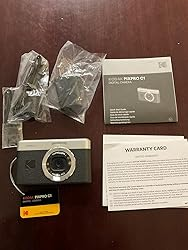

I decided to try the Kodak PIXPRO C1 after seeing it everywhere as part of that “retro digital camera comeback” trend. It looked simple, fun, and different from the usual phone photography experience. But from experience, I know a lot of these trending gadgets lean heavily on aesthetics, so I wanted to see if it actually holds up beyond the hype.
Quick take
The Kodak PIXPRO C1 is fun and easy to use, and it does deliver that nostalgic camera look in good lighting. But once conditions get a bit harder, especially low light or movement, the limitations show quickly. It feels more like a lifestyle camera than a reliable everyday shooter.
Table of Contents
- Quick take
- What Is the Kodak PIXPRO C1?
- Why I Bought It
- My Experience Using Kodak PIXPRO C1
- Build Quality & Feel
- What It Actually Gets Right
- Pros and Cons
- Is Kodak PIXPRO C1 Worth It?
- Alternatives to Consider
- Honest Take
- FAQ
- How to Shop Safely Online (Very Important)
What Is the Kodak PIXPRO C1?
The Kodak PIXPRO C1 is a compact budget digital camera designed for casual photography. It comes with a basic sensor, fixed lens, flip-up screen, and simple controls.
It’s positioned for:
- Casual users
- Beginners
- People chasing a retro digital aesthetic
It’s not trying to compete with modern smartphone cameras or serious photography gear.
Why I Bought It
I love being outdoors and I naturally take pictures of little things that catch my attention, random details, quiet moments, anything interesting in the moment. I wanted a small camera I could carry around and use easily without always reaching for my phone, something that would make those moments feel a bit more intentional.
There was also a bit of curiosity from seeing how popular this type of retro camera has become online. It felt like something that could make photography feel more intentional again.
My Experience Using Kodak PIXPRO C1
The first thing I noticed when I started using it is how simple it is. There’s no learning curve. You turn it on and start shooting immediately.
In bright outdoor light, it actually performs better than I expected in terms of vibe. The photos have that slightly soft, slightly grainy digital look that feels nostalgic. It’s not sharp or polished, but that’s kind of the point of this type of camera.
When I was out taking random shots of street scenes, trees, small details, and everyday moments, it did feel different from using a phone. I wasn’t constantly checking notifications or switching apps. I was just taking photos in the moment, which I actually liked.
But once lighting changes, things shift quickly.
In lower light, the quality drops noticeably. Photos start to look softer, noisier, and less detailed. If there’s movement, you also start noticing shutter delay, which means you can easily miss moments if you’re not careful.
The flip screen is useful for framing shots, especially when taking selfies or angled photos, but the brightness isn’t amazing outdoors, so sometimes it’s hard to see clearly in strong sunlight.
Over time, I realized I had to adjust how I use it:
- Wait for better lighting
- Hold it more steady than my phone
- Retake shots more often
It’s not effortless like a smartphone camera, but that’s also part of the experience.
Build Quality & Feel
The camera is very lightweight, almost surprisingly so. It doesn’t feel fragile, but it definitely doesn’t feel premium either.
It’s clearly made to be simple and affordable. The buttons are basic, and the body is mostly plastic, which matches its price range.
What It Actually Gets Right
The biggest thing this camera does well is how it changes the way you take photos.
Instead of snapping endlessly, you slow down a bit and actually think about moments. When it works well, especially outdoors, it gives a nice nostalgic feel that fits the whole retro trend.

Pros and Cons
Pros:
Simple and easy to use
Lightweight and portable
Good in bright daylight
Retro-style photo look
Makes photography feel more intentional
Cons:
Weak low-light performance
Noticeable shutter delay
No optical zoom or stabilization
Image quality is inconsistent
Often weaker than a smartphone camera
Is Kodak PIXPRO C1 Worth It?
For me, it depends on why you’re buying it.
If you want something:
- Fun
- Simple
- A bit nostalgic
- For casual outdoor moments
Then it can be enjoyable.
But if you’re expecting:
- Sharp, reliable image quality
- Strong low-light performance
- A camera that beats your phone
Then it will feel limited very quickly.
Alternatives to Consider
If you’re mainly after better performance or similar vibe, people usually also look at:
- Canon PowerShot ELPH series
- Sony W800 compact cameras
- Kodak PIXPRO FZ55
- Camp Snap style cameras
These can offer either better reliability or a similar nostalgic feel depending on what you want.
Honest Take
After using it for a while, the Kodak PIXPRO C1 feels less like a “camera upgrade” and more like a lifestyle choice. It’s not about performance or quality. It’s about slowing down a bit and capturing small moments differently. It works best when you treat it that way.
FAQ
Is Kodak PIXPRO C1 better than a smartphone?
In most cases, no. Modern smartphones usually produce sharper and more consistent images.
Does it work well in low light?
Not really. Image quality drops quickly when lighting isn’t good.
Is it good for vlogging?
The flip screen helps, but video quality is basic compared to modern devices.
Is it worth the price?
Only if you value the experience and aesthetic more than performance.
How to Shop Safely Online (Very Important)
After testing products like this, I’ve learned that how you buy matters just as much as what you buy.
First, always be cautious with heavily promoted products online. When something is trending everywhere, it’s often being pushed hard for a reason.
Second, compare prices across different platforms. The same product can sometimes be listed at very different prices depending on where you look.
Third, read real user experiences outside of the official product page. That’s where you’ll get a clearer picture of what to expect.
Fourth, check return policies before buying. If something doesn’t meet expectations, you want the option to return it easily.
Finally, take a moment to compare alternatives. In many cases, you’ll find options that perform better or offer more value for the same price.
Also Read >>> Mini Projector Review: I Tried the Viral “1080P” Projector Everyone’s Buying… Here’s the Truth