
The HiStrips Onyx caught my attention because it promises something surprisingly specific. Not better sleep. Not sleep tracking. Not recovery scores. Just waking up without waking the person beside you.
It’s a simple idea. Wear a wristband, set an alarm, and let the vibration wake you instead of a blaring phone alarm. If you’ve ever shared a room with someone who hits snooze five times every morning, the appeal is obvious. The more I looked into the Onyx, the more I realized the real question wasn’t whether it works. The real question was whether it works well enough for the people it’s targeting, especially the heavy sleepers the company keeps talking about.
Quick Takeaways
- The Onyx is a wearable vibration alarm designed to replace traditional alarms.
- The biggest selling point is waking up without disturbing a partner or roommate.
- Battery life appears to be one of the stronger aspects of the product.
- Reviews are generally positive, but vibration strength is where opinions start to split.
- It looks most useful for couples, shift workers, students, and people who hate noisy alarms.
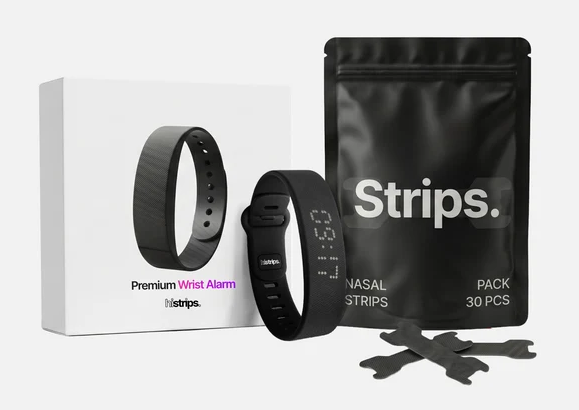
Table of Contents
- Quick Takeaways
- Why So Many People Seem Interested In This Thing
- The Marketing Makes It Sound Like The End Of Alarm Clocks
- The Reviews Started Telling A More Interesting Story
- I Kept Seeing The Same Promise
- The Feature I Ended Up Liking Most Wasn’t The Alarm
- Is The HiStrips Onyx A Scam?
- Is The HiStrips Onyx Worth Buying?
- My Final Thoughts
Why So Many People Seem Interested In This Thing
The pitch is easy to understand because it’s built around a real annoyance. Most alarms are designed to be impossible to ignore. That’s great if you’re worried about oversleeping, but not so great if someone else is trying to stay asleep. The Onyx takes the opposite approach. Instead of filling the room with sound, it vibrates directly on your wrist.
I can see why that idea appeals to couples. A lot of the customer stories revolve around one person needing to wake up early while the other wants to keep sleeping. Students sharing dorm rooms, parents with young children, and shift workers all seem like obvious target customers too.
The Marketing Makes It Sound Like The End Of Alarm Clocks
This is where I started slowing down a little. The HiStrips website doesn’t just present the Onyx as a vibration alarm. It often presents it as a better way to wake up entirely. There are claims about waking more naturally, reducing stress, improving energy, improving recovery, and avoiding the cortisol spike associated with traditional alarms. That’s a lot to put on the shoulders of a wristband.
I think most people looking at the Onyx are probably interested in one thing above all else: “Will it wake me up?” Everything else feels secondary. If it can’t reliably do that, the rest of the benefits become much less important.
The Reviews Started Telling A More Interesting Story
The reviews were actually more balanced than I expected. What stood out wasn’t that people hated the product. Most people seemed to genuinely like the idea. The disagreement was about vibration strength.
Some users described it as strong enough to wake them every morning. Others said it wasn’t powerful enough and felt similar to the vibration from a smartwatch. A few people specifically mentioned being heavy sleepers and still sleeping through it. That’s probably the most useful thing a potential buyer can know.
The product doesn’t appear to be generating complaints because it’s broken. The complaints tend to come from people who expected the vibration to be stronger than it was.
I Kept Seeing The Same Promise
One phrase appeared over and over again during my research. Heavy sleepers. The Onyx is heavily marketed toward people who struggle to wake up with traditional alarms. That’s a huge audience, but it’s also a difficult audience to satisfy because heavy sleepers aren’t all the same. Someone who occasionally hits snooze is very different from someone who sleeps through multiple alarms every morning.
Reading through customer experiences, I got the impression that the Onyx works best for people who already respond reasonably well to alarms but want a quieter, less disruptive way to wake up. The deeper the sleeper, the more unpredictable the results seem to become.
The Feature I Ended Up Liking Most Wasn’t The Alarm
Oddly enough, the feature I found most convincing wasn’t the vibration. It was the simplicity. There are no apps to constantly check. No sleep scores. No endless notifications. No pressure to turn your alarm into another health-tracking device. You wear it, set the alarm, charge it occasionally, and go to sleep. That simplicity feels refreshing when so many products try to become an entire ecosystem.
Is The HiStrips Onyx A Scam?
No, I don’t think so. The product appears to be a real vibration alarm, real customers are receiving it, and many users seem genuinely happy with it. Customer service also receives a surprising amount of praise, which isn’t something I usually see with questionable products. My hesitation isn’t about legitimacy. My hesitation is about expectations. If someone buys it expecting a silent alternative to a traditional alarm, they may be very happy. If someone buys it believing no alarm on earth can wake them except this one, they may end up disappointed.
Is The HiStrips Onyx Worth Buying?
I think the answer depends almost entirely on why you’re interested in it. For couples, roommates, shift workers, and anyone tired of waking the entire house every morning, the Onyx makes a lot of sense. That’s the problem it appears most qualified to solve.
For extremely heavy sleepers, I’d be more cautious. Not because the product is bad, but because the reviews show that vibration strength isn’t a one-size-fits-all experience.
My Final Thoughts
After researching the Onyx, I came away thinking it was probably being sold to two very different audiences. One group wants a quiet alarm. The other wants a miracle solution for oversleeping. The first group is probably much more likely to be satisfied. The Onyx looks like a practical product addressing a genuine problem. I just wouldn’t buy it expecting a tiny wristband to succeed where every other alarm you’ve ever owned has failed. That’s a pretty high bar for any device to clear.
You can also check out my review of All Day Slimming Tea here.
