

Gleamefy.com is the sort of website that can easily catch you through an ad. A product looks useful, the pictures are convincing, the price has supposedly been slashed by 50% or 60%, and there is usually some reason why you need to order now rather than think about it overnight.
I researched the store beyond its homepage, and the problems aren’t limited to its recent domain registration. There are already complaints from buyers saying the products they received were substantially different from what the advertising led them to expect. The site also uses questionable urgency tactics, makes big claims about customer satisfaction, and gives shoppers surprisingly little information about the actual business behind it.
I wouldn’t shop at Gleamefy.com. Here is why.
Quick Takeaways
- Gleamefy.com is not listed with the Better Business Bureau (BBB).
- The domain was created in October 2025 and expires in October 2027.
- Discounts of 50% to 60% or more appear throughout the store.
- The site sells unrelated products ranging from garden decorations and jewelry to children’s toys.
- Its About Us page is generic and doesn’t identify the people behind the business.
- Independent customer reviews include complaints about receiving products that didn’t match the advertising.
- Customer support appears to revolve mainly around support@gleamefy.com.
- Some listings use countdowns, “ending soon” messages, huge customer numbers, and other urgency tactics.
- Product photos have the highly polished or artificial appearance I’ve seen on stores using AI-generated, altered, or repurposed marketing images.
- Independent website reputation services have also flagged Gleamefy.com as high risk.

Table of Contents
- Quick Takeaways
- What Is Gleamefy.com?
- Why I Don’t Trust Gleamefy.com
- The Countdown and FOMO Marketing
- The Customer Reviews on the Site Don’t Reassure Me
- The Business Behind Gleamefy Is Difficult to Pin Down
- Its Refund Policy Isn’t as “Risk-Free” as the Ads Make It Sound
- Is Gleamefy.com a Scam?
- How Stores Like This Operate
- A Pattern I Keep Seeing
- What To Do If You Already Ordered From Gleamefy
- FAQ
- Conclusion
What Is Gleamefy.com?
Gleamefy.com is a general online store rather than a retailer specializing in one particular category. During my research, I found artificial flowers and solar garden lights alongside Montessori toys, jewelry, Christmas products, and other unrelated items.
That makes its About Us page even less helpful. Instead of explaining who owns Gleamefy, where the company operates, or why it sells this particular mix of products, it says the store loves “every passion and interest on Earth” and wants to help shoppers “Express Yourself.”
I’ve encountered versions of this same About Us wording on numerous questionable ecommerce sites. It reads like a ready-made store template rather than the history of an actual business.
Why I Don’t Trust Gleamefy.com
Real Buyers Are Already Complaining
This is more useful to me than simply looking at whether a website has an SSL certificate or a professional homepage. Gleamefy currently has a small number of independent Trustpilot reviews, but they are overwhelmingly negative. One buyer said flowers received were cheaply made and took almost a month to arrive. Another said what arrived was completely different from what the website’s presentation led her to believe. A third customer complained that baskets shown in the promotion weren’t sent and eventually had to involve PayPal to obtain a refund.
A small review sample shouldn’t be treated as proof of what happens with every order, but the nature of these complaints matters. They match one of the biggest concerns I have with this type of store: the advertising creates an expectation that the delivered item may not meet.
The Product Pages Make Some Very Big Claims
I found a Montessori toy listed for $49.97, supposedly reduced from $99.97. The page claims a 4.9/5 rating, more than 4,200 happy customers, hundreds more five-star reviews, over 600 sets sold in a week, and a 60-day money-back guarantee. That’s a lot of social proof for a relatively young website.
The same listing says the product is ASTM F963 certified and uses language such as “100% US Kids-Safe Certified Material.” Claims involving children’s product safety deserve more than a badge and marketing copy. I would want to see enough information to independently connect any certification to the exact product being sold.
The Discounts Don’t Pass My Basic Reality Check
Gleamefy advertises discounts reaching 50%, 60%, and sometimes even higher on individual listings. I found an artificial hydrangea listing being promoted as “Last Day 70% OFF.”
Big sales happen. The problem is when dramatic markdowns become the normal way an unfamiliar store sells practically everything. A $100 product shown for $50 makes the shopper feel they’re saving $50. But unless that product genuinely sold for $100 previously, the original price doesn’t tell you much. Extreme markdowns are a very effective bait tactic because shoppers start thinking about what they’re supposedly saving instead of asking who they’re giving their card details to.
The Countdown and FOMO Marketing
Another pattern is urgency. One product page tells shoppers the flash sale is “ENDING SOON,” claims weekly stock is selling fast, says hundreds were sold that week, and warns that restocking will take two weeks. All of that pushes the same button: buy now or lose the opportunity. A legitimate limited sale can obviously have a deadline. But when countdown timers, last-day sales, stock warnings, and dramatic discounts constantly appear around an unfamiliar store, I don’t treat the timer as evidence that the deal is genuinely disappearing. I treat it as advertising.
The Customer Reviews on the Site Don’t Reassure Me
Gleamefy tells shoppers that its products are loved by customers and some listings display impressive ratings and thousands of supposed buyers. Yet its independent reputation is extremely thin. The Montessori toy page, for example, presents named “verified buyers,” dates, locations, star ratings, and even hundreds of people supposedly finding individual reviews helpful.
For a store with such a limited independent footprint, those enormous numbers deserve skepticism. On-site testimonials are controlled by the seller. They are not equivalent to independently collected customer feedback.
The Business Behind Gleamefy Is Difficult to Pin Down
The website gives shoppers the support@gleamefy.com email address, but its About Us page doesn’t tell me much about the people actually running the operation. During my research, however, I found a Gleamefy jewelry listing containing company details for Singafon Tech Co., Limited, including a Hong Kong address and phone number. That’s odd because this isn’t clearly explained in the site’s main About Us story. If that company operates Gleamefy, why isn’t the relationship made obvious to customers throughout the website? If it doesn’t, why are its details appearing on a Gleamefy product page? That’s exactly the sort of basic business identity question I want answered before entering payment information.
Its Refund Policy Isn’t as “Risk-Free” as the Ads Make It Sound
Gleamefy repeatedly uses reassuring phrases such as “100% Risk-Free Purchase.” The actual return policy deserves reading. Customers generally have 14 days after delivery to request a return. For ordinary customer-initiated returns, the buyer pays return shipping. You also have to contact customer service to obtain the return address, and approved refunds can take another 15 to 20 business days after the returned item is received and inspected. That’s quite different from the effortless impression created by “100% risk-free.” And considering one independent reviewer specifically described having to get PayPal involved in a dispute, I wouldn’t assume getting money back will necessarily be simple.
Is Gleamefy.com a Scam?
I would avoid Gleamefy.com. There isn’t just one concern here. It’s the combination that bothers me: a relatively young website, generic About Us copy, extreme discounts, questionable urgency tactics, huge on-site customer claims, limited business transparency, and independent complaints about products arriving significantly different from their advertising.
Independent security services aren’t particularly reassuring either. Scam Detector currently gives Gleamefy.com 17.2/100 and reports that the domain has appeared on blacklist engines. Gridinsoft has also classified it as a suspicious shop and assigned it a very low trust score. Those automated scores alone wouldn’t make my decision. The buyer complaints and what I found on the store itself are much more important.
How Stores Like This Operate
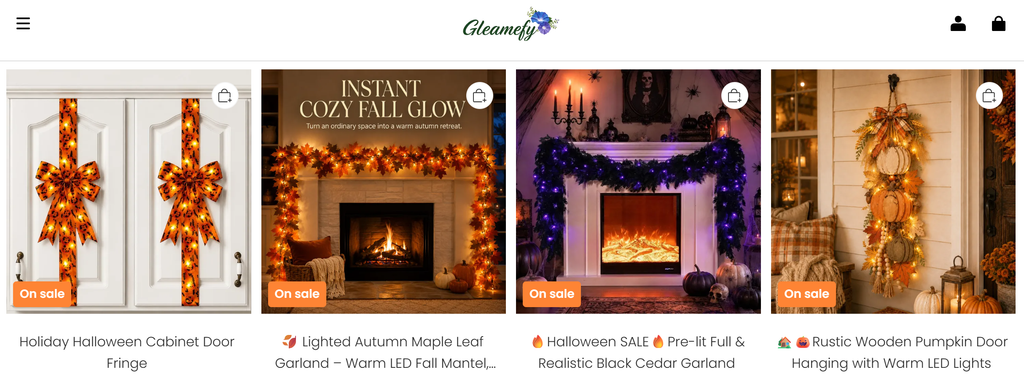
The pattern has become very familiar. A store can be built quickly using generic ecommerce templates. Attractive or AI-enhanced product images are added, products are marked down by 50%, 60%, or 70%, and paid social media ads put those products in front of thousands of potential buyers. Countdown timers, “last day” promotions, low-stock messages, guarantees, and glowing testimonials then manufacture the feeling that the store is both popular and urgent.
The website itself can also be disposable. If a domain develops a bad reputation, the products, advertising material, templates, and sales tactics can potentially reappear elsewhere under another store name. That’s why I pay attention to repeated About Us wording, recycled product photos, shared company details, support patterns, and similar page layouts. They can sometimes point toward a broader network of related ecommerce stores rather than the independent little brand the advertising suggests.
That doesn’t prove every site sharing a template belongs to the same operator. But when several of these signals appear together, I don’t ignore them.
A Pattern I Keep Seeing
Gleamefy.com reminds me of several stores I’ve already investigated, including Hunkerk.com, Pawrare.com, and ZovelyShop.com. The products change, but the formula doesn’t change much: broad catalogs, generic company stories, recently established websites, steep discounts, questionable product imagery, weak business transparency, and email-based customer support. Those previous reviews are useful internal links here because the similarities become much easier to recognize when you see these stores side by side.
What To Do If You Already Ordered From Gleamefy
Don’t panic just because you’ve already paid. Keep screenshots of the product page, advertised photos, price, order confirmation, guarantee, and any promised delivery time.
If something different arrives, photograph the package and product before using it. Contact Gleamefy in writing so there is a record of the conversation. If the seller doesn’t deliver, refuses to resolve a materially misrepresented order, or makes a legitimate refund impossible, contact your card issuer or payment provider and ask about the dispute or chargeback process.
Also monitor the payment method you used for transactions you don’t recognize.
FAQ
Is Gleamefy.com listed on BBB?
No. Gleamefy.com is not currently listed with the Better Business Bureau.
How old is Gleamefy.com?
The domain was registered in October 2025 and is currently registered through October 2027.
Are there real Gleamefy customer reviews?
Yes, I found a small number of independent customer reviews. The ones currently available on Trustpilot are predominantly negative and include complaints about slow delivery, missing items, poor-quality products, and products not matching their advertising.
Does Gleamefy offer refunds?
The website has a return and refund policy, but there are conditions. Customers generally have 14 days after delivery to request a return, and customer-initiated returns may require the buyer to pay return shipping.
Should I buy from Gleamefy.com?
I wouldn’t. There are too many unresolved trust issues, and the existing customer complaints make the risk harder to dismiss.
Conclusion
Gleamefy.com isn’t a store I’d gamble my money on. What pushed me away wasn’t simply the fact that the domain is relatively new. It’s what happens when I put everything together: generic business information, dramatic markdowns, constant urgency, enormous on-site customer claims, unclear company identity, and actual shoppers saying the products they received didn’t resemble what they thought they were buying.
A 60% discount isn’t much of a bargain if the product that turns up isn’t what the advertisement sold you. There are enough established retailers selling the same types of products that I see little reason to take that chance with Gleamefy.