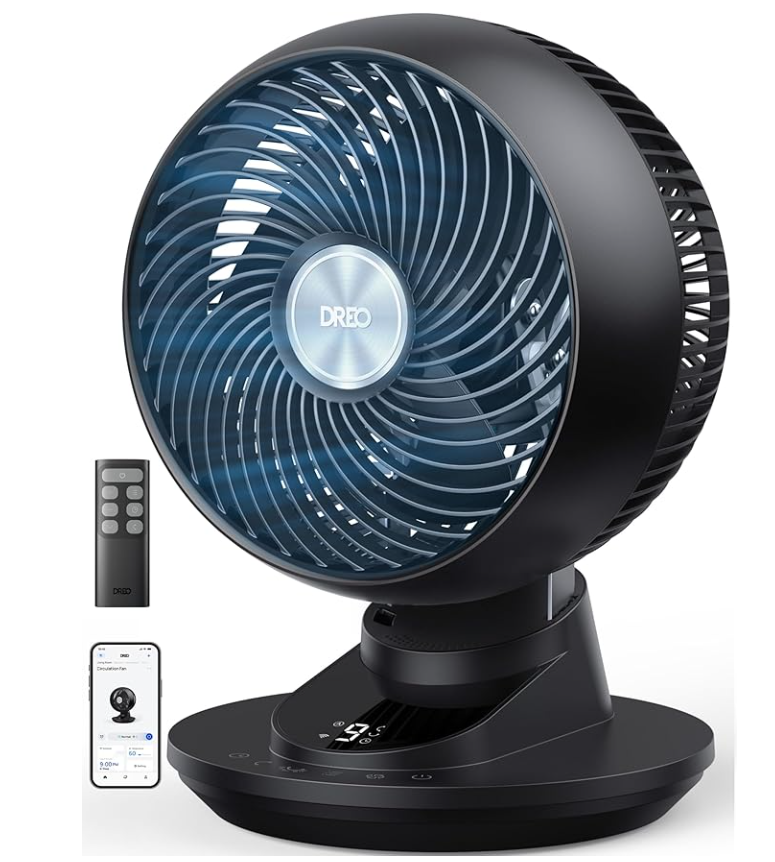

DREO fans have exploded online over the past couple years. TikTok loves them. YouTube reviewers keep calling them “Dyson killers.” Amazon rankings are packed with them. The marketing pushes this image of ultra-quiet, smart-controlled cooling that somehow feels premium without the ridiculous price tag.
And compared to a lot of random viral home gadgets, DREO actually looked more legitimate the deeper I researched it.
Still, a few patterns kept showing up repeatedly once real long-term ownership entered the picture.
Quick Take
- DREO smart fans generally receive strong feedback for airflow, quietness, and design
- The brand heavily markets “premium smart cooling” at a more affordable price than Dyson
- App connectivity and oscillation problems appear repeatedly in user complaints
- Some owners report durability issues after months of use, especially around motor noise and oscillation systems
- Overall impression: far more legitimate than most viral home gadgets, but still not as flawless as the marketing makes it look
Table of Contents
- Quick Take
- What the DREO Smart Fan Is Supposed to Do
- The Quietness Claims Sound Better in Ads Than Real Rooms
- The Smart Features Seem to Be the Most Frustrating Part
- The Long-Term Durability Questions Keep Appearing
- A Pattern I Keep Seeing
- Is the DREO Smart Fan Legit?
- Conclusion
- FAQ
What the DREO Smart Fan Is Supposed to Do
DREO makes several different smart fan models, but the overall pitch stays pretty similar across the lineup:
- quiet operation
- strong airflow
- smart app controls
- voice assistant support
- wide oscillation
- bedroom-friendly cooling
- lower energy usage than AC systems
A lot of the marketing leans heavily into comparisons with premium brands like Dyson while positioning DREO as the “smarter budget alternative.” And to be fair, many people genuinely seem impressed by the airflow performance and feature set for the price. Multiple reviews consistently praise the fans for strong circulation, quiet operation, and easy controls.
The products themselves clearly exist and function. The bigger conversation starts once people live with them for a while.
The Quietness Claims Sound Better in Ads Than Real Rooms
One thing I noticed quickly is that DREO pushes the “ultra quiet” angle very aggressively. You constantly see:
- whisper-quiet marketing
- sleep-friendly positioning
- near-silent airflow claims
- decibel numbers highlighted everywhere
And at lower speeds, many owners agree the fans are genuinely quiet. But once higher fan speeds or oscillation enter the picture, the experience becomes much more mixed.
Some users describe:
- clicking noises
- rattling during oscillation
- buzzing sounds
- motor hums developing over time
- grinding after months of use
That doesn’t make the fans terrible. It just makes the “almost silent under all conditions” marketing feel overstretched. Because real rooms are quiet at night. And small mechanical noises become much more noticeable when a product is marketed specifically for bedroom sleep use.
The Smart Features Seem to Be the Most Frustrating Part
This was probably the biggest recurring complaint pattern overall. The fans themselves usually get positive comments for airflow and cooling performance. The software side is where frustration starts building.
A lot of users mention:
- WiFi pairing problems
- app disconnections
- firmware update issues
- voice assistant failures
- smart features randomly stopping
And honestly, this feels very similar to what happens with a lot of modern smart-home products. The hardware is often decent.
The app ecosystem becomes the unstable part.
Some owners even mention they stopped using the smart features entirely and just treated the fan like a normal appliance because it became less frustrating that way. That says a lot.
The Long-Term Durability Questions Keep Appearing
This was another thing that stood out once I started reading deeper into long-term user experiences.
The early impressions are usually positive:
- strong airflow
- sleek appearance
- quiet cooling
- easy setup
But longer ownership discussions start introducing more concerns:
- oscillation motors wearing down
- fans developing clicking sounds
- units failing after several months
- internal cable wear from repeated movement
One Reddit user even described the oscillation cable design gradually damaging itself over time during normal use.
That kind of complaint matters more to me than first-week impressions because fans are products people expect to use for years, not months.
A Pattern I Keep Seeing
The DREO Smart Fan reminded me a little of what I noticed with the DELLA Mini Split AC and the WORX Landroid Vision 4WD WR344.
Different category. Same broader trend. Take an ordinary household product:
- fan
- AC system
- lawn mower
Then combine:
- smart-home branding
- app controls
- AI buzzwords
- premium-looking design
- “next generation” marketing
The actual products can still be good. But the marketing often starts selling a futuristic lifestyle experience more than the appliance itself. That’s where expectations start drifting higher than reality.
Is the DREO Smart Fan Legit?
Yes. Much more legitimate than most viral home gadgets floating around social media right now. DREO fans generally appear to perform well in airflow, cooling efficiency, and feature value for the price. Many reviews are genuinely positive.
The concerns are more about:
- long-term durability
- software consistency
- oscillation reliability
- whether the “premium smart experience” fully holds up over time
My overall impression is that DREO makes solid modern fans that sometimes get marketed closer to perfection than real ownership fully supports.
Conclusion
The DREO Smart Fan feels like one of the better examples of modern smart-home appliances done mostly right. The airflow performance, quiet cooling at lower speeds, and overall feature set genuinely seem to impress a lot of buyers.But the longer-term complaints around oscillation noise, app instability, and durability keep appearing often enough that they’re hard to ignore completely.
The biggest disconnect here isn’t whether the fans work. It’s the difference between “good modern smart fan” and the almost flawless premium cooling experience the marketing keeps trying to sell.
FAQ
Are DREO smart fans actually good?
Overall, many buyers seem satisfied with airflow performance, quiet cooling, and features for the price. The products themselves appear legitimate and functional.
What are the most common complaints?
The biggest complaints involve app connectivity, oscillation noises, firmware bugs, and durability concerns after extended use.
Are DREO fans really quiet?
At lower speeds, many users describe them as very quiet. Noise complaints become more common during oscillation or higher speed settings.
Is DREO better than Dyson?
DREO is often positioned as a more affordable alternative with smart features, but the overall build quality and long-term durability comparisons are more mixed.
Are DREO smart features worth using?
Some people enjoy the app and voice controls, while others eventually stop using them due to connectivity frustrations.