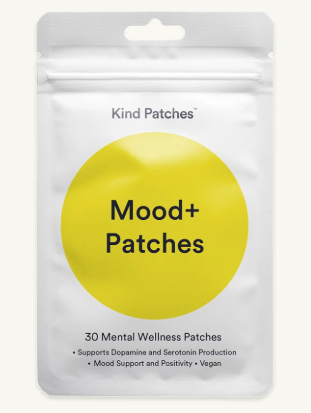

Dopamine patches have become an increasingly popular wellness product, particularly on social media, where they’re advertised as an easy way to improve motivation, concentration, mood and energy. The idea is appealing: instead of swallowing supplements or relying on caffeine to get through the day, you simply stick a small patch on your skin and let its ingredients work throughout the day. Some brands even market them as a natural alternative for people struggling with ADHD-related symptoms. But there’s something about the name that deserves closer attention. Most of these products don’t actually contain dopamine. So what exactly are people paying for, and can the ingredients inside these patches really deliver the mental and emotional benefits being advertised? I looked into the formulations, the available research and a regulatory investigation involving one of the better-known sellers. What I found raises some important questions about this growing wellness trend.
Table of Contents
- What Are Dopamine Patches?
- Dopamine Isn’t Actually in Most of These Patches
- What the Ingredients Are Supposed to Do
- The Research Behind Dopamine Patches Has a Delivery Problem
- The UK Advertising Regulator Challenged Kind Patches’ Claims
- Kind Patches Later Acknowledged a Problem With the Product Name
- Some Consumers Are Using Them as an Alternative to ADHD Treatment
- A Lawsuit Has Also Raised Questions About Kind Patches
- Are Dopamine Patches Safe?
- A Pattern I Keep Seeing With These Wellness Products
- What to Consider Before Buying Dopamine Patches
- Do Dopamine Patches Actually Work?
- Frequently Asked Questions
- Conclusion
What Are Dopamine Patches?
Dopamine patches are adhesive wellness products designed to deliver selected ingredients through the skin. They’re marketed to people who want better focus, motivation, mental clarity and emotional balance without taking conventional supplements in capsule or powder form. Several brands sell them as daily-use patches, often recommending that customers wear one for several hours before removing it. The products are particularly popular among people interested in productivity, brain health and natural approaches to managing attention difficulties. However, these consumer wellness patches should not be confused with prescription dopamine-related medications. The name describes a marketing concept, not necessarily what’s inside the product.
Dopamine Isn’t Actually in Most of These Patches
This was one of the first things I wanted to establish. Dopamine is a neurotransmitter that helps regulate movement, motivation, reward, attention and several other functions in the nervous system. It isn’t simply a happiness chemical that people can increase by applying something to their skin. Many consumer dopamine patches contain botanical extracts and other compounds associated with mood or neurological function rather than dopamine itself. For example, Kind Patches’ former Dopamine Patch formulation listed Mucuna pruriens, 5-HTP, Lion’s Mane mushroom and Rhodiola rosea. These ingredients have different biological properties, and their presence doesn’t establish that the finished patch increases dopamine levels in the brain. The distinction is important because consumers may reasonably assume that a product called a dopamine patch actually contains dopamine or has demonstrated effects on dopamine production.
What the Ingredients Are Supposed to Do
The formulations vary between brands, but several ingredients appear repeatedly. Mucuna pruriens is a tropical plant whose seeds naturally contain L-DOPA, a compound involved in dopamine production. This gives manufacturers a scientific basis for associating the ingredient with dopamine, although research involving oral Mucuna preparations doesn’t establish that a small quantity delivered through a wellness patch produces the same effects. 5-HTP is a precursor to serotonin rather than dopamine, and it is commonly marketed for mood and sleep support. Lion’s Mane is a mushroom being investigated for potential neurological and cognitive effects, while Rhodiola rosea is traditionally used in products intended to support stress management and fatigue. These ingredients are interesting enough to warrant scientific investigation, but their individual properties shouldn’t be confused with proven results from a finished adhesive patch.
The Research Behind Dopamine Patches Has a Delivery Problem
Here’s where the marketing becomes considerably less convincing. A company can find research suggesting that an ingredient has potential benefits when consumed orally, but that doesn’t establish that the same ingredient will work when placed inside an adhesive patch. The skin is a protective barrier, and substances must have suitable properties to pass through it in sufficient quantities. This is why transdermal medications are developed and tested with specific delivery systems, rather than simply placing familiar supplement ingredients into an adhesive material. For a dopamine patch to support its claims, manufacturers need evidence showing that the active ingredients are released, absorbed through the skin and delivered at meaningful concentrations. They should also demonstrate that the finished product produces the advertised effects in human users. I couldn’t establish convincing product-specific clinical evidence demonstrating this for the consumer dopamine patches investigated here.
The UK Advertising Regulator Challenged Kind Patches’ Claims
One of the most revealing findings came from the UK’s Advertising Standards Authority (ASA), which investigated advertisements for Kind Patches’ Dopamine Patch. The company had promoted the product using claims about balanced mood, mental clarity, reduced stress and motivation, including the statement that low dopamine steals your spark and its patches help bring it back. The ASA examined the evidence submitted by the company and found that six of the seven clinical trials involved individual ingredients administered orally rather than through the skin. Those studies also used quantities exceeding the amounts contained in the product. The remaining clinical trial had no results and was therefore not considered useful evidence. The regulator also found that some of the other material submitted consisted of animal studies, background research and informational articles rather than suitable human clinical trials. It concluded that the advertising claims had not been adequately substantiated and ruled against the company on February 4, 2026. This is a particularly important finding because it demonstrates the difference between research on an ingredient and evidence that a finished patch actually works.
Kind Patches Later Acknowledged a Problem With the Product Name
The regulatory scrutiny didn’t end with the February decision. On September 2, 2026, the ASA published another ruling concerning a Kind Patches advertisement that explicitly claimed its Dopamine Patch increased dopamine and serotonin levels. In its response, the company said it did not hold evidence to substantiate its claims about mood, focus, motivation, emotional balance or dopamine and serotonin levels. It also acknowledged that consumers could take the product name at face value and develop a misleading impression. The company subsequently renamed the product. This is worth paying attention to because it wasn’t simply a disagreement about how impressive the ingredients might be. The company acknowledged that the name itself could mislead customers about what the product contained and what it could achieve.
Some Consumers Are Using Them as an Alternative to ADHD Treatment
Another reason these patches deserve closer scrutiny is the way they’re being marketed to people struggling with attention and concentration. Some social media advertisements position them as a natural, convenient alternative to prescription ADHD medication. I understand why that message appeals to people who have difficulty accessing assessments, obtaining prescriptions or finding affordable treatment. However, there is no convincing clinical evidence establishing that consumer dopamine patches can treat ADHD or replace prescribed medication. In a March 2026 report, SELF spoke with women who had tried the products, alongside pharmacists and medical professionals who raised concerns about their effectiveness and the lack of clinical testing. One user described developing an eczema-like reaction and stopping use, while another said the patch might have increased her energy but did little to improve her ability to focus. These are individual experiences rather than proof of how every product performs, but they illustrate why marketing testimonials shouldn’t replace proper clinical evidence.
A Lawsuit Has Also Raised Questions About Kind Patches
The concerns surrounding Kind Patches have also reached the courts. In July 2026, a proposed class action lawsuit was filed in the United States against Kind Patches Limited. The complaint alleges that the company’s Mood+ Patches, previously marketed as Dopamine Patches, misled consumers about their ingredients and ability to influence dopamine levels. It also challenges whether the herbal ingredients can be effectively delivered through the skin in the quantities used. These are allegations contained in a lawsuit, not a final judicial finding, so they shouldn’t be presented as established facts. Nevertheless, the case adds another reason to examine the company’s marketing and scientific claims carefully.
Are Dopamine Patches Safe?
Safety depends on the particular formulation, ingredient quantities, delivery system and individual user. The adhesive itself may cause irritation, redness or allergic skin reactions, while the active ingredients can raise additional concerns. Mucuna pruriens contains L-DOPA, which has biological effects and may interact with medications. 5-HTP also deserves caution, particularly for people taking antidepressants or other medicines that affect serotonin. Combining products that influence neurotransmitter pathways without understanding their ingredients or potential interactions isn’t something I’d recommend. Pregnant or breastfeeding individuals and anyone taking prescription medication should seek professional advice before using these products. I would also avoid treating them as an alternative to an ADHD assessment or prescribed treatment.
A Pattern I Keep Seeing With These Wellness Products
Dopamine patches illustrate a marketing approach that appears repeatedly in the supplement industry: take a genuine scientific concept, associate it with a convenient product and let the promise do most of the selling. Dopamine is real, Mucuna pruriens contains L-DOPA, and researchers are investigating the potential benefits of ingredients such as Lion’s Mane and Rhodiola. But none of those facts independently proves that a particular patch can improve concentration or change brain chemistry. I’ve discussed this distinction in my guide to identifying supplement marketing claims that aren’t supported by product-specific evidence. Customers should be looking for evidence on the actual formulation and delivery method, not just a collection of scientific references attached to familiar ingredient names.
What to Consider Before Buying Dopamine Patches
I wouldn’t make a purchase based solely on social media testimonials, promises of instant motivation or claims that a patch naturally restores dopamine. Check the complete ingredient list, the amount of each ingredient, the manufacturer’s identity and whether independent testing has established that the ingredients actually pass through the skin. Be particularly cautious of products marketed as ADHD treatments or replacements for prescription medication. A legitimate transdermal delivery system should have evidence demonstrating how much of its active ingredient reaches the body, and a finished-product study should establish whether that delivery produces the claimed benefits. If a seller cannot provide this information, I don’t see a good reason to accept its promises.
Do Dopamine Patches Actually Work?
I wouldn’t describe consumer dopamine patches as a proven way to improve motivation, focus or dopamine levels. Some of their ingredients have been investigated for potential health benefits, but the evidence doesn’t automatically transfer to adhesive patches. The Kind Patches investigation is a particularly useful example of how studies involving oral supplements can be used to support claims about a completely different delivery method. Until manufacturers provide reliable absorption studies and clinical trials on their finished products, the advertised benefits remain unproven.
Frequently Asked Questions
Do dopamine patches actually contain dopamine?
Most consumer wellness dopamine patches don’t contain the dopamine molecule itself. They generally use ingredients such as Mucuna pruriens, 5-HTP, Lion’s Mane and Rhodiola, which are marketed for their proposed effects on mood, focus or neurological function.
Can dopamine patches help with ADHD?
There isn’t convincing clinical evidence establishing that consumer dopamine patches treat ADHD. They shouldn’t replace an appropriate assessment or evidence-based treatment.
How long should I wear a dopamine patch?
Instructions vary by manufacturer. Some products recommend wearing their patches for up to eight hours, but following the instructions doesn’t establish that the ingredients are absorbed effectively or that the product works.
Are dopamine patches FDA-approved?
Consumer wellness patches marketed as dietary supplements should not be confused with FDA-approved prescription transdermal medications. The FDA does not approve dietary supplements for safety and effectiveness before they are marketed in the same way it approves prescription drugs.
Are dopamine patches a scam?
Not every product in this category can automatically be labelled a scam. However, claims that these patches reliably increase dopamine, improve ADHD symptoms or deliver clinically established mental health benefits go beyond the evidence currently available.
Conclusion
Dopamine patches sound like an appealing shortcut for people who want better concentration, motivation and emotional balance. Unfortunately, the science hasn’t caught up with the marketing. The ingredients may have interesting properties, but there is insufficient evidence that these consumer patches deliver them effectively or produce the promised benefits. The regulatory findings involving Kind Patches make the concerns even harder to dismiss. I wouldn’t spend money on dopamine patches expecting them to improve brain chemistry or replace proper treatment. For now, they’re better viewed as an unproven wellness trend than a scientifically established solution.