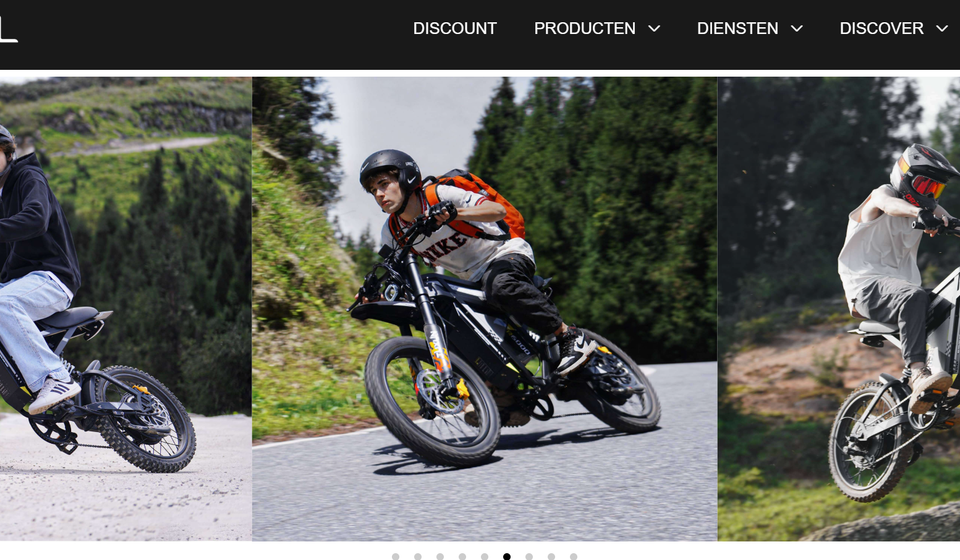

A dirt bike capable of reaching 55 mph isn’t normally what I’d expect to see marketed toward beginners. Yet that’s exactly how COSWHEEL presents the R6000, a 7000W electric dirt bike designed to be lighter, lower, and easier to control than its more powerful R19. The company even promotes it for recreational riding and everyday travel, which makes the idea more appealing. You get the excitement of a fast electric motorcycle, the option to pedal, and a price closer to what some people spend on a regular electric bicycle. But those features don’t necessarily work together as neatly as the advertising suggests. I was particularly interested in whether the R6000’s performance is genuinely manageable for someone new to riding, and whether its advertised versatility holds up once you consider the battery, suspension, and restrictions on where it can legally be used.
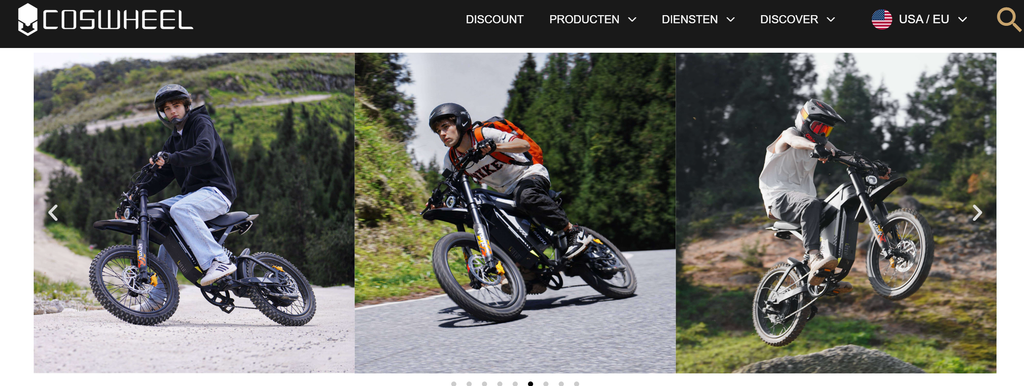
Table of Contents
- What I Could Confirm About the COSWHEEL R6000
- Motor Power and Riding Performance
- Battery Range and Charging
- Suspension and Braking on Rough Terrain
- Everyday Use and Maintenance
- COSWHEEL R6000 Road Legality
- Price, Warranty, and Return Conditions
- COSWHEEL R6000 vs R19
- What Would Change My Mind
- My Verdict
What I Could Confirm About the COSWHEEL R6000
The R6000 is a pedal-equipped electric dirt bike made by COSWHEEL, a manufacturer that also sells the more powerful R19. Its motor is built into the rear wheel rather than mounted centrally like the motor on many dedicated motocross bikes. COSWHEEL advertises 7000W peak output, a 60V 30Ah removable lithium battery, 180Nm of torque, and a maximum speed of 55 mph (88 km/h). The battery stores a nominal 1800Wh of energy, which is a meaningful figure because it tells us more about its capacity than the amp-hour rating alone. The bike uses a high-carbon steel frame, 17-inch wheels, hydraulic disc brakes, and front and rear suspension. It also has a Shimano seven-speed drivetrain, three pedal-assist levels, a colour display, and NFC card unlocking. COSWHEEL lists the weight at approximately 121 pounds (55kg), including the battery, with a 33-inch seat height and a maximum load of 330 pounds. The advertised rider-height range is unusually broad, from 5’1″ to 6’5″, so I’d pay more attention to actual inseam and riding position than that recommendation alone. The standard package includes the bike, charger, fenders, toolkit, phone holder, air pump, and combination lock. These are manufacturer-published specifications, not independently measured results, but they establish that the R6000 is a fairly substantial machine despite its compact appearance.
Motor Power and Riding Performance
The R6000’s advertised motor output is impressive for a bike in this price range, but the electrical specifications deserve closer examination. COSWHEEL lists a 60V system and a 70A controller, which gives approximately 4200W when those nominal figures are multiplied. Its battery management system is rated at 100A, equivalent to 6000W at nominal voltage. Neither calculation establishes the motor’s actual peak output, since battery voltage changes with charge level and controllers can have different short-duration current limits. Still, the published figures don’t independently explain how the advertised 7000W peak is achieved. A European product listing identifies the motor’s rated output as 3000W, which is probably a more useful figure when thinking about sustained operation. COSWHEEL also claims the bike can climb slopes of up to 40 degrees, but I couldn’t find a controlled test establishing the rider weight, surface conditions, or speed used for that result. Available customer reviews describe strong acceleration and impressive speed, although most are published on the seller’s own website and don’t provide detailed measurements. What interests me more is the relationship between that power and rider control. A rear hub motor can deliver strong acceleration without the shifting associated with a petrol motorcycle, and an inexperienced rider can easily underestimate how quickly an electric bike responds to throttle input. The R6000 has a speed-limiting function that reduces its maximum speed to approximately 15.5 mph, which is useful while learning. But the ability to restrict speed doesn’t establish that the bike’s throttle response, braking, and handling are appropriate for every beginner. I’d want independently measured acceleration and controlled riding demonstrations before accepting that description without qualification.
Battery Range and Charging
COSWHEEL advertises two very different range figures for the R6000: more than 56 miles using the throttle alone and up to 80 miles with pedal assistance. That difference is important because the longer figure depends on the rider contributing some of the energy. It isn’t a promise that the bike will travel 80 miles while running at maximum power. With an 1800Wh battery, achieving 56 miles would require an average consumption of approximately 32Wh per mile, while covering 80 miles would bring that down to 22.5Wh per mile. Those figures are plausible under favourable conditions, but they don’t tell us how far the bike will travel through sand, up steep hills, or during repeated hard acceleration. I couldn’t find a sufficiently documented independent range test that establishes what owners should expect in those situations. At sustained high motor output, energy consumption rises quickly, and the practical range could be substantially lower than the advertised maximum. COSWHEEL supplies a 5A charger and quotes a charging time of six to seven hours. The battery can be removed for charging, which is useful if you don’t have an electrical outlet near your parking space. It also means you can store the battery indoors when appropriate, rather than leaving the entire bike exposed. For occasional recreational riding, the charging time seems manageable. But if someone intends to use the R6000 for long daily journeys, I’d recommend planning around a conservative range rather than assuming the promotional figure will hold up.
Suspension and Braking on Rough Terrain
The R6000 has a dual-crown inverted front fork with 180mm of advertised travel, which sounds promising for a relatively inexpensive off-road machine. That amount of movement gives the front wheel room to absorb substantial bumps before the suspension reaches the end of its stroke. The rear arrangement is less clear. COSWHEEL lists a spring shock with 40mm of travel, but doesn’t clearly explain whether that measurement refers to the shock’s stroke or the actual movement available at the rear wheel. Those aren’t the same thing, and the difference matters when assessing how well the bike can handle repeated impacts. I also noticed that COSWHEEL’s European listing contains braking information referring to the R19 rather than the R6000, while the R6000’s main specification sheet lists 203mm rotors with dual-piston hydraulic calipers. I’d use the model-specific specification as the reference but confirm the supplied components before ordering. The 17-inch off-road tyres should provide useful grip on suitable dirt surfaces, although their smaller diameter compared with full-sized dirt bike wheels may make large rocks, deep ruts, and uneven obstacles more challenging. The brakes also deserve proper testing because the energy involved in stopping a bike increases considerably with speed. Hydraulic discs are a sensible choice, but the presence of those components doesn’t establish stopping distances or resistance to brake fade. I see the R6000 as more convincing for recreational trails and uneven dirt roads than for aggressive motocross riding, particularly until its suspension and braking performance have been demonstrated under demanding conditions.
Everyday Use and Maintenance
One of the R6000’s more unusual features is that it combines dirt bike performance with bicycle-style pedals and a seven-speed gear system. That gives owners the option of pedal assistance, although pedalling a 55kg machine won’t feel like riding an ordinary bicycle, especially without motor support. The 3.5-inch display provides information such as speed and fault codes, while the NFC unlocking system replaces the conventional ignition-key arrangement found on many motorcycles. I can see the convenience, but losing an access card could become an inconvenience of its own, so I’d confirm how replacements are obtained. The removable battery has a keyed lock and carrying handle, while the lighting system includes a front headlight and rear LED. COSWHEEL also offers an optional full-twist throttle, suggesting the supplied throttle configuration may not suit everyone’s preference. The company provides an assembly guide, and the delivered bike requires some setup rather than arriving completely ready to ride. Correctly securing the handlebars, wheels, brakes, and other components matters considerably on a machine this fast. Beyond assembly, the usual maintenance includes checking tyre condition, brake-pad wear, chain tension, wheel fasteners, and suspension components. COSWHEEL sells replacement parts through its website, including batteries, controllers, brake components, tyres, and forks, which is encouraging for repairability. However, the existence of a parts catalogue doesn’t establish how quickly every component can be supplied or whether local repair shops will be familiar with the bike. Those are things I’d check before relying on it for regular transport.
COSWHEEL R6000 Road Legality
This is one of the more consequential issues I found. COSWHEEL promotes the R6000 as suitable for both dirt riding and commuting, and its website uses electric bicycle classifications alongside a claimed maximum speed of 55 mph. But a bike with a motor rated around 3000W and capable of reaching that speed doesn’t ordinarily fit the legal definition of a standard Class 1, 2, or 3 electric bicycle in the United States. The company acknowledges that the R6000 may exceed those classifications and says some customers register it for road use under local regulations. It also advertises a speed-limiting function that reduces the maximum speed to 25 km/h. That may be useful for controlling the bike, but reducing its speed doesn’t automatically change its legal vehicle classification. Motor power, throttle operation, equipment requirements, and type approval can still matter. The European sales page raises another concern by offering guidance on removing the factory speed restriction and mentioning a 250W label for the motor. A label cannot make a higher-powered motor legally equivalent to a compliant 250W pedal-assist bicycle. Buyers should not assume the bike can be used on public roads simply because it has pedals, lights, and a slower riding mode. Depending on the location, it may require registration, insurance, a licence, or approval as a different vehicle category. Some off-road trails also prohibit motorised vehicles. For someone who wants to ride primarily on private land or authorised motorised trails, this issue is easier to manage. For daily public-road commuting, I would verify its legal status before spending any money.
Price, Warranty, and Return Conditions
COSWHEEL’s US website lists the R6000 at $1,599, reduced from $1,999, although the site’s homepage has also displayed a lower promotional price of $1,499. That inconsistency makes it worth checking the actual checkout total rather than relying on a banner or search result. US shipping is advertised as free, with an estimated delivery period of five to eight business days from the US warehouse. European orders may involve additional shipping charges, while other destinations require a checkout estimate. COSWHEEL advertises a one-year limited warranty for the original purchaser, including the frame, motor, controller, and battery, but some parts have shorter coverage. Brake pads and calipers, for example, are listed with three-month warranty periods. More importantly, the warranty excludes damage associated with off-road or stunt riding, ramp jumping, and racing. That wording is unusually consequential for a product specifically marketed as an electric dirt bike. I’d ask COSWHEEL to clarify in writing what normal recreational off-road use means under its warranty before ordering. The return policy is another reason to read carefully. It advertises a 30-day return window, but a non-defective unused bike can attract a 30% restocking fee plus shipping. A used bike returned within the permitted conditions can attract a 70% restocking fee, with mileage limited to fewer than 25 miles. At a $1,599 purchase price, those percentages represent $479.70 and $1,119.30 respectively, before shipping costs. The policy also lists cancellation fees and excludes certain sale items, creating another point worth clarifying when buying at a promotional price. Those conditions make the R6000 a purchase I’d research thoroughly before ordering rather than something I’d buy expecting an inexpensive trial period.
COSWHEEL R6000 vs R19
The R19 is the most useful comparison because it comes from the same manufacturer but targets riders looking for more aggressive off-road performance. COSWHEEL advertises the R19 with a 72V 9000W motor, a top speed of 60 mph, and a maximum range of up to 124 miles. Its listed price is approximately $2,499, considerably more than the R6000. The R6000 is around 8kg lighter according to COSWHEEL, has a lower seat height, and is designed around a less intimidating riding position. That makes it easier to understand why the company considers it the more approachable option. The R19’s additional power and larger platform may appeal to experienced riders who regularly tackle demanding terrain, but they also bring higher purchase costs and greater performance demands. I wouldn’t choose the R19 simply for another five miles per hour of advertised top speed, just as I wouldn’t choose the R6000 merely because it’s cheaper. The more useful question is how much off-road capability you actually need. Someone riding moderate trails may appreciate the R6000’s smaller dimensions and lower cost, while a rider seeking a more specialised high-performance machine may find the R19 better suited to that purpose. Neither should be treated as a conventional commuter bicycle just because both are electric.
What Would Change My Mind
I’d be more comfortable recommending the R6000 to newer riders if COSWHEEL published independent tests showing its acceleration, braking distance, handling at different speed settings, and real-world battery range. I’d also like a clear explanation of the controller’s peak output and written confirmation that ordinary recreational trail riding is covered by the warranty. Those aren’t unreasonable demands for a bike capable of motorcycle-like speeds. If the company addressed them convincingly, the R6000’s combination of equipment and price would become much easier to recommend.
My Verdict
The COSWHEEL R6000 looks like a potentially good-value electric dirt bike for riders who want substantial performance without paying premium motocross prices. I wouldn’t dismiss it because of its marketing claims, but I also wouldn’t accept the beginner-friendly description without qualification. For someone with basic riding experience, suitable protective equipment, and access to legal off-road riding areas, it could be an interesting purchase. For a complete beginner, a younger rider without proper supervision, or someone expecting a road-legal commuter, I’d look elsewhere. The R6000 offers a lot of performance for the money, but buyers need to be comfortable with the responsibilities and ownership restrictions that come with it.
Read Also >>> XGIMI HORIZON 30 Review: Is This 4K Laser Projector Worth the Money?