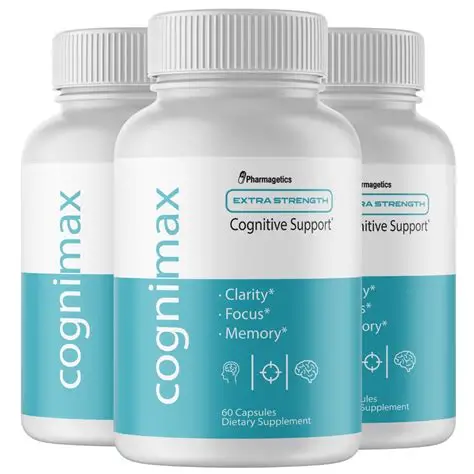

If you’ve seen ads for Cogni Max claiming it can fix memory loss, reverse cognitive decline, or help with conditions like dementia, you’re definitely not imagining things. This product has been showing up in aggressive online ads with some very bold promises around brain health.
And the way it’s being marketed honestly raises a lot of questions. Because once a supplement starts getting tied to Alzheimer’s-style claims and “brain restoration” messaging, it’s no longer just a casual wellness product anymore. It enters a much more sensitive space. So I took a closer look at what Cogni Max actually is versus what the marketing is trying to sell.
Quick Takeaway
- Cogni Max is heavily marketed, but strong evidence for its big claims is limited
- Marketing leans heavily into fear around dementia, memory loss, and aging
- “Clinically backed” is used in a loose, ingredient-based way
- No strong proof the full formula works as dramatically as advertised
- Transparency around the brand is weak compared to established health companies
- Real-world results appear much more subtle than the marketing suggests
Table of Contents
- Quick Takeaway
- What Is Cogni Max Supposed to Be?
- The Alzheimer’s and Dementia Marketing Angle
- The Fake Authority and “Breakthrough” Storytelling
- Ingredient Breakdown vs Marketing Claims
- The “Clinically Backed” Framing Problem
- Sales Pages, Funnels, and Urgency Tactics
- Realistic User Experience Pattern
- A Pattern I Keep Seeing
- Is Cogni Max Scam or Legit?
- Conclusion
- FAQ
What Is Cogni Max Supposed to Be?
Cogni Max is being presented as a cognitive support supplement that supposedly improves memory, focus, and overall brain performance. But depending on where you see it advertised, the claims shift quite a bit.
Some versions stay relatively mild:
- better focus
- improved concentration
- reduced brain fog
Others go much further and start suggesting things like:
- reversing memory decline
- supporting dementia-related symptoms
- restoring lost cognitive function
That jump from general support to serious neurological implications is where things start to feel overstated. Because if those stronger claims were real, this wouldn’t be circulating through ads and funnel pages. It would be front-page medical news.
The Alzheimer’s and Dementia Marketing Angle
One of the most noticeable things about Cogni Max promotions is how often they lean into fear around memory loss and aging.
Even when the product is framed as a supplement, the messaging often drifts toward:
- dementia concerns
- Alzheimer’s fears
- “brain aging reversal”
- cognitive decline anxiety
This is a very sensitive emotional trigger, and it’s used heavily in marketing because it gets attention fast. The issue is not that people care about brain health. The issue is how the fear is being used to position a supplement as something far more powerful than what’s realistically proven.
The Fake Authority and “Breakthrough” Storytelling
A big part of the marketing structure relies on storytelling that feels medical or scientific at first glance.
You’ll often see:
- supposed expert explanations
- dramatic “discovery” narratives
- hidden breakthrough framing
- claims that mainstream medicine is ignoring the solution
This is usually designed to build trust quickly before the product is even introduced.
But when you strip it down, what you’re often left with is:
- scripted narration
- stock visuals or AI-generated content style videos
- emotional storytelling instead of verifiable science
That gap is important because credibility is being built visually, not factually.
Ingredient Breakdown vs Marketing Claims
Like most brain supplements, Cogni Max appears to rely on common cognitive-support ingredients such as vitamins and nootropic-style compounds.
These ingredients are generally associated with:
- mental energy
- neurotransmitter support
- focus and alertness
- general brain function support
The problem is not necessarily the ingredients themselves. It’s how they are presented. A lot of supplement marketing takes ingredients with mild or context-specific benefits and turns them into the foundation for very large claims about memory restoration or cognitive repair. That is where expectations start getting distorted. Realistically, even well-researched nootropic ingredients tend to produce subtle effects at best, not dramatic neurological changes.
The “Clinically Backed” Framing Problem
Another phrase that appears frequently in products like this is “clinically backed.” But in supplement marketing, this often means something much narrower than it sounds. In many cases, it refers to:
studies on individual ingredients, not the final product itself. That difference matters a lot because combining ingredients does not guarantee the same outcomes seen in isolated research. So while the phrase sounds scientific, it does not automatically validate the supplement as a complete formula.
Sales Pages, Funnels, and Urgency Tactics
When you move from ads to actual sales pages, the structure usually becomes very familiar.
You’ll often see:
- limited-time discounts
- urgency timers
- bulk purchase offers
- emotional testimonials
- strong “act now” messaging
This is a direct-response funnel style designed to reduce hesitation. Instead of encouraging comparison or research, it pushes fast decision-making. That alone doesn’t prove anything about the product, but it does show how aggressively the offer is being positioned.
Realistic User Experience Pattern
When you step back from the marketing, the realistic outcomes people tend to report with similar supplements are usually much more modest.
Common patterns include:
- slight focus improvement
- mild energy changes
- little to no noticeable difference for some users
The gap between these subtle effects and the dramatic marketing claims is where most skepticism naturally comes in.
A Pattern I Keep Seeing
This section connects Cogni Max to similar supplement marketing patterns seen across other products I’ve reviewed on this site.
The same structure shows up repeatedly:
fear-based hook, scientific-sounding explanation, emotional storytelling, then urgency-driven sales funnel.
I’ve seen this pattern across:
- Male Enhancement Products like Ultra Peak XL Gummies
- detox supplements like Mila Miamor 15 Day Cleanse
- weight-loss products like Purisaki Berberine Patches
- metabolism boosters using urgency and emotional triggers like Buck Naked Fat Burner
The branding changes, but the structure stays almost identical. This is important because Cogni Max doesn’t exist in isolation. It follows a wider pattern used across multiple supplement categories.
Is Cogni Max Scam or Legit?
Cogni Max sits in a familiar gray zone within the supplement industry. It is not presented with clear evidence that supports the strongest claims being used in marketing, especially those related to memory decline or dementia-style concerns.
The main issues are:
- exaggerated cognitive claims in advertising
- emotional fear-based positioning
- weak product-level clinical proof
- limited transparency around the brand
- aggressive funnel-style sales tactics
While some ingredients may support general cognitive function in mild ways, the marketing clearly pushes expectations beyond what is realistically supported.
Conclusion
Cogni Max feels like one of those supplements where the marketing story does most of the heavy lifting. The product itself may contain standard brain-support ingredients, but the way it is promoted creates expectations that go far beyond typical supplement outcomes. And once a product starts leaning heavily into fear, urgency, and “hidden breakthrough” messaging, it becomes even more important to separate marketing narrative from actual evidence.
FAQ
Does Cogni Max actually improve memory?
It may support mild cognitive function in some users, but there is no strong evidence supporting the dramatic memory improvement claims seen in marketing.
Is Cogni Max related to dementia or Alzheimer’s treatment?
No credible scientific evidence supports Cogni Max as a treatment or cure for dementia or Alzheimer’s disease.
Why does Cogni Max sound like a medical breakthrough?
Because the marketing uses scientific-sounding language combined with emotional storytelling to increase perceived credibility.
Are the ingredients clinically proven?
Some individual ingredients may have studies behind them, but that is not the same as proving the full supplement works as marketed.