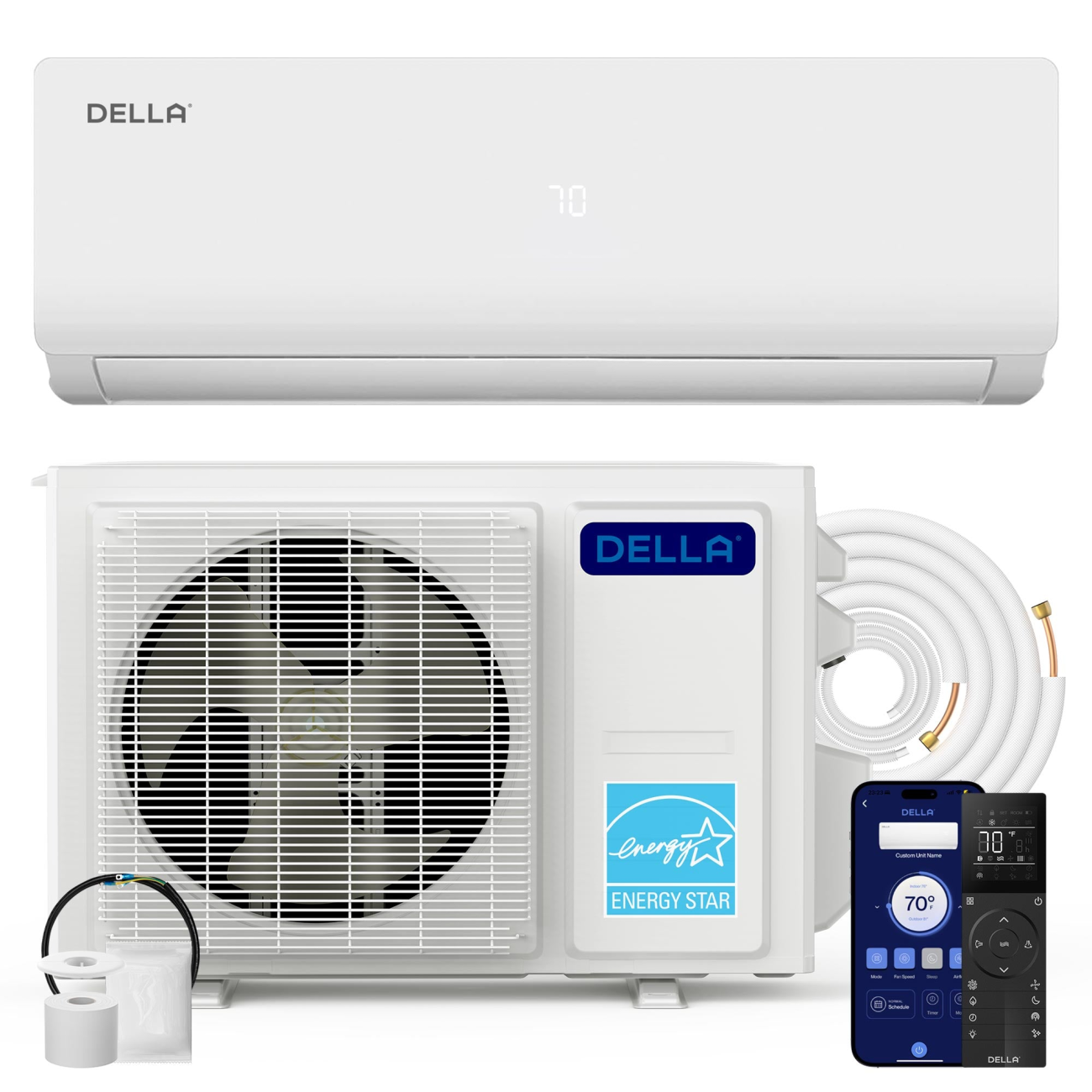
Mini split AC systems have become one of those products that show up everywhere once you start looking into home cooling upgrades. The DELLA Mini Split AC is one of the more aggressively marketed options, often presented like a high-efficiency, ultra-quiet, near plug-and-play solution for heating and cooling a full room or even multiple zones.
The ads make it feel like you can skip traditional HVAC installers, save a lot of money, and still get powerful, year-round climate control. That sounds great on paper. But once you start breaking down how mini splits actually work in real homes, the picture becomes a bit more grounded and a lot less “effortless install miracle” than the marketing suggests.
Quick Take
- Marketed as a high-efficiency heating and cooling mini split system for home use
- Promises strong cooling power, energy savings, and quiet operation
- Real performance depends heavily on correct sizing, installation quality, and room insulation
- Installation is not as simple as ads often imply and may still require professional help
- Overall impression: solid concept and capable system class, but success depends more on setup than branding
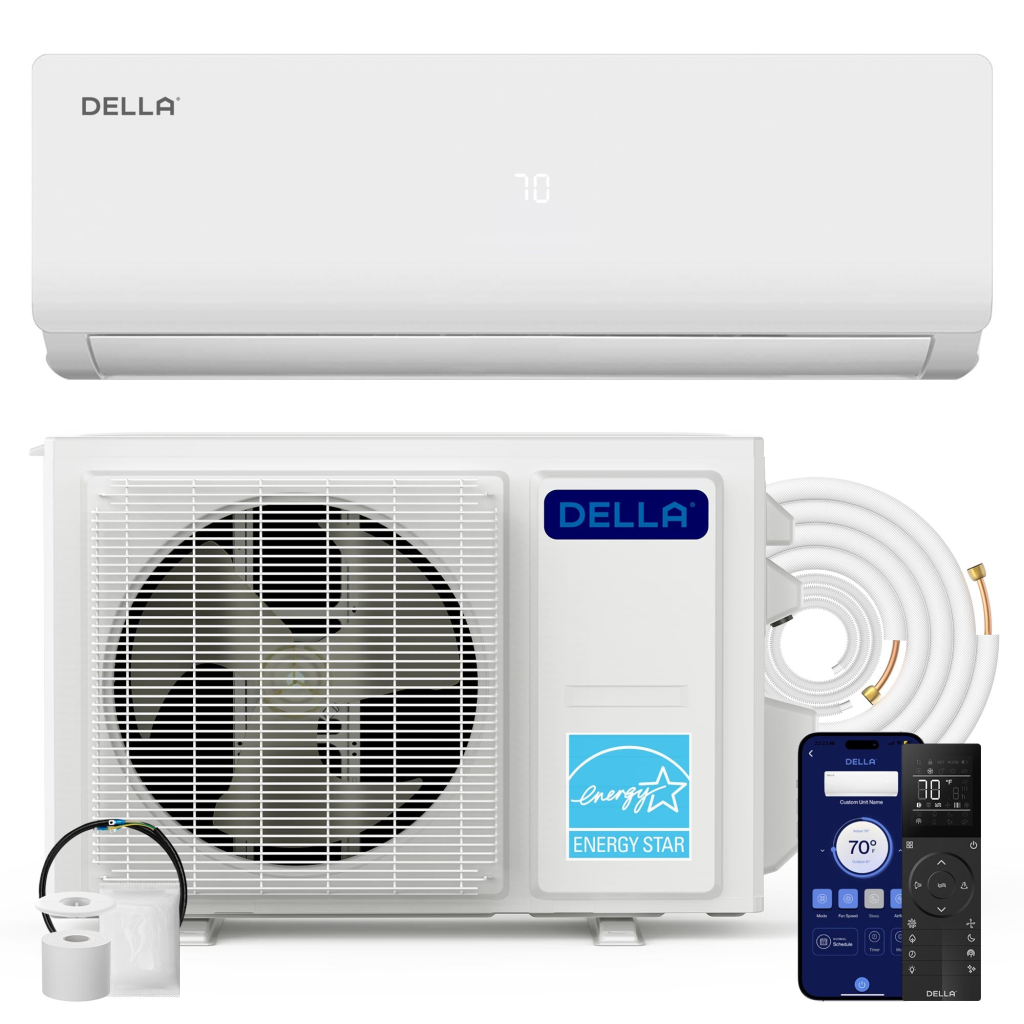
Table of Contents
- Quick Take
- What the DELLA Mini Split AC Is Supposed to Do
- Where the Marketing Starts Feeling Too Simple
- Where It Actually Fits Well
- What It’s Actually Like in Real Use
- Installation Reality vs Expectations
- A Pattern I Keep Seeing
- Is the DELLA Mini Split AC Legit?
- Final Thoughts
- FAQ
What the DELLA Mini Split AC Is Supposed to Do
The DELLA Mini Split AC is designed to provide both cooling and heating through a split system: an indoor air handler and an outdoor compressor unit. The idea is to deliver more efficient temperature control compared to window units or portable ACs, with better airflow distribution, quieter operation, and improved energy efficiency.
On paper, it’s part of a well-established HVAC category that’s actually known for performance improvements over traditional cooling methods. So the concept itself is not new or questionable. The real question is how well this specific setup performs once it’s installed in an actual home environment with real insulation conditions, room layouts, and usage patterns.
Where the Marketing Starts Feeling Too Simple
A lot of the promotional content around mini split systems tends to lean heavily into simplicity.
The message often feels like:
- mount it
- plug it in
- connect a few lines
- enjoy whole-home climate control
But real installation isn’t always that clean.
Mini splits require:
- proper sizing for room square footage
- correct refrigerant line setup
- vacuuming and sealing the system
- electrical considerations
- correct placement for airflow efficiency
If any of these are off, performance can drop significantly. And that’s something the ads rarely emphasize, because it doesn’t fit the “easy upgrade” narrative.
Where It Actually Fits Well
To be fair, mini split systems like this can be genuinely effective when set up correctly.
They tend to work well for:
- bedrooms and medium-sized rooms
- garage conversions or home offices
- energy-conscious cooling/heating setups
- homes without existing ductwork
- zone-based temperature control
When installed properly and matched correctly to room size, they can deliver strong cooling efficiency and quieter operation compared to traditional AC units.
So the underlying technology is solid. The issue is more about expectations and setup quality than the system category itself.
What It’s Actually Like in Real Use
This is where mini split systems often separate good experiences from frustrating ones. When everything is done right, the system feels smooth and stable. Temperature control is consistent, and the noise level is noticeably lower than window or portable units.
But when something is off, even slightly, users tend to notice:
- uneven cooling in larger rooms
- systems cycling too frequently if oversized or undersized
- reduced efficiency in poorly insulated spaces
- performance drops during extreme heat conditions
- dependence on correct installation rather than just product quality
This is not unique to DELLA. It’s a general reality of mini split systems. They’re less “appliance plug-in” and more “installed HVAC system,” even when marketed otherwise.
Installation Reality vs Expectations
One of the biggest disconnects with products like this is installation expectations. The marketing often makes it feel like a simplified setup anyone can handle.
But in practice, many users still end up needing:
- HVAC professionals
- proper vacuum pump tools
- refrigerant handling knowledge
- electrical circuit setup
Even DIY-friendly kits can become complicated if the user has no HVAC background. And this is usually where frustration starts showing up in real-world feedback, not because the system is bad, but because the installation complexity was underestimated.
A Pattern I Keep Seeing
The DELLA Mini Split AC fits into a familiar pattern that shows up across a lot of home improvement and “upgrade” products.
It starts with a real need: better cooling efficiency, lower electricity costs, and quieter operation.
Then the marketing pushes it into the idea of a simple transformation that removes all friction.
I’ve seen this same structure with products like Bcdroid A10 Ultra Robot Vacuum, Viral CoolMate Portable AC, and HONOR Choice AI Projector Air.
Different categories, same emotional pitch. Make a difficult household task feel like it’s about to become effortless.
And while mini splits are absolutely a legitimate and widely used HVAC solution, the marketing still tends to simplify the real-world complexity of installation and setup.
Is the DELLA Mini Split AC Legit?
The DELLA Mini Split AC sits in a legitimate product category with proven HVAC technology behind it. This is not a questionable concept or gimmick device.
The concerns are more practical:
- installation complexity
- dependence on correct sizing
- variable performance based on setup quality
- marketing that can understate real installation effort
So it’s not about whether the system works. It’s about whether buyers fully understand what they’re getting into before purchase. In the right setup, it can absolutely perform well. In the wrong setup, it can feel underwhelming or inefficient.
Final Thoughts
The DELLA Mini Split AC is part of a category that genuinely improves home cooling efficiency when done properly. It offers real advantages over traditional window or portable AC systems, especially in terms of energy use, noise levels, and zoned temperature control. But the experience is heavily dependent on installation quality and realistic expectations.
The biggest gap isn’t performance potential. It’s the difference between how simple the product appears in marketing versus how involved it actually is in real-world setup. Once you understand that, it becomes less of a plug-and-play cooling upgrade and more of a proper HVAC system that rewards correct installation and planning.
FAQ
Does the DELLA Mini Split AC actually cool a room well?
Yes, it can cool effectively when it is properly sized and correctly installed. Performance is more dependent on setup quality and room conditions than the brand itself.
Is the DELLA Mini Split AC energy efficient?
Mini split systems are generally more efficient than window or portable AC units, especially when used for zone cooling. However, efficiency depends heavily on correct installation and insulation.
Can I install it myself?
Some kits are marketed as DIY-friendly, but in reality, many users still need HVAC tools and experience. Incorrect installation can reduce performance or cause system issues.
Is the DELLA Mini Split AC worth it?
It can be worth it if you understand it is a full HVAC system, not a plug-and-play appliance. It performs best in planned installations, not quick setups.
What are the most common complaints?
Most concerns tend to revolve around installation difficulty, sizing mistakes, and performance drops in poorly insulated or improperly configured spaces.
