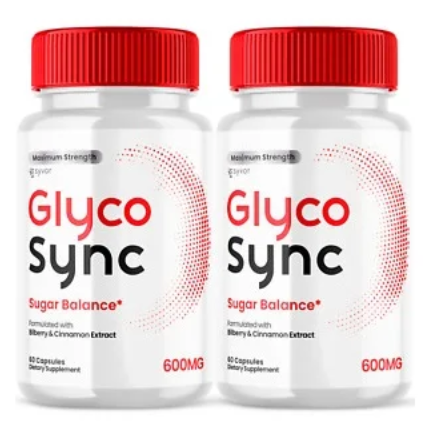

Joint stiffness, morning aches, and that slow “warming up” feeling when you start moving… it’s exactly the kind of discomfort products like GlycoSync Joint are designed to target. But when a supplement claims to support joints, circulation, energy, and overall metabolic balance all at once, it’s worth slowing down and looking closer.
In this review, we’ll break down what GlycoSync Joint claims to do, what’s inside it, what the science actually says about its approach, and whether it looks like meaningful joint support or just another broad wellness formula.
Quick Takeaways
- Marketed as a joint support and overall wellness supplement with circulation and energy benefits
- Often positioned as a “natural balance” formula rather than a direct joint repair product
- Ingredients are typically standard vitamins, minerals, and herbal extracts
- No clear clinical trials on GlycoSync Joint as a finished formula
- Overall impression: mild general wellness supplement, but joint-specific claims feel overstretched
What Is GlycoSync Joint?
GlycoSync Joint is a dietary supplement marketed toward people dealing with:
- Joint stiffness and discomfort
- Reduced mobility
- Age-related joint wear
- General inflammation and circulation concerns
It is usually sold in capsule form and positioned as a multi-benefit wellness product rather than a strictly orthopedic or clinical joint treatment. Instead of focusing only on cartilage or joint lubrication, it expands into broader health areas like energy, blood flow, and metabolic support.
First Things I Noticed
The first thing that stands out is how broad the positioning is. Rather than being a focused joint formula, GlycoSync Joint tends to market itself as a full-body support supplement.
Common messaging patterns include:
- “Supports mobility and flexibility”
- “Boosts energy and vitality”
- “Supports circulation and balance”
- “Natural daily wellness formula”
That kind of wide-angle positioning usually signals a product designed for general wellness rather than targeted joint repair. Another thing worth noting is how heavily it relies on “natural blend” framing without clearly emphasizing clinically proven joint repair compounds.
How GlycoSync Joint Is Supposed To Work
The general mechanism is usually described like this:
- Nutrients and plant compounds are absorbed through digestion
- Antioxidant and anti-inflammatory effects reduce systemic stress
- Circulation support improves nutrient delivery to joints
- Over time, stiffness and discomfort are expected to ease
The problem is that this is a very indirect pathway. Unlike targeted joint supplements that focus on hyaluronic acid or cartilage-specific compounds, this approach relies on general wellness improvements translating into joint relief.
Ingredients Breakdown
Vitamin and Mineral Blend
Most versions emphasize essential vitamins and minerals. These are important for general health, but they are not specific treatments for cartilage repair or joint lubrication.
Herbal Anti-Inflammatory Compounds
Common plant-based ingredients are often included for their antioxidant or anti-inflammatory reputation. These may support comfort slightly, but effects tend to be mild and gradual.
Circulation Support Ingredients
Some formulas highlight ingredients linked to blood flow and vascular health. While circulation is important for tissue health, this does not directly rebuild joint structure.
What Does The Science Actually Say?
There is a big difference between general nutritional support and clinically proven joint repair. Some ingredients commonly found in products like GlycoSync Joint do have research suggesting mild anti-inflammatory or antioxidant effects.
However:
- There is no strong clinical evidence that multi-ingredient “balance blends” significantly repair joints
- Most supporting studies are on individual compounds, not the finished formula
- Joint improvement usually requires long-term, targeted interventions
Joint health research tends to focus more on specific compounds like hyaluronic acid, collagen peptides, or standardized anti-inflammatory agents rather than broad wellness stacks.
What Realistically Can Someone Expect?
Real-world expectations are usually modest.
Some possible outcomes:
- Slight reduction in stiffness over time
- Mild improvement in daily comfort
- General wellness or energy stability
What is less realistic:
- Rapid joint repair
- Complete elimination of chronic joint pain
- Structural cartilage restoration
- Strong, consistent results across all users
Joint discomfort is complex and usually doesn’t respond dramatically to general supplements alone.
Biggest Concerns
The main concern is lack of focus. Instead of targeting joint health directly, the formula spreads across multiple health claims, which weakens clarity about what it is actually designed to do.
Other concerns include:
- Limited transparency around exact dosages
- No clear clinical trials on the finished product
- Broad wellness claims that go beyond joint support
- Overlapping marketing terms like “energy,” “balance,” and “detox”
This combination often makes it hard to separate realistic benefits from marketing language.
A Pattern I Keep Seeing
GlycoSync Joint follows a familiar structure seen in many general wellness supplements. It reminds me of products like Joint Caps, Thermo Burn Pro, and other circulation-focused joint blends. Different branding, same framework: broad health positioning + herbal blend + mild inflammation support claims + limited product-specific clinical evidence.
Who Is Behind GlycoSync Joint?
Public information on GlycoSync Joint is limited, with most details coming from retail listings rather than transparent clinical or pharmaceutical documentation.
It is typically presented as:
- Direct-to-consumer supplement
- Multi-purpose wellness formula
- Manufactured under general health supplement standards
There is usually no clearly identifiable research institution tied to the formulation.
Is GlycoSync Joint Legit or a Scam?
GlycoSync Joint appears to be a real supplement rather than a fake product. The ingredients are commonly used in wellness supplements and are not inherently concerning. However, the gap between marketing expectations and what these types of formulas can realistically deliver is important. It is best viewed as a general wellness support supplement rather than a dedicated joint repair solution.
What To Do If You Already Ordered
If you already purchased it:
- Give it realistic time (weeks, not days) if you’re testing effects
- Track mobility changes carefully rather than expecting dramatic relief
- Avoid using it as a replacement for medical joint treatment
- Check for subscription billing or bundle renewals
- Consider pairing with physical therapy or movement-based routines
How To Avoid Similar Products
A few practical checks help in this category:
- Look for joint-specific clinical ingredients (not general wellness blends)
- Check if studies exist on the finished product, not just individual herbs
- Be cautious with “energy + joints + circulation + detox” multi-claims
- Prioritize transparency in dosages and formulation
Bottom Line
After breaking it down, GlycoSync Joint feels like a broad wellness supplement that lightly overlaps with joint support rather than a targeted solution for joint pain or stiffness. Some ingredients may help with general inflammation or comfort, but the strongest claims around mobility and joint restoration are not strongly supported by product-specific clinical evidence. It may offer mild support for everyday wellness, but expectations around joint recovery should stay grounded.
Frequently Asked Questions
What is GlycoSync Joint used for?
It is marketed for joint support, mobility, circulation, and general wellness.
Does GlycoSync Joint actually work?
Some users may experience mild improvements, but there is limited evidence for strong joint repair effects.
Is GlycoSync Joint legit or a scam?
It appears to be a real supplement, but its claims are broader than the evidence typically supports.
How long does it take to see results?
If any effects occur, they are usually gradual over several weeks.
Is it safe?
It generally uses common supplement ingredients, but suitability depends on individual health conditions.