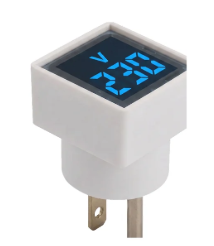

Imagine reducing your electricity bill without replacing a single appliance, changing your daily routine, or paying an electrician. That’s the promise behind VoltSaver X, a small plug-in device being promoted as an easy way to cut household energy costs. The advertisements suggest that simply leaving it connected to a wall outlet can improve electrical efficiency and reduce the amount you pay each month. But there’s a problem with that explanation, and it becomes clearer when you understand how household electricity meters work. I also found concerns involving the product’s advertising and a recurring membership connected to its seller, Inovira Home. In this review, I’ll explain what VoltSaver X supposedly does, whether the technology supports its claims, and what buyers should know about the purchasing process.
Quick Takeaway
- Product: VoltSaver X, a plug-in electricity-saving device.
- Associated seller: Inovira Home.
- Main claim: Improves electrical efficiency and reduces household electricity bills.
- Scientific evidence: No convincing independent testing of VoltSaver X demonstrating meaningful household savings was identified.
- Advertising concern: Reports of manipulated promotional footage involving a real electrical professional.
- Checkout concern: Inovira advertises a recurring VIP membership, with conflicting monthly prices on its published pages.
- Safety: Similar plug-in energy-saving devices have failed independent electrical safety tests.
- My verdict: I don’t recommend VoltSaver X. Its claimed benefits aren’t adequately supported, and the purchasing arrangements deserve caution.
Table of Contents
- Quick Takeaway
- What Is VoltSaver X Supposed to Do?
- Why the Electricity-Saving Explanation Doesn’t Add Up
- What Independent Testing Says About Devices Like This
- The Advertising Involving a Real Electrician Raises Questions
- The Inovira Home Connection Is Worth Understanding
- The $49.99 Monthly Membership Could Cost More Than the Device
- Is VoltSaver X Safe to Leave Plugged In?
- What Do Real Customer Reviews Tell Us?
- Why I Wouldn’t Compare It to a Real Surge Protector
- Is VoltSaver X a Scam?
- What Actually Helps Reduce Electricity Bills?
- Final Verdict
What Is VoltSaver X Supposed to Do?
VoltSaver X is marketed as a compact device that plugs into an ordinary electrical outlet and supposedly improves the way electricity flows through a home. The advertising uses terms such as power stabilization, electrical optimization, and power-factor correction to explain why the device might reduce electricity costs. Unlike a smart plug that monitors an individual appliance, VoltSaver X is presented as something that can influence a household’s electrical system simply by remaining connected. There’s no complicated installation or adjustment required, which is a major part of its appeal. However, I couldn’t verify the internal components or obtain a credible technical specification for this exact model, so I wouldn’t assume its circuitry matches other devices sold under similar names.
Why the Electricity-Saving Explanation Doesn’t Add Up
Power-factor correction is a legitimate electrical engineering technique, but the way it is used in advertisements for household power savers is misleading. Some electrical equipment draws reactive power, and correcting the power factor can improve efficiency in certain commercial or industrial settings where utilities charge for poor power factor. Most ordinary residential electricity bills, however, are based primarily on real energy consumption measured in kilowatt-hours. Adding a small capacitor to a wall socket doesn’t substantially change how much real energy a refrigerator, air conditioner, television, or washing machine needs to operate. Even if a device improves power factor locally, that doesn’t automatically translate into a lower household bill. For VoltSaver X to justify its promises, the seller would need controlled measurements showing reduced billed energy consumption, not simply an explanation filled with electrical terminology.
What Independent Testing Says About Devices Like This
The broader category of plug-in electricity savers has already attracted scrutiny from consumer organizations. In 2025, Which? examined eight energy-saving plugs sold through major online marketplaces and found no evidence that they delivered the advertised savings. Electrical Safety First has also investigated similar products and reported serious concerns about their construction. Those investigations didn’t specifically test VoltSaver X, so their results shouldn’t be presented as a laboratory verdict on this exact device. Nevertheless, they establish that the general marketing concept has a poor track record. I couldn’t find an independently published, product-specific laboratory report showing that VoltSaver X produces measurable reductions in residential electricity consumption.
The Advertising Involving a Real Electrician Raises Questions
Another concern involves promotional footage reportedly associated with Michael Harrington, the creator of the Backyard Maine YouTube channel. Harrington is known for electrical and DIY-related content, making his appearance potentially persuasive to people unfamiliar with the technology. Reports examining VoltSaver X advertising allege that footage connected to him was altered or combined with AI-generated material to make it appear that he was promoting the device. I couldn’t independently authenticate every version of the circulating advertisement or establish whether he authorized any particular use of his footage. That distinction matters because an edited advertisement can make viewers believe a qualified professional has personally tested and endorsed a product when no such endorsement has been established. I wouldn’t treat the appearance of a familiar electrician in a sales video as evidence that VoltSaver X works.
The Inovira Home Connection Is Worth Understanding
VoltSaver X has been associated with Inovira Home, but a separate examination of the seller’s publicly accessible catalogue found that its current energy-saving offer was advertised under the name PowerPlug Pro. That doesn’t establish that the two products are physically identical or that one has officially replaced the other. What it does mean is that buyers should pay attention to the exact product name and description presented at checkout. If an advertisement promotes VoltSaver X but the order page identifies a different device, I’d want the seller to explain the relationship before completing the purchase. The identity of the product being ordered should never depend on guesswork.
The $49.99 Monthly Membership Could Cost More Than the Device
Inovira Home also advertises a VIP membership offering benefits such as discounted products, shipping privileges, and priority customer support. Its membership page describes a recurring charge of $49.99 per month, while other published information has referred to $29.99 per month following a 12-day introductory period. Those conflicting figures make it difficult to determine the exact financial commitment without examining the terms presented during a particular purchase. The company indicates that a guest checkout option is available for shoppers who don’t want the membership. I haven’t independently verified that a specific VoltSaver X customer was enrolled without consent, but the recurring arrangement is significant: a $49.99 monthly charge would amount to $599.88 over 12 months. Before entering payment details, I’d confirm whether the order is a one-time purchase, whether any introductory offer converts into a subscription, and how cancellation works.
Is VoltSaver X Safe to Leave Plugged In?
Electrical safety is another reason I wouldn’t casually leave an unfamiliar power-saving gadget running around the clock. These products connect directly to household mains electricity, so their construction, insulation, and component quality matter. Electrical Safety First has warned that some plug-in energy-saving devices sold online pose risks of electric shock and fire, while Which? has documented failures involving comparable products. That doesn’t prove VoltSaver X itself is unsafe, because I couldn’t verify a safety test of this exact model. However, I also couldn’t confirm credible, independently verifiable electrical safety certification for it. A seller describing a device as safe or reliable isn’t equivalent to evidence that the specific model has passed the standards applicable to the country where it will be used.
What Do Real Customer Reviews Tell Us?
I looked for independent experiences that could demonstrate whether VoltSaver X actually reduced electricity bills, but I couldn’t establish a reliable body of product-specific results. Testimonials about saving money are especially difficult to assess because electricity bills fluctuate for many reasons, including weather, seasonal appliance use, changes in household occupancy, and utility rates. A customer might genuinely receive a smaller bill after plugging in a device without the device being responsible for that reduction. A convincing test would compare measured kilowatt-hour consumption under controlled conditions, with and without VoltSaver X, while accounting for the same electrical loads. Without that information, positive customer stories cannot establish the savings being advertised.
Why I Wouldn’t Compare It to a Real Surge Protector
Some electricity-saving advertisements also suggest that these devices help protect appliances by smoothing electrical fluctuations. That language can make a plug-in power saver sound similar to a surge protector or voltage regulator, but those are different products with specific engineering purposes. A properly rated surge protector is designed to limit certain transient overvoltages, while a voltage regulator is intended to control output voltage within specified limits. Neither function should be assumed simply because a seller mentions electrical stabilization. If appliance protection is the goal, I’d buy equipment specifically designed and certified for that purpose rather than treating VoltSaver X as a substitute.
Is VoltSaver X a Scam?
I can’t establish that every VoltSaver X transaction is fraudulent or that no physical product is ever delivered. But I do consider the electricity-saving proposition highly questionable. The central benefit being sold lacks convincing product-specific evidence, and the technical explanation doesn’t provide a sound reason to expect substantial savings on an ordinary residential electricity bill. That’s enough for me to advise against purchasing it, even without making an unsupported claim about the seller’s intentions. A product doesn’t need to be proven to be a deliberate scam before consumers have good reasons to avoid it.
What Actually Helps Reduce Electricity Bills?
If lowering electricity costs is the goal, I’d focus on changes that reduce measurable energy consumption. Checking the wattage and operating time of major appliances is a useful starting point, particularly for air conditioners, electric heaters, water heaters, and older refrigerators. A plug-in energy monitor can help identify how much electricity compatible appliances consume, while efficient lighting, better insulation, sensible temperature settings, and reducing unnecessary standby usage can all contribute to lower consumption. For homes with high electricity use, an energy audit may reveal more significant opportunities. These approaches aren’t as effortless as plugging in a mysterious little box, but they address the energy that households are actually billed for.
Final Verdict
I wouldn’t buy VoltSaver X or recommend it to someone trying to reduce their electricity expenses. The product is being promoted with a promise that sounds convenient but hasn’t been supported by the kind of independent evidence I’d expect from a genuine energy-saving device. The uncertainty surrounding its marketing and purchasing arrangements makes the offer even less attractive. I’d rather put that money toward a reliable energy monitor or a practical efficiency improvement that can produce measurable results. If you’ve already ordered VoltSaver X, check your receipt and card statements for any recurring membership charges, and contact the seller promptly if you discover a subscription you didn’t intend to purchase.
Read >>> FaithBlessedWear.com: Scam or Legit Faith Wear Store?