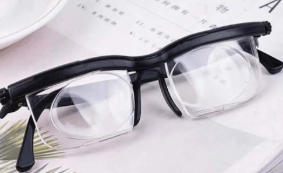

I recently started needing reading glasses, probably because I’m spending so much time staring at my computer screen since I began working remotely. I’ve bought a couple of pairs, but honestly, they haven’t been as helpful as I’d hoped. I still find myself struggling with small text, especially when I’ve been working for hours. So when I came across Vi-Shift Glasses, I was curious. They’re advertised as adjustable glasses that let you change the focus by turning small dials on the frames. That sounded interesting, particularly since I was already having trouble finding reading glasses that worked well for me. I decided to look into them and see if they were any different. In this review, I’ll explain how Vi-Shift Glasses work, what they claim to offer, and whether they seem like a worthwhile option.
Table of Contents
- About Vi-Shift Glasses
- Vi-Shift Glasses and Their Adjustable Lens Range
- Can Vi-Shift Replace Prescription Glasses?
- Does the Technology Actually Work?
- Vi-Shift Glasses Customer Reviews
- Are Vi-Shift Glasses Safe?
- Are Vi-Shift Glasses Worth Buying?
- Final Verdict
About Vi-Shift Glasses
Vi-Shift Glasses are adjustable-focus glasses designed to let people change the strength of their lenses without buying a different pair for every activity. They have small dials on the sides of the frame, and each lens can be adjusted separately. According to the product information, the idea is to make it easier to switch between reading, working on a computer and looking at things in the distance. This is quite different from ordinary reading glasses, which have a fixed strength. With those, you have to choose the magnification you need and hope it works for most of your daily activities. Vi-Shift is supposed to give you more control by allowing you to make adjustments whenever necessary. I can see why that would appeal to someone who struggles with ordinary glasses, but I wanted to know how much difference those little dials could actually make.
Vi-Shift Glasses and Their Adjustable Lens Range
The advertised adjustment range is -6 to +3 diopters. In simple terms, negative numbers are generally used for nearsightedness, while positive numbers are used for farsightedness and certain reading difficulties. Turning the dials changes the lens strength, allowing the wearer to find a setting that makes things appear clearer. The left and right lenses can be adjusted independently, which is useful because the two eyes don’t always need the same correction. Adjustable-focus glasses aren’t a new invention, either. Some designs use lenses that slide over each other, while others use liquid-filled lenses that change shape when the wearer turns a control. Both methods can change the strength of a lens. However, the product information doesn’t give enough detail to establish exactly how Vi-Shift’s lens mechanism is built. The advertised range also doesn’t mean the glasses can correct every eyesight problem. For example, people with astigmatism need a different type of correction, and simply turning a dial won’t provide it. So while the adjustment range sounds impressive, there’s more to choosing the right glasses than finding a number that makes things look sharper.
Can Vi-Shift Replace Prescription Glasses?
This was one of the first things I wanted to understand because the whole idea of adjustable glasses is that you don’t have to keep buying different pairs. But can they really replace ordinary prescription glasses? I’m not convinced. When you visit an optician, your eyes are examined to determine the correction each one needs. The examination can also identify problems such as astigmatism, which ordinary adjustable lenses may not correct. With Vi-Shift, you’re expected to turn the dials yourself and decide when your vision looks clear enough. That might help someone with a straightforward focusing problem, but it doesn’t guarantee that the lenses are giving them the correct prescription. There’s also the question of whether one setting will work comfortably for reading, computer use and distance viewing. Someone who needs more than basic correction may still need properly prescribed glasses. If your current reading glasses aren’t working well, it’s probably better to find out why before assuming an adjustable pair will solve the problem.
Does the Technology Actually Work?
I wanted to find out whether adjustable glasses were just another clever advertising idea or whether there’s actual research behind them. It turns out that the technology is real. A 2023 clinical trial published in JAMA Ophthalmology studied adjustable-focus glasses in children and found that 79.5% achieved vision of 20/25 or better after adjusting the lenses themselves. That’s encouraging, because it shows that some adjustable glasses can provide useful vision correction. However, the study also found that children with higher levels of astigmatism were more likely to struggle with the glasses. There’s an important difference between that research and what Vi-Shift is selling, though. The trial tested a particular type of adjustable eyewear under clinical conditions. It didn’t test Vi-Shift or prove that its lenses provide the same results. I couldn’t find independent testing showing how accurately Vi-Shift adjusts vision or how well it performs after regular use. So the technology itself has some scientific backing, but that doesn’t automatically mean this particular product works as advertised.
Vi-Shift Glasses Customer Reviews
Customer feedback is another area I looked into, but it wasn’t as straightforward as I expected. Some people praise adjustable glasses for making reading and everyday activities easier, while others complain that their glasses didn’t improve their vision as promised. Complaints associated with the Vi-Shift name include lenses that allegedly made little difference, adjustment dials that didn’t work properly and frames that felt cheap or uncomfortable. There are also positive testimonials displayed with the product, but some of the written reviews appear to describe ordinary progressive reading glasses rather than glasses with manually adjustable lenses. That makes it difficult to know whether all those reviews actually relate to the same product. I wouldn’t dismiss every positive or negative comment because individual experiences can differ, especially when people have different eyesight problems. Still, there isn’t enough dependable feedback to establish how well Vi-Shift performs for most buyers. I would have liked to see more detailed reviews showing how the glasses work after weeks or months of normal use, rather than just short comments saying they are great.
Are Vi-Shift Glasses Safe?
Adjustable glasses aren’t automatically unsafe, but getting the lens strength wrong can cause blurred vision, headaches and eye strain. The bigger concern is assuming that because something looks clearer after turning a dial, your eyesight has been properly corrected. That’s not always the case. The International Agency for the Prevention of Blindness has warned that self-adjustable glasses can result in overcorrection or undercorrection. They also cannot correct astigmatism. This is why an eye examination is still important, even if you’re interested in trying adjustable eyewear. I also wouldn’t use Vi-Shift for driving or other activities where clear vision is essential without first having an eye care professional confirm that the glasses provide suitable correction. It’s better to know exactly what your eyes need than to keep guessing with different lens settings.
Are Vi-Shift Glasses Worth Buying?
I understand the appeal of Vi-Shift because having one adjustable pair instead of several ordinary glasses sounds convenient. That’s what caught my attention in the first place. However, after looking into the product, I still have some unanswered questions. The adjustable-focus technology is real, but I couldn’t find independent evidence showing that Vi-Shift itself provides accurate correction or remains comfortable with everyday use. The advertised lens range also doesn’t cover every type of vision problem, so some people may not get the results they’re expecting. Customer feedback doesn’t make the decision any easier, especially when it’s difficult to separate reviews of adjustable glasses from comments about ordinary reading glasses. For someone who only needs basic reading help, the idea might be tempting, but I wouldn’t spend money on them expecting them to replace a proper prescription.
Final Verdict
Vi-Shift Glasses caught my attention because I was already having trouble finding reading glasses that worked well for me. The idea of adjusting the lenses instead of buying another pair sounded like a good solution. After looking into them, I found that adjustable-focus glasses are a real thing, and there’s some research showing that the technology can work. The problem is that I couldn’t find enough evidence to say that Vi-Shift delivers the same results. There are questions about the actual lens mechanism, how accurately it corrects vision and how comfortable the glasses are during everyday use. They also aren’t suitable for every eyesight problem. I wouldn’t rule out adjustable glasses altogether, but I’m not convinced that Vi-Shift is a reliable replacement for properly prescribed eyewear. For now, I’d rather know exactly what correction my eyes need than take a chance on a pair of glasses that may or may not work for me.
Read also >>> Hj-jewels.com EXPOSED: Scam or Legit Jewelry Giveaway?


[…] Read also >>> Vi-Shift Glasses Review: Do These Adjustable Glasses Really Work? […]
[…] Read also … Vi-Shift Glasses Review: Do These Adjustable Glasses Really Work? […]