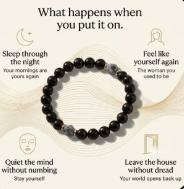

Can a bracelet really calm anxiety, stop racing thoughts, and help you sleep better? That’s the question the Veylor Obsidian Bracelet is built around. The marketing doesn’t present it as ordinary jewelry. Instead, it’s sold as a natural anxiety solution that supposedly supports the nervous system, reduces 3 AM wake-ups, calms a racing heart, and helps people feel more grounded throughout the day. The bracelet combines black obsidian and black tourmaline stones and leans heavily on wellness and anxiety-related messaging.
After looking through the claims, the materials, and the science being referenced, I came away with a very different impression than the one shown on the sales page.
Quick Take
- Marketed as a natural solution for anxiety and nervous system support
- Made from black obsidian and black tourmaline stones
- The bracelet itself appears to be a real physical product
- Strong claims about anxiety relief are not supported by established medical evidence
- Overall impression: a bracelet with wellness branding rather than a proven anxiety treatment
Table of Contents
- Quick Take
- What Is the Veylor Obsidian Bracelet?
- The Claims Started Raising Questions
- The “Science” Section Deserves a Closer Look
- What You’re Really Buying
- A Pattern I Keep Seeing
- Is the Veylor Obsidian Bracelet Legit?
- Conclusion
- FAQ
What Is the Veylor Obsidian Bracelet?
The Veylor bracelet combines black obsidian and black tourmaline beads on a stretch cord and is marketed as a wearable tool for calming anxiety, improving sleep, and supporting emotional well-being. The company describes it as a way to naturally regulate the nervous system and reduce symptoms that conventional solutions supposedly haven’t solved.
At its core, though, it’s still a stone bracelet. The real question isn’t whether the stones exist. It’s whether they can actually do what the marketing says they do.
The Claims Started Raising Questions
One thing that immediately stood out was how far the advertising goes.
The bracelet is linked to:
- anxiety relief
- improved sleep
- reduced racing heart sensations
- nervous system regulation
- emotional balance
Those are significant health-related outcomes.The problem is that the sales page presents these benefits with a level of certainty that goes well beyond what has been scientifically demonstrated for wearing stones on a wrist. A bracelet can certainly have personal meaning. It can serve as a reminder to slow down, breathe, or stay mindful. That’s very different from proving it changes anxiety physiology.
The “Science” Section Deserves a Closer Look
The Veylor website references piezoelectricity, tourmaline crystals, and historical scientific research to support its claims. Here’s where things become confusing.
Piezoelectric properties in certain minerals are real scientific phenomena. However, that’s not the same thing as proving that wearing a bracelet on your wrist regulates the nervous system, improves sleep, or treats anxiety.
Those are separate claims entirely. I couldn’t find convincing evidence that wearing obsidian and tourmaline beads produces the kinds of health outcomes being promised on the sales page. The leap from mineral properties to anxiety treatment is much larger than the marketing suggests.
What You’re Really Buying
If someone purchases the Veylor bracelet, they’re receiving a piece of jewelry made with obsidian and tourmaline stones. The company highlights the stones’ grounding and protective qualities, which are common themes in crystal and wellness communities. Whether those beliefs resonate with someone personally is a separate discussion.
What matters from a review perspective is that the bracelet should not be confused with a medically proven treatment for anxiety, panic attacks, insomnia, or other health concerns.
A Pattern I Keep Seeing
This reminded me of products like the GenciVie Dental Powder and the MyMyde Herbal Diffuser. The product itself is real. The problem isn’t whether it exists.
The pattern appears when ordinary products get wrapped in health and wellness claims that sound far more certain than the available evidence. A bracelet becomes an anxiety solution. A diffuser becomes a wellness breakthrough. A simple product starts carrying expectations it may not realistically meet.
Is the Veylor Obsidian Bracelet Legit?
The bracelet itself appears to be a legitimate product made from obsidian and tourmaline beads. The bigger concern is the marketing. The claims about calming anxiety, regulating the nervous system, stopping 3 AM wake-ups, and producing significant emotional changes are much harder to verify than the sales page suggests. That’s where skepticism becomes reasonable.
Conclusion
The Veylor Obsidian Bracelet looks more like a wellness accessory than a proven anxiety solution. If you enjoy crystal jewelry, find meaning in the stones, or simply like the design, there’s nothing unusual about buying it for those reasons.
But if you’re purchasing it expecting a scientifically proven way to treat anxiety, improve sleep, or regulate your nervous system, the evidence becomes much less convincing than the marketing makes it appear.
FAQ
Does the Veylor Obsidian Bracelet treat anxiety?
The bracelet is marketed for anxiety support, but there is no established medical evidence showing that wearing obsidian and tourmaline beads treats anxiety disorders.
Is the bracelet made from real stones?
According to the company, it contains genuine black obsidian and black tourmaline beads.
Does obsidian have scientifically proven healing properties?
Obsidian is a naturally occurring volcanic glass. Claims about emotional healing, protection, and grounding are generally based on spiritual or wellness traditions rather than established medical science.
Is the Veylor bracelet a scam?
The bracelet itself appears to be a real product. The debate centers more on the health claims than on whether the bracelet physically exists.