
VertiClear Pro caught my attention because the advertising makes vertigo sound like something you might be able to calm with a small device wrapped around your neck for 15 minutes. No medication, no appointment, and supposedly no need to wait for the spinning sensation to pass on its own. That is a big promise for an $89.99 device, so I decided to investigate what VertiClear Pro actually does and how well the marketing matches the evidence behind it.
The device itself isn’t particularly mysterious. It’s essentially a rechargeable neck massager combining electrical muscle stimulation, heat, and vibration. Those features can certainly make tense neck muscles feel more relaxed. The part I have trouble with is the leap from relaxing your neck to claims about correcting the nerve activity responsible for vertigo.
Quick Takeaway
- VertiClear Pro costs $89.99 and combines EMS, heat, and vibration.
- Each recommended session lasts around 15 minutes.
- The physical device makes sense as a neck relaxation or massage product.
- Some VertiClear advertising goes much further, claiming it can stop spinning sensations and target the cause of vertigo.
- I couldn’t find convincing product-specific clinical evidence supporting those larger vertigo claims.
- The official product page itself says the product isn’t intended to diagnose, treat, cure, or prevent disease.
- Independent Shop feedback is mixed, with a 3.1/5 rating from 38 ratings when I checked.
- I wouldn’t rely on VertiClear Pro as a substitute for finding out what’s actually causing recurring dizziness or vertigo.
Table of Contents
- Quick Takeaway
- What VertiClear Pro Actually Does
- The Vertigo Ads
- The Science Doesn’t Automatically Follow the Device
- The Website Itself Uses Much More Careful Language
- The “FDA Cleared” Claim
- Real Customer Feedback
- The Safety Instructions Are Worth Reading
- Is VertiClear Pro Worth Buying?
- Before You Buy, Ask Yourself This
- Conclusion
What VertiClear Pro Actually Does
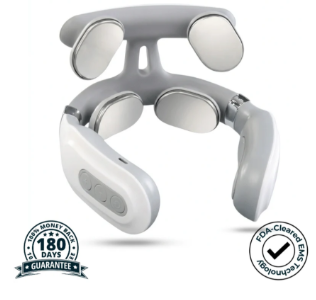
Put the medical-sounding language aside and the hardware is fairly easy to understand. VertiClear Pro sits around the back of your neck. Four metal pads make contact with the skin behind your ears and around the base of the skull. You apply conductive gel, select an EMS intensity and heat setting, and let the device run for 15 minutes. There are 16 EMS intensity levels and six massage patterns. The electrical stimulation creates a tingling or pulsing sensation, while heat and vibration are intended to relax the surrounding muscles.
I don’t find any of that particularly questionable. Heat can feel good on tense muscles. Massage can help people relax. Electrical muscle stimulation is also established technology. If VertiClear were simply advertised as a heated EMS neck massager, I’d have far fewer questions.
The Vertigo Ads
This is where VertiClear Pro becomes a very different product. One of its sales pages says the device can stop spinning sensations within 15 minutes. It talks about interrupting “nerve panic,” restoring balance, calming the nervous system and addressing vertigo at its source. Another advertorial goes even further, describing VertiClear Pro as a device that “erases” vertigo by resetting distorted signals travelling through vestibular nerve pathways. Those aren’t ordinary massage claims.
Vertigo isn’t one single condition with one universal cause. The spinning sensation can occur for different reasons, including problems involving the inner ear, vestibular system, migraine and other medical conditions. That makes me uncomfortable with any simple explanation suggesting that neck tension is the underlying reason people have been experiencing vertigo for years.
The Science Doesn’t Automatically Follow the Device
EMS, heat and massage don’t become questionable technologies just because they’re used in VertiClear. The problem is what we’re asking those technologies to accomplish. There is a huge difference between saying:
“This device may relax tense muscles around your neck.”
and saying:
“This device interrupts the nerve signals causing your vertigo.”
I couldn’t find published clinical trials demonstrating that this particular VertiClear Pro device reliably stops vertigo by resetting vestibular nerve signalling in the way its advertising describes. That’s the evidence I’d want before treating an $89.99 neck device as something capable of addressing a neurological or vestibular symptom.
Without that evidence, I think the more reasonable expectation is relaxation and temporary comfort around the neck rather than assuming the underlying cause of vertigo has been corrected.
The Website Itself Uses Much More Careful Language
There’s an interesting difference between the current VertiClear product page and some of the promotional pages used to sell it. The regular store page now focuses heavily on neck tension. It says VertiClear Pro targets tight muscles at the base of the neck and describes the experience as relaxing and loosening. That’s much easier for me to accept.
At the bottom of the same page is a disclaimer saying the statements haven’t been evaluated by the FDA and that the product isn’t intended to diagnose, treat, cure, or prevent disease. Compare that with advertising telling people the device stops vertigo, targets its cause, restores balance and interrupts abnormal nerve signals. Those two presentations leave me wondering which product I’m supposed to be evaluating: a neck-relaxation device or a treatment for vertigo.
The “FDA Cleared” Claim
Some VertiClear promotional material has used “FDA Cleared” language, and this is something I’d want documented very clearly before relying on it. FDA clearance isn’t a general stamp saying every marketing claim made about a device has been proven. What matters is which specific device was cleared and for what intended use.
I couldn’t independently verify from the information available to me that VertiClear Pro has FDA clearance specifically supporting the claim that it treats vertigo. The company’s own product page also carries the disclaimer that its statements haven’t been evaluated by the FDA and that the product isn’t intended to diagnose or treat disease. If FDA status is part of the reason you’re considering buying VertiClear Pro, I would want the specific clearance information rather than relying on the words appearing in an advertisement.
Real Customer Feedback
VertiClear’s own store presents a huge number of reviews, but I wanted to see feedback outside the main sales page. The Shop listing was much more mixed. When I checked, VertiClear Pro had a 3.1 out of 5 rating from 38 ratings there. One verified purchaser said the device tingles and vibrates and feels good but couldn’t yet tell whether it was actually correcting their vertigo. Another simply said it wasn’t what they expected. Those comments sound much more useful to me than dramatic stories about someone’s vertigo disappearing. They also fit what I’d realistically expect from this device. You may put it around your neck, feel warmth, electrical stimulation and vibration, and enjoy the sensation. Whether that translates into reliably treating vertigo is an entirely different question.
The Safety Instructions Are Worth Reading
This isn’t a gadget I’d put around my neck and immediately crank up to the highest setting. VertiClear says users should start with low EMS intensity and use conductive gel on the four metal pads. Its instructions say insufficient conductivity can cause uncomfortable tingling or burning sensations.
The company also says the device shouldn’t be used by people with pacemakers or implanted electronic devices. Its instructions list several additional situations where it shouldn’t be used or where medical advice is appropriate. That alone tells you this should be treated as an electrical stimulation device rather than a harmless vibrating neck pillow. And if you’re experiencing unexplained or recurring vertigo, I wouldn’t use a device like this to avoid getting the underlying cause evaluated.
Is VertiClear Pro Worth Buying?
As an $89.99 heated EMS neck massager, I can understand why someone might enjoy VertiClear Pro. You get adjustable electrical stimulation, heat, multiple massage patterns, a rechargeable design and short 15-minute sessions. Someone who regularly carries tension around the neck may genuinely enjoy using it. I become much less enthusiastic when the reason for buying changes to: “I have vertigo and this will fix it.” I haven’t found enough evidence to support that expectation. That difference completely changes my verdict on the product.
Before You Buy, Ask Yourself This
VertiClear Pro is one of those products where I’d first work out whether I’m buying the device or buying the promise attached to it.
- Do I mainly want an EMS and heated neck massager?
- Am I expecting VertiClear Pro to treat recurring vertigo?
- Do I actually know what’s causing my dizziness?
- Have I seen product-specific clinical evidence supporting the claims that persuaded me?
- Am I relying on “FDA Cleared” wording without knowing exactly what was cleared?
- Do I have a pacemaker, implanted electrical device, recent neck surgery, or another reason electrical stimulation may be unsuitable?
- Would I still spend $89.99 if the product were advertised simply as a neck relaxation device?
- Am I ordering because I genuinely want the device or because a limited-stock message and 50% discount are rushing me?
That second-to-last question is the one I’d pay the most attention to. If VertiClear still sounds worthwhile after removing the vertigo promises, then at least you’re buying it for something the hardware is clearly designed to do.
Conclusion
VertiClear Pro isn’t a device I’d dismiss as completely useless. EMS, heat and vibration can make for a perfectly reasonable neck-massage experience, and some users may genuinely find those 15-minute sessions relaxing. My problem is with the much bigger story being built around that hardware. Claims about stopping vertigo, calming vestibular nerve panic, resetting abnormal signals and addressing the problem at its source require far stronger evidence than showing that an electrical neck massager can make tense muscles feel better. The fact that VertiClear’s regular product page now focuses much more heavily on neck tension makes that gap even harder for me to ignore.
If I wanted a heated EMS neck massager, I might compare VertiClear Pro with similar devices before deciding. If I were experiencing recurring vertigo, I wouldn’t spend $89.99 assuming this device had identified or treated the underlying problem. For me, VertiClear Pro makes considerably more sense as a neck relaxation device than as a vertigo treatment.
Also Read >>> Walmart-9s8.pages.dev Review: Do You Really Get a $750 Walmart Gift Card?