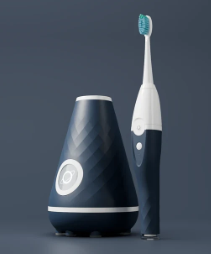

Most electric toothbrushes are designed to clean your teeth. The TAO Clean UMMA Diamond goes a step further by cleaning the toothbrush itself after every use. You finish brushing, place it inside a special docking station, and the base uses ultraviolet light and warm air to sanitize and dry the bristles. It’s an interesting idea, particularly when you consider how often toothbrushes sit damp on bathroom counters. But the UMMA Diamond costs around $205, which is a lot to spend on something you use for four minutes a day. TAO Clean says its system eliminates 99.9% of certain germs, provides 40,000 sonic vibrations per minute, and can make teeth visibly whiter in two weeks. Those claims sound impressive, but they raise a question I find more interesting than the technology itself: does having a cleaner toothbrush actually mean you’ll have healthier teeth and gums? I looked into the sanitizing system, the evidence behind the whitening claims, the brushing features, and the cost of replacement heads to see whether the UMMA Diamond offers a meaningful improvement over an ordinary electric toothbrush.
Quick Takeaway
- Product: TAO Clean UMMA Diamond Sonic Toothbrush
- Price: Approximately $205 on the official US website
- Brushing technology: 40,000 sonic vibrations per minute
- Cleaning modes: Clean and Gentle
- Special feature: UV-C sanitizing and automatic brush-head drying
- Germ reduction: Up to 99.9% under reported laboratory test conditions
- Whitening claim: Visibly whiter teeth within two weeks
- Battery life: Approximately 2–3 weeks per charge
- Replacement heads: $24.95 for two before advertised discounts
- Warranty: Lifetime coverage for qualifying manufacturing defects
- Verdict: A well-equipped electric toothbrush with a genuinely useful drying system, but its premium price is difficult to justify on oral-health benefits alone.
What Makes the TAO Clean UMMA Diamond Different?
The UMMA Diamond isn’t simply an electric toothbrush with an expensive charging stand. TAO Clean has built the product around a docking station called the BioShield Base, which stores the brush head inside an enclosed chamber after use. When you place the toothbrush in the dock, the system automatically activates a UV-C sanitizing cycle and dries the bristles. The idea is to reduce the number of microorganisms left on the brush and prevent it from remaining damp between uses. That’s a sensible design goal because bacteria and other microorganisms can accumulate on toothbrushes, particularly when they’re stored in humid bathrooms. The handle itself looks like a fairly conventional sonic toothbrush, with a slim body, interchangeable brush heads, and two brushing settings. It comes with a two-minute timer that gives a signal every 30 seconds, encouraging you to spend roughly equal time cleaning each section of your mouth. The package includes the handle, two brush heads, the sanitizing base, and a charging system. TAO Clean also offers several colours, although the finish doesn’t change how the toothbrush works. I like the fact that the cleaning system is automatic because it removes the need to remember an extra sanitizing routine. However, the base needs access to an electrical outlet, takes up counter space, and adds another piece of equipment to maintain. That’s a reasonable compromise for someone who wants a dedicated toothbrush storage system, but it may feel unnecessary to someone who prefers a simple brush and charger.
Does the UV-C Sanitizing Base Actually Work?
This is the most important part of the UMMA Diamond’s advertising, and it’s also where buyers need to separate two different ideas. UV-C light can damage the genetic material of microorganisms, preventing them from reproducing or remaining infectious. It’s a real disinfection technology used in various settings, including certain medical and laboratory applications. TAO Clean says its enclosed UV-C system has been independently tested and can eliminate 99.9% of selected bacteria and viruses on toothbrush heads. The company publishes laboratory results involving organisms such as E. coli, Salmonella, Streptococcus, influenza, and human coronavirus. Those results provide a basis for the company’s germ-reduction claims, although laboratory conditions aren’t identical to what happens in every household bathroom. The effectiveness of UV-C depends on factors such as exposure time, light intensity, and whether the light can reach contaminated surfaces. Bristles packed closely together may create shaded areas, and dried toothpaste or other residue can interfere with the process. That’s why rinsing the brush properly before docking it remains important. The automatic drying function is another practical advantage because reducing moisture can make the brush less favourable for microbial growth between uses. But there’s a much bigger question: does reducing germs on a toothbrush actually prevent tooth decay, gum disease, or illness? That’s not something the laboratory germ-reduction figures establish. A toothbrush can contain microorganisms without necessarily making its owner sick, and there isn’t strong clinical evidence showing that routine UV sanitizing produces better oral-health outcomes for most healthy people than properly rinsing, drying, and storing a toothbrush. The technology can work without being medically necessary. I would see the BioShield Base as an additional hygiene feature, not something that automatically makes the UMMA Diamond healthier than every ordinary electric toothbrush.
Sonic Cleaning, Gum Health, and the Whitening Claims
The UMMA Diamond produces up to 40,000 sonic vibrations per minute, which sounds powerful, but more vibrations don’t automatically mean cleaner teeth. Sonic toothbrushes use rapid movements to help the bristles remove plaque, the sticky bacterial film that builds up on teeth and around the gumline. Electric toothbrushes can improve plaque removal and gum health compared with manual brushing, particularly when people struggle to brush thoroughly or consistently. However, the effectiveness of a particular model depends on the brush-head design, how it moves, the pressure applied, and the user’s technique. TAO Clean advertises its brush as ten times more effective between teeth and suggests that two minutes of sonic brushing can deliver the equivalent of hours of manual brushing. I wouldn’t interpret those statements literally as proof that the UMMA Diamond can replace flossing or professional dental care. A toothbrush still cannot reliably clean every tight contact between teeth, regardless of how quickly it vibrates. The two brushing modes are useful, especially the Gentle setting for people who find stronger vibrations uncomfortable, but anyone with sensitive or receding gums should also pay attention to bristle softness and brushing pressure. Pressing harder doesn’t improve cleaning and can irritate gum tissue. The whitening claim deserves similar scrutiny. TAO Clean says its diamond-shaped bristles can make teeth visibly whiter within two weeks, and it advertises an average improvement of two shades in its testing. That may be possible when brushing removes surface stains from coffee, tea, or other sources. But a toothbrush doesn’t bleach the internal colour of teeth the way peroxide-based whitening treatments can. It also won’t change the colour of fillings, crowns, or other dental restorations. Someone with naturally darker teeth or deeper discolouration shouldn’t expect the same result as someone whose teeth have removable surface stains. I would judge the UMMA Diamond primarily on how comfortably and effectively it cleans, rather than buying it for a guaranteed whitening transformation.
TAO Clean UMMA Diamond Price and Replacement Costs
At approximately $205, the UMMA Diamond sits firmly in the premium electric toothbrush category. That puts it in competition with established ranges from Philips Sonicare and Oral-B, including models with pressure sensors, multiple brushing modes, and other features intended to improve brushing habits. TAO Clean’s main selling point isn’t a complicated set of brushing options. It’s the combination of sonic cleaning and an automatic sanitizing dock. Whether that’s worth the extra money depends on how much you value the convenience. There are also ongoing costs to consider. TAO Clean advertises its whitening replacement heads at $24.95 for a two-pack, with promotional pricing around $19.96. Replacing the head every three months means buying roughly two packs a year, which would cost about $40 to $50 at those prices. That’s not outrageous for an electric toothbrush, but it does mean relying on compatible TAO Clean heads rather than picking up a cheap generic brush at the supermarket. The company also sells sensitive, extended-reach, and children’s heads, which gives owners some flexibility. Battery life is advertised at two to three weeks per charge, although the dock itself needs to remain connected to electricity for its UV-C and drying functions. The automatic drying cycle can take several hours, so the system is best suited to someone who keeps the base in one place rather than frequently moving it around. TAO Clean currently advertises a 45-day money-back guarantee and lifetime warranty coverage for manufacturing defects. Those terms are reassuring, but the warranty doesn’t mean replacement heads or ordinary wear are covered forever. I’d also check the return conditions carefully, especially when ordering internationally. The UMMA Diamond could be a convenient long-term purchase, but buyers should understand that they’re paying for a complete toothbrush-and-storage system, not just stronger brushing performance.
TAO Clean UMMA Diamond vs Philips Sonicare and Oral-B
I think the fairest way to judge the UMMA Diamond is to compare what it offers with other good electric toothbrushes, rather than comparing it with a basic manual brush. Philips Sonicare uses a similar high-frequency brushing approach, while many Oral-B models use a round brush head that oscillates and rotates around individual teeth. Both approaches can remove plaque effectively when used correctly. Research comparing electric toothbrush designs has found some differences in plaque removal, but the evidence doesn’t establish that TAO Clean’s particular sonic system is clinically superior to comparable premium models. The UMMA Diamond also lacks some features found on competing toothbrushes. Its published specifications list two cleaning modes and a timer, but not a built-in pressure sensor. That’s worth considering because people sometimes press too hard when brushing, particularly if they’re trying to remove stains or clean around sensitive gums. A pressure sensor can alert them when they’re using excessive force, which may be more immediately useful than sanitizing the brush head after use. Some competing models also provide brushing feedback through connected apps, although I don’t consider an app essential for cleaning teeth. Where TAO Clean has a clearer difference is its enclosed UV-C and drying station. Most ordinary electric toothbrushes rely on users rinsing the head and allowing it to air-dry. If you specifically want automated brush-head storage and sanitizing, the UMMA Diamond offers something more distinctive than a standard charging stand. But if your priority is improving brushing technique, preventing excessive pressure, or simply getting a dependable electric toothbrush, a less expensive Sonicare or Oral-B model could make more sense. The UMMA Diamond isn’t necessarily a better toothbrush because it has a more elaborate base. It’s a different combination of features, and buyers need to decide which ones they’ll actually benefit from.
Is the TAO Clean UMMA Diamond Sonic Toothbrush Worth Buying?
I like the idea behind the UMMA Diamond, particularly the automatic drying system. Keeping a toothbrush clean and allowing it to dry properly are sensible habits, and TAO Clean has made that process more convenient with its enclosed docking station. The sonic brushing features are also perfectly reasonable for a premium electric toothbrush, and the two-minute timer encourages a habit that many people struggle to maintain. But I wouldn’t spend $205 expecting the UV-C system to prevent gum disease, stop cavities, or deliver a level of oral health that an ordinary electric toothbrush cannot achieve. The laboratory germ-reduction claims and the clinical benefits of using a sanitized brush are two different things. I also wouldn’t rely on the two-week whitening promise if my teeth had deeper staining or naturally darker enamel. For someone who already brushes properly and simply wants a more hygienic storage system, the UMMA Diamond could be a worthwhile luxury, especially with the advertised trial period and warranty. But for someone buying an electric toothbrush primarily to improve their teeth and gums, I’d place more value on gentle brushing, a suitable brush head, pressure control, and consistent cleaning between the teeth. A good toothbrush doesn’t need to cost $205 to do those things. My verdict is that the TAO Clean UMMA Diamond is a legitimate premium oral-care product with an interesting sanitizing feature, but its price is easier to justify as a convenience purchase than as a necessary investment in better dental health.
Read Also >>> NocturneCraft Nightmare Projector Review: Is It Legit or a Halloween Scam?


[…] Also Read >>> TAO Clean UMMA Diamond Review: Is It Worth $205? […]