
Blood sugar supplements aren’t hard to find these days, but Sweet Restore Glycogen Support stood out because of how confidently it’s marketed. According to the sales page, it can help maintain healthy blood sugar, reduce sugar cravings, boost energy, support weight management, and even promote heart health. Those are some big promises for a single supplement.
Whenever I come across a product making multiple health claims, I like to look beyond the headlines. Instead of focusing on what the company says, I wanted to see whether the claims hold up, whether the ingredients make sense, and if there are any red flags buyers should know about before spending their money.
Quick Verdict
- Overall impression: A blood sugar supplement built around familiar ingredients but marketed with several questionable claims.
- Biggest strength: Some of the listed ingredients have been individually studied for supporting healthy blood sugar metabolism.
- Biggest concern: The marketing contains claims I couldn’t independently verify, including unexplained percentages and broad health promises.
- Who may benefit: Adults looking for a supplement to complement a healthy lifestyle, not replace it.
- Who should be cautious: Anyone expecting dramatic blood sugar improvements or taking diabetes medication without medical advice.
- Bottom line: I wouldn’t call Sweet Restore Glycogen Support an outright scam, but there are enough unanswered questions that I’d proceed carefully.
Table of Contents
- Quick Verdict
- What Sweet Restore Glycogen Support Claims
- The First Red Flags I Noticed
- What’s Actually Inside?
- Can I Verify the Company’s Claims?
- What Are Other Buyers Saying?
- Is Sweet Restore Glycogen Support a Scam?
- A Pattern I Keep Seeing
- My Personal Take
- Sweet Restore Glycogen Support FAQ
What Sweet Restore Glycogen Support Claims
Sweet Restore Glycogen Support is promoted as a natural supplement designed to support healthy blood sugar levels, reduce cravings, improve energy, assist with weight management, and promote overall metabolic health. On paper, those benefits sound appealing. But whenever one supplement claims to tackle several health concerns at once, I immediately start looking for the evidence behind those claims.
The First Red Flags I Noticed
The first thing that caught my attention wasn’t the ingredient list, it was the marketing.
The “99.9% Accurate” Claim
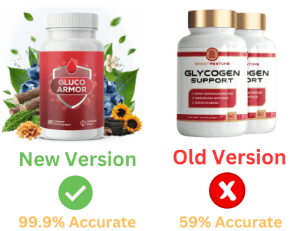
One statement on the website says the “new version” of Sweet Restore is 99.9% accurate, while the previous version is only 59% accurate.
My first question was simple:
Accurate at what?
I couldn’t find an explanation anywhere on the page. There was no reference to laboratory testing, clinical studies, or any methodology explaining where those numbers came from. Without context, those percentages don’t provide shoppers with meaningful information and appear to function more as a marketing tactic than evidence.
The “New Version vs. Old Version” Comparison
The website also compares the new bottle with the old one using a green check mark for the new version and a red X for the older version. That’s a common marketing strategy designed to create confidence in the latest formula while making previous versions appear inferior. What I couldn’t find, however, was an explanation of what actually changed in the formula or why the older version supposedly performed so much worse. Without supporting evidence, it’s difficult to know whether this comparison reflects meaningful improvements or simply promotional branding.
Very Broad Health Claims
Another thing that stood out was the number of benefits being promised. According to the marketing, Sweet Restore may help:
- Maintain healthy blood sugar
- Reduce sugar cravings
- Improve energy
- Support weight management
- Promote heart health
While some ingredients have been researched for metabolic health, making all of these claims together requires stronger evidence than I could find for the finished product.
What’s Actually Inside?
Looking at the ingredient list, nothing immediately struck me as revolutionary. The formula includes ingredients commonly found in blood sugar supplements, such as berberine, white mulberry leaf, bitter melon, chromium, and biotin. Several of these ingredients have attracted scientific interest individually. Berberine, in particular, has been studied for its potential role in supporting healthy glucose metabolism, while white mulberry and bitter melon have also shown promise in some research. The important distinction is that studies on individual ingredients don’t automatically prove that the finished Sweet Restore formula delivers the same results. I also couldn’t verify clear ingredient dosages, making it difficult to compare the formula with amounts used in published research.
Can I Verify the Company’s Claims?
This is where I started running into more unanswered questions. Although the marketing makes several strong health claims, I couldn’t find published clinical trials evaluating Sweet Restore Glycogen Support itself. Most of the scientific discussion appears to rely on studies involving individual ingredients rather than the finished supplement. I also found multiple websites promoting Sweet Restore using very similar wording, making it difficult to separate independent information from affiliate marketing. That doesn’t automatically make the product illegitimate, but it does make independent verification more challenging.
What Are Other Buyers Saying?
Outside the official sales pages, customer feedback appears mixed. Some users report feeling more balanced energy or fewer cravings after using the supplement consistently. Others say they noticed little change, while some complaints focus on ordering, billing, or customer service rather than the supplement’s effectiveness. That’s fairly common with supplements in this category. Individual results often depend on diet, exercise, existing health conditions, and whether someone is managing an underlying medical issue.
Is Sweet Restore Glycogen Support a Scam?
Based on everything I found, I wouldn’t immediately label Sweet Restore Glycogen Support a scam. However, I also don’t think buyers should accept every marketing claim at face value. The unexplained “99.9% accurate” claim, the unsupported comparison between the new and old versions, and the lack of product-specific clinical studies all raise questions that the company doesn’t clearly answer. For me, those are reasons to slow down before purchasing rather than rushing into a multi-bottle package.
A Pattern I Keep Seeing
I’ve investigated quite a few blood sugar supplements now, and the pattern is often the same: familiar ingredients, bold marketing, and very little product-specific evidence. If you’re still comparing options, you may also want to read my Gluco Armor, Gluco Off Gummies, and SugarBoost Supplement before deciding.
My Personal Take
After looking into Sweet Restore Glycogen Support, I think the ingredients are more convincing than the marketing. The formula contains several ingredients that have legitimate scientific interest, but I don’t think the available evidence supports treating this as a breakthrough solution for blood sugar management.
If you’re considering trying it, I’d focus less on the advertising and more on whether the ingredient list aligns with your needs and whether you’re already following the lifestyle habits that make the biggest difference for blood sugar health.
Sweet Restore Glycogen Support FAQ
Does Sweet Restore Glycogen Support really work?
Some of its ingredients have been studied individually, but I couldn’t find published clinical trials proving the finished formula works as advertised.
Is Sweet Restore Glycogen Support FDA approved?
No. Like other dietary supplements, it is not FDA-approved before being sold. The FDA regulates supplements differently from prescription medications.
Is Sweet Restore Glycogen Support a scam?
I wouldn’t call it an outright scam, but I found several marketing claims that couldn’t be independently verified and think buyers should research carefully before purchasing.
Can Sweet Restore Glycogen Support replace diabetes medication?
No. It should never be considered a replacement for prescribed medication or professional medical care.
Is Sweet Restore Glycogen Support safe?
Some ingredients are commonly used in supplements, but anyone with diabetes or taking medication should speak with their healthcare provider before trying it.