
Why does a supplement being advertised for gut health suddenly start sounding like a solution for weight loss, cravings, metabolism, and almost everything else?
That was the question that made me look into SodaTide. I wanted to see what was actually behind the product, who was selling it, and whether the claims matched what I could verify. The further I looked, the less comfortable I became with simply calling this another gut health supplement and moving on.
Quick Takeaways
- SodaTide is marketed as a prebiotic and probiotic supplement for gut health, metabolism, and weight management.
- The main ingredients promoted are chicory root inulin, potato resistant starch, and a three-strain probiotic blend.
- Some versions of the product information identify the probiotic organisms as Bifidobacterium infantis, Clostridium butyricum, and Akkermansia muciniphila.
- The marketing makes much bigger claims about fat burning, appetite control and metabolism than the available evidence can establish for the finished product.
- I found different SodaTide websites presenting different product information, which makes it difficult to know exactly which version a buyer is getting.
- Some product pages advertise thousands of verified customers, while independent review footprints are much harder to establish.
- A recent BBB Scam Tracker report describes a buyer receiving what they believed were counterfeit SodaTide bottles after purchasing through a Facebook advertisement.
- That complaint does not prove every SodaTide purchase is fraudulent, but it is something I would take seriously before ordering.
- I would not buy SodaTide because an advertisement promises that it will turn your gut into a “fat-burning” machine.
- The biggest issue I found is not that every ingredient is questionable. It is the gap between what can be verified and what the marketing wants you to believe.
What Is SodaTide?
SodaTide is sold as a daily gut health supplement combining prebiotic fiber, resistant starch, and probiotics. The basic idea is fairly familiar. Prebiotics provide food for certain gut microorganisms, while probiotics introduce live microorganisms. Resistant starch can also be fermented by gut bacteria and may influence the production of short-chain fatty acids. So the general concept isn’t strange. What caught my attention was how quickly the marketing moves from gut health to weight loss.
The sales pages describe SodaTide as supporting metabolism, appetite control, fat burning, blood sugar regulation, energy, and healthy weight loss. Some versions even describe the formula as creating a “fat-burning environment” inside the gut. That’s a much bigger promise than simply supporting digestion.
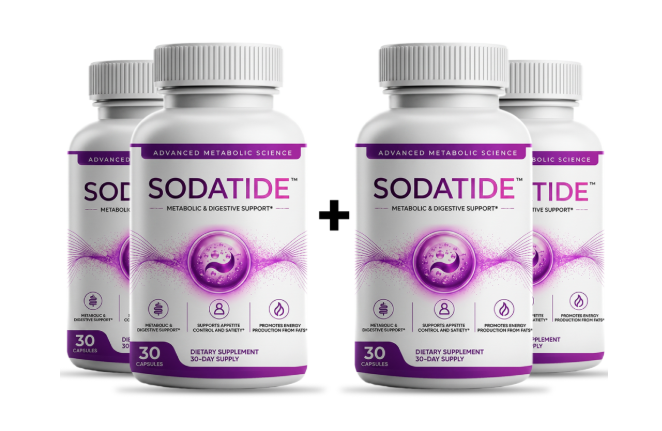
Table of Contents
- Quick Takeaways
- What Is SodaTide?
- The SodaTide Weight Loss Story
- What I Found in the Formula
- The Probiotic Information Needs a Closer Look
- The Dose Problem
- What the Ingredients Actually Tell Us
- Red Flags
- The Counterfeit Complaint I Found
- The Checkout Is Part of the Investigation
- Why the Marketing Works
- Before You Buy, Ask Yourself This
- Similar Scam Patterns
- What To Do If You Already Ordered
- My Verdict
- FAQ
The SodaTide Weight Loss Story
The central marketing idea is that your gut microbiome may be holding your metabolism back. According to the sales pitch, certain bacteria are associated with better metabolic health while other bacteria are linked to weight gain, inflammation, cravings, and poor blood sugar control. SodaTide is then presented as a way to change that environment.
The basic story goes something like this:
- Feed beneficial bacteria with prebiotic fibers.
- Introduce selected probiotic organisms.
- Improve the balance of the gut microbiome.
- Reduce inflammation.
- Improve metabolic function.
- Control cravings and appetite.
- Increase fat burning.
- Support lasting weight loss.
There’s enough legitimate science around the gut microbiome to make this sound convincing. The problem is what happens at the end of the chain. Research showing that gut bacteria can influence metabolism doesn’t automatically mean taking SodaTide will cause meaningful weight loss.
What I Found in the Formula
The formula being promoted most consistently contains three main components:
- Chicory root inulin
- Potato resistant starch
- A three-strain probiotic blend
Some current product information identifies the probiotic blend as Bifidobacterium infantis, Clostridium butyricum, and Akkermansia muciniphila. That combination makes sense from a gut-health perspective.
Inulin is a prebiotic fiber. Resistant starch is also used by gut bacteria. Probiotics are intended to provide specific microorganisms that may interact with the existing microbiome.
The problem is that knowing the names of the ingredients isn’t enough. I also need to know the amounts. And that’s where SodaTide becomes much harder to evaluate.
The Probiotic Information Needs a Closer Look
One of the more unusual things I found was inconsistency between SodaTide’s marketing material and the product information appearing on some sales pages. Some marketing pages discuss familiar probiotic strains such as Lactobacillus acidophilus, Bifidobacterium longum, Bifidobacterium breve, and Lactobacillus rhamnosus.
Other versions identify a completely different three-strain combination, including Akkermansia muciniphila. That’s not a minor detail. With probiotics, the exact organism matters. Different strains can behave differently, and research involving one strain shouldn’t automatically be applied to another simply because they belong to the same species. If I’m buying a probiotic, I want the label and the marketing page telling me the same story. SodaTide doesn’t always make that easy.
The Dose Problem
There is another issue I couldn’t ignore. Some versions of the SodaTide information identify the total probiotic blend by weight rather than giving a clear colony-forming unit count for each organism. Other product pages don’t make the individual quantities particularly easy to verify. That matters because probiotics are generally discussed in terms of viable microorganisms, commonly expressed as CFUs.
A number in milligrams tells me how much the blend weighs. It doesn’t tell me how many live organisms are actually present. The same problem applies to the prebiotic ingredients. One current product version lists 211 mg of chicory root inulin and 100 mg of potato resistant starch. Those aren’t automatically useless amounts, but they are much smaller than the gram-level quantities commonly discussed for some prebiotic uses. So when I see a sales page describing the formula as a powerful microbiome intervention, I want to know exactly how much of each component I’m getting.
What the Ingredients Actually Tell Us
Chicory Root Inulin
Inulin is a legitimate prebiotic fiber. It can be fermented by gut bacteria and can encourage the growth of certain beneficial microorganisms. That makes it a reasonable ingredient for a gut health formula. But inulin isn’t a weight-loss drug. Some people also experience gas, bloating, or digestive discomfort when increasing their intake of inulin and other fermentable fibers. So the ingredient itself makes sense. The marketing around it needs more restraint.
Potato Resistant Starch
Resistant starch is another legitimate gut-health ingredient. Because it isn’t fully digested in the small intestine, some reaches the colon where gut bacteria can ferment it. There is research into resistant starch and metabolic health, but that doesn’t mean a small amount inside a capsule will automatically produce substantial changes in body weight. Again, the ingredient is not the problem. The size of the promise is.
The Probiotic Blend
This is the part I would want the most information about before buying. Probiotics are not interchangeable. The strain, dose, viability, storage conditions, and intended use can all matter. If the product doesn’t clearly tell me how much of each organism I’m receiving, I can’t meaningfully compare the formula with the research being used to support its ingredients. That makes the impressive-sounding strain names less useful than they initially appear.
Red Flags
Multiple SodaTide Websites
This was one of the first things that made me slow down. There are multiple websites using the SodaTide or Sodatide name, and the information isn’t perfectly consistent between them. Some present themselves as official sites, while others use similar branding and product descriptions.
I’ve seen this before with online supplements. It creates a simple problem for the buyer: which website is actually selling the product you think you’re purchasing?
If two bottles have similar packaging but different ingredient panels, that’s not something I want to discover after the payment has gone through.
The “Fat-Burning Gut” Language
SodaTide’s marketing repeatedly connects gut bacteria with fat burning, appetite control, and metabolism. The underlying relationship between the microbiome and metabolic health is a legitimate research area.
But the sales language can make it sound as though changing your gut bacteria with one capsule will switch your metabolism into a different mode. That’s a much bigger conclusion. I wouldn’t treat the microbiome as a magic explanation for every case of weight gain.
The Customer Numbers
Some SodaTide websites display very large customer numbers and thousands of positive reviews. One current site, for example, advertises more than 2,600 verified reviews. Another version claims more than 18,000 verified customers. Those numbers are difficult for me to evaluate independently.
A number printed on a sales page isn’t the same thing as an independently verifiable customer history. That doesn’t mean the numbers are necessarily fabricated. It means I wouldn’t use them as proof that the product works.
The Counterfeit Complaint I Found
A recent complaint published through the BBB Scam Tracker describes a consumer who says they purchased SodaTide after seeing a Facebook advertisement. According to the report, the buyer initially ordered six bottles, was offered another 12-bottle upgrade, received 18 bottles, and believed the products were counterfeit. The reported loss was $641, and the complaint identifies BuyGoods as the payment site.
That’s a serious allegation. But I don’t want to turn one consumer report into proof that every SodaTide order is fake. What it does tell me is that buyers should be extremely careful about where they purchase the product, especially when the advertisement leads to a sales page offering aggressive multi-bottle upgrades.
If you receive a product that looks different from the advertisement or label information, document it immediately.
The Checkout Is Part of the Investigation
I don’t stop investigating a supplement once I’ve read the ingredient list. The checkout matters too.This is especially true with products promoted through social media advertisements, where the initial purchase can be followed by additional offers.
Before paying for SodaTide, I’d check:
- The exact number of bottles being ordered.
- The final price rather than the advertised starting price.
- The merchant name appearing on the payment page.
- Whether another package has been added.
- Whether shipping is included.
- The refund period.
- The actual refund conditions.
- Whether the website you’re using matches the company information on the bottle.
I’d also screenshot the checkout page. If something goes wrong later, having the original offer and order terms can make a big difference.
Why the Marketing Works
The appeal of SodaTide isn’t really the capsule. It’s the explanation. If you’ve struggled with weight, bloating, cravings, or digestive problems, being told that the problem might be hidden inside your gut gives you a new explanation for something that has probably frustrated you for years. Then the advertisement gives you a solution that sounds simple. You don’t need another restrictive diet. You don’t need a stimulant. You don’t need complicated meal planning. You just need to fix your gut.
That’s a powerful sales message because it turns a complicated problem into a single understandable cause. Real biology is rarely that simple.
Before You Buy, Ask Yourself This
Am I buying SodaTide because I want basic gut-health support, or because I believe it will make me lose weight? Those are two very different expectations.
If you’re buying it for weight loss, I’d be especially cautious about taking the advertisement literally. Gut health can be relevant to metabolic health, but that doesn’t mean one supplement can override diet, activity, sleep, medications, genetics, or an underlying medical condition.
I’d also ask myself whether I’m comfortable buying a probiotic when the exact strain and dose information isn’t consistently presented across the product pages I’m seeing. If I can’t establish exactly what’s in the bottle, I’m not comfortable paying a premium price for it.
Similar Scam Patterns
I’ve seen similar tactics in other supplement investigations, where a legitimate health concept gets wrapped in exaggerated claims and an aggressive sales pitch.
My Melt Peak Drops review, Bariatric Gelatin Recipe review, and HorseFil Gummies review cover some of those patterns. The products are different, but the strategy is familiar: make the health problem feel urgent, give the ingredients a scientific-sounding role, and make the purchase feel like the obvious next step.
What To Do If You Already Ordered
If you’ve already purchased SodaTide, save everything. Keep the advertisement, order confirmation, receipt, checkout page, product photos, packaging, and any emails you received.
If the bottle you receive doesn’t match the product information you were shown, photograph the differences before throwing anything away.
Check your bank or card statement for the exact merchant and amount charged. If you see additional charges you didn’t authorize, contact the seller and your payment provider promptly.
If you’re seeking SodaTide because of persistent digestive symptoms, unexplained weight changes, ongoing bloating, or other health concerns, don’t let the supplement replace a proper medical evaluation.
My Verdict
SodaTide is not something I’d buy casually. The gut-health concept is legitimate, and the ingredients themselves aren’t particularly mysterious. What makes me cautious is the inconsistent product information, the aggressive weight-loss positioning, the difficulty verifying some of the probiotic details, and the recent counterfeit-product complaint.
I don’t need to call every bottle of SodaTide a scam to decide that there are too many unanswered questions for me to hand over my money without checking the seller first.
When the label raises questions that the sales page doesn’t answer, I keep my wallet closed.
FAQ
Is SodaTide a scam?
I found enough issues to recommend caution, but I would not claim that every SodaTide product or seller is fraudulent based solely on the evidence available. The inconsistent websites and a recent BBB Scam Tracker complaint involving an alleged counterfeit order are legitimate reasons to investigate the seller carefully before purchasing.
What is SodaTide used for?
SodaTide is marketed for gut health, digestive support, metabolism, appetite, and weight management. Its formula is based around prebiotic fiber, resistant starch, and probiotics.
Does SodaTide really work for weight loss?
There is legitimate research connecting gut bacteria, dietary fiber, resistant starch, and metabolic health. That does not establish that SodaTide itself causes meaningful weight loss. I would not treat the product as a proven weight-loss treatment.
What are the ingredients in SodaTide?
The product information most commonly identifies chicory root inulin, potato resistant starch, and a three-strain probiotic blend. Some versions identify the probiotics as Bifidobacterium infantis, Clostridium butyricum, and Akkermansia muciniphila.
