
I picked up the DREO Reverse Osmosis Water Filter mostly because I was tired of buying plastic water bottles every week and doing the math on how much that actually adds up to over a year. Been using it every single day for about four months now, and I’m genuinely glad I bought it.
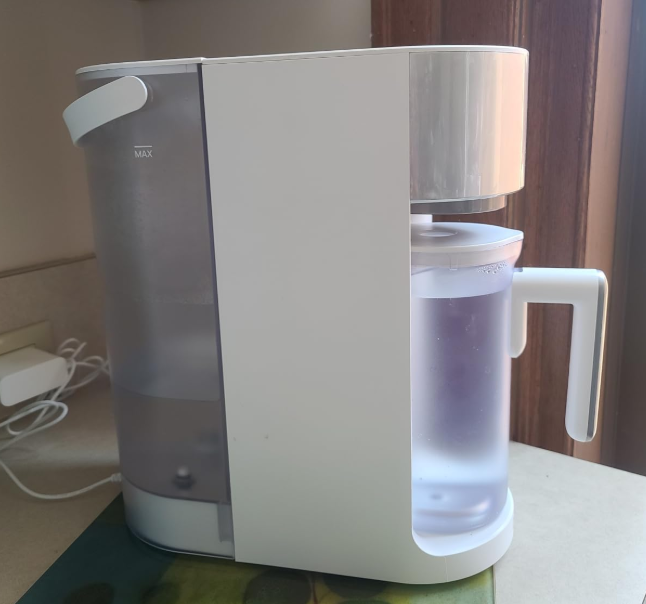
Table of Contents
- What Is the DREO Reverse Osmosis Water Filter?
- Four Months In, Still No Issues
- The One Tip That Actually Matters
- Features, Build Quality and Design
- Should You Trust DREO’s Filtration Claims?
- Pros and Cons
- Bottom Line
- Frequently Asked Questions
What Is the DREO Reverse Osmosis Water Filter?
It’s a countertop reverse osmosis system, so no drilling into your sink or dealing with an installer, you just set it on the counter, plug it in, and run your tap water into it. DREO’s version uses a multi-stage filtration process aimed at removing things like chlorine, PFAS, lead, and other contaminants, and it comes with a pitcher that auto-fills once it’s placed under the unit. Mine’s the smaller size, though DREO also sells a larger version, more on that later.
Four Months In, Still No Issues
Not a single problem so far. No leaks, no weird noises beyond the normal filtration buzz, nothing breaking down or needing attention outside of regular maintenance. The water tastes noticeably better too, not in a subtle “I guess I can tell the difference” way, actually good.
Money-wise it’s paid for itself faster than I expected. Once you stop buying cases of bottled water every week, it adds up fast, probably faster than most people realize until they actually stop buying them and watch the savings show up.
I liked it enough that I bought a second pitcher. I just rotate them in and out of the fridge, so there’s always cold filtered water ready to go instead of waiting on a fresh pitcher to filter every time I run out.
The One Tip That Actually Matters
If you get one of these, empty the reservoir fully and refill it instead of just topping water off on top of what’s already in there. It’s an easy habit to skip since topping off feels more convenient in the moment, but doing it properly is apparently what gets you the full lifespan out of the filter instead of wearing it out early. Small habit, but worth building right from day one.
Features, Build Quality and Design
The whole unit is plastic, no metal housing or anything like that, and I’ll admit that was my first hesitation looking at it before I bought it. In practice it doesn’t feel cheap or flimsy at all. Four months of daily use and it still feels solid, no cracking, no discoloring, nothing loose. I wouldn’t call it built like a tank, but it’s held up better than the plastic construction made me expect going in.
Should You Trust DREO’s Filtration Claims?
This is the part I’d actually tell people to look into a little themselves before assuming the marketing numbers at face value. Before I bought mine, I saw other reviewers mention that DREO includes a QR code in a couple of their promotional photos that links out to a several-page test result document from SGS, a third-party testing lab. If you want to confirm the contaminant-removal percentages actually match what’s advertised rather than just taking the product page’s word for it, that QR code is apparently how you check it yourself instead of relying on marketing copy alone. I’d still recommend the unit, I just think that’s a reasonable extra step before you fully buy into every number on the listing.
Pros and Cons
What I liked:
- Four months of daily use with zero issues
- Water tastes noticeably better than straight tap
- Saved real money compared to buying bottled water weekly
- Having a second pitcher means cold water is always ready in the fridge
- Holds up well despite the all-plastic build
What I didn’t:
- Wish I’d bought the 5 liter version instead of the smaller one
- Filter life depends on you actually emptying and refilling properly, not just topping off
- All-plastic construction might not sit well with everyone even if it performs fine
Bottom Line
Four months in, I’d buy this again, just in the bigger size next time. It’s done exactly what I wanted it to do: better-tasting water, real savings on bottled water, and no maintenance headaches so far as long as you actually follow the refill instructions instead of cutting corners. I’d just encourage anyone considering it to check the SGS results for themselves rather than taking the marketing claims at face value, not because I think you’ll be disappointed, but because it’s an easy way to buy with more confidence.
Frequently Asked Questions
Does the DREO Reverse Osmosis Water Filter actually improve water taste?
Yes, noticeably. That’s been consistent for me over four months of daily use, not just a first-week impression.
How often do you need to replace the filter?
Depends on use, but making sure you fully empty and refill the reservoir instead of topping it off helps you get the full lifespan out of it rather than wearing it down early.
Is the plastic build actually durable?
Yes, in my experience. It felt like a fair concern before buying, but four months in it still feels solid with no cracking or wear.
Should I get the 3 liter or 5 liter version?
Based on my own experience, I’d lean toward the 5 liter. That’s the one regret I have with my purchase, wishing I’d sized up from the start.
How do I know if the filtration claims are accurate?
Some reviewers point to a QR code included in a couple of DREO’s promotional photos that links to third-party SGS test results, which is a way to check the numbers yourself instead of relying only on the product listing.
Also Read >>> Baby of the Year Scam Alert: The Vote Sellers and Fake Emails to Watch For
