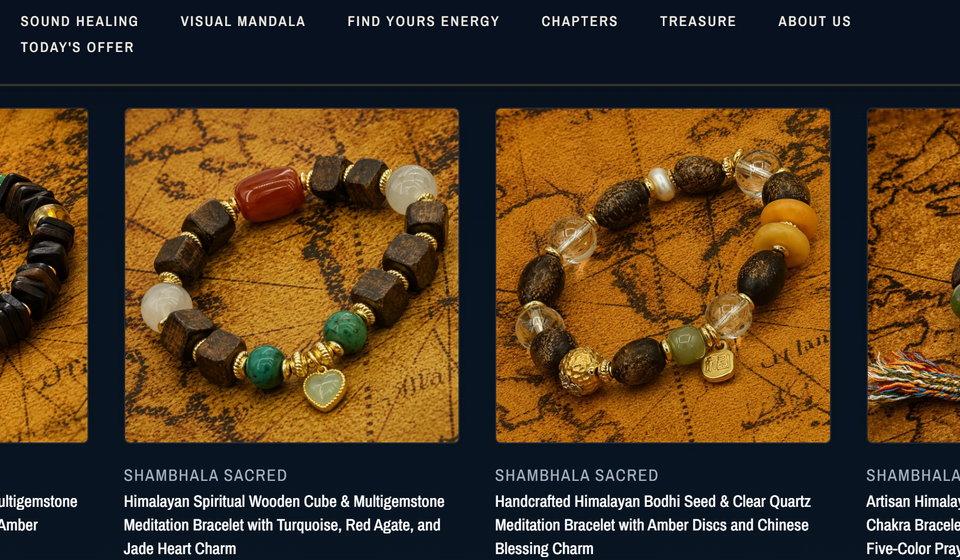

Shambhalasacred.com doesn’t sound like a typical online store. Its About Us page reads more like a spiritual memoir, pages of language about “energetic anchors,” “sacred geometry,” and a founder named Ruyi Jiang who claims to have spent years walking hidden paths through the Himalayas collecting blessed silver and stones. It’s beautifully written and completely disarming.
Strip away the poetry and what’s left is a Shopify store selling singing bowls and gemstone bracelets, registered a few months ago, with no verifiable founder, no real business address, and a contact page that lists a sacred mountain region instead of anywhere you could actually send a return. Shambhalasacred.com is a scam.
Quick Answer
Shambhalasacred.com is not a real, accountable business. Here’s why:
- The site was only registered in March 2026 and isn’t listed with the BBB
- Its “address” is Mount Kailash, a mountain region in Tibet, not a business location where a package or a complaint could ever actually go
- The only way to contact anyone is one email address, no phone number, no live chat
- The founder story about Ruyi Jiang can’t be verified anywhere outside this one website
- Independent reviewers already flagged this exact site for the same missing information and pressure tactics before this review was written
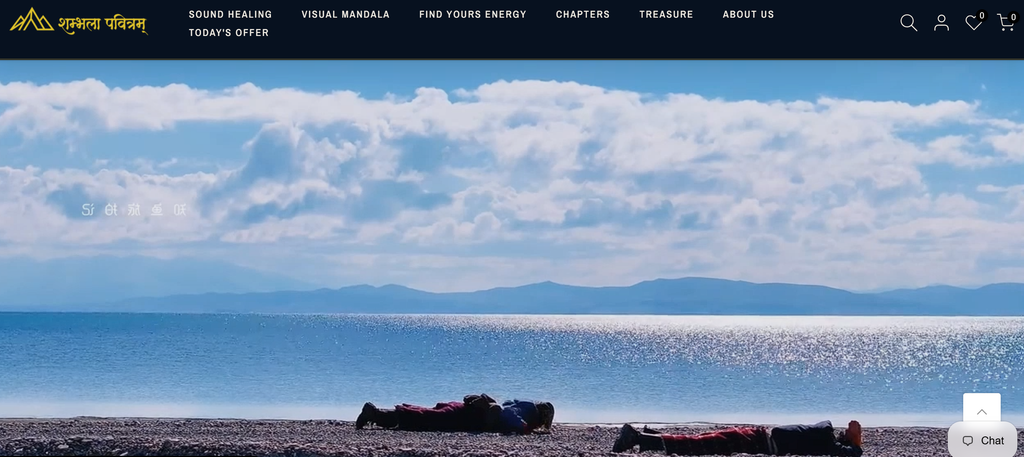
Table of Contents
- Quick Answer
- How Old Is This Website, Really
- The Address Is a Mountain, Not a Business
- A Founder Story That Can’t Be Checked
- How Stores Like Shambhala Sacred Operate
- FAQ
- Conclusion
How Old Is This Website, Really
Shambhalasacred.com was registered in March 2026 and runs through March 2027, a standard one year registration. That’s a short life for a brand that describes itself through the voice of someone who’s spent “years” walking Himalayan monasteries and building relationships with artisans across the plateau. A founder with that kind of history would usually have some trace of it somewhere outside their own storefront, an interview, an older website, a social post from before the brand launched. None of that shows up here.
The Address Is a Mountain, Not a Business
Most scam stores hide their address entirely. This one takes a different approach: it gives you an address, but it’s Mount Kailash Region, Purang County, Ngari Prefecture, Tibet Autonomous Region, linked to a spot on Google Maps in the middle of a remote mountain range. That’s not a warehouse, an office, or a studio. It’s not a location a courier could deliver to or a regulator could inspect. It reads like poetry because that’s exactly what it’s meant to do, reinforce the brand story rather than function as an actual contact point.
Beyond that, the only working way to reach anyone is one email address. No phone number, no physical support line, nothing that would let you actually resolve a problem if an order went wrong. Independent reviewers looking at this exact site have already flagged the same gap: no physical address, no phone number, and a poor showing on Trustpilot.
A Founder Story That Can’t Be Checked
The About Us page is built entirely around Ruyi Jiang, described as someone who has spent years in Himalayan monasteries and built deep relationships with artisans who “chant” over silver and weave “sacred geometry” into their work. It’s compelling writing, but there’s no verifiable trace of this person anywhere outside the site itself, no prior work, no interviews, no independent mention of a Himalayan jewelry maker by that name.
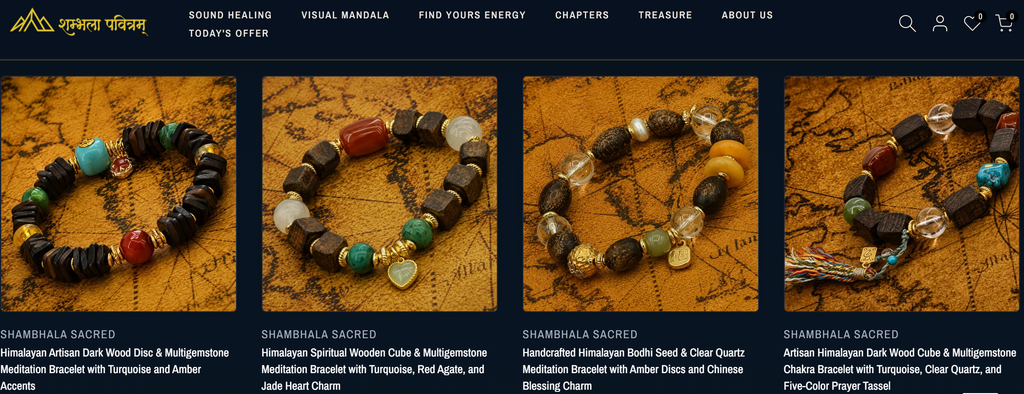
That matters because the entire pricing and trust structure of the store rests on this story. A bracelet described as “born from High Frequency origin” and “chanted over” by mountain artisans is being sold at $126.99, the exact same price shown twice on the homepage for what’s presented as two different pieces, “Celestial Harmony: The Five-Element Energy Balance Bracelet,” listed identically in two places. If the artisan story and the sourcing were real, you’d expect some variation in how individual pieces are priced and described. Instead you get a duplicated listing dressed up in spiritual language.
How Stores Like Shambhala Sacred Operate
This one uses a softer approach than a typical closing-down sale, but it’s built from the same underlying playbook.
The website is disposable, just dressed up more carefully. Like the fabricated “closing sale” backstory we found behind Avelmore.store, Shambhala Sacred invests in narrative instead of urgency, but the underlying site is still a standard Shopify build that could be abandoned and relaunched under a new name at any time.
It matches a pattern seen across a wider category of spiritual and wellness storefronts. Sites selling singing bowls, mala beads, and “energy” jewelry with invented founder stories and vague sourcing claims show up again and again in this space. There’s no confirmed shared ownership behind Shambhala Sacred specifically, but the format, an emotional origin story standing in for real business information, is a well worn template in this niche.
Product images and descriptions lean on mysticism instead of specifics. Real handmade jewelry sellers can usually tell you which artisan made a piece, what materials were used, and where. Shambhala Sacred’s descriptions talk about “frequencies” and “psychic bridges” instead, language that sounds meaningful but tells you nothing you could actually verify.
Paid social ads and quizzes manufacture a feeling of personal connection before you buy anything. The site opens with a “what is your mantra” quiz that collects your email before showing you a product recommendation, a soft version of the urgency tactics used elsewhere, built to make the shopping experience feel personal and spiritual rather than transactional.
The pricing doesn’t hold up once you separate the story from the object. A $126.99 bracelet described as infused with mountain energy and blessed by monks is, materially, still a bracelet. When the price is justified entirely through unverifiable spiritual claims rather than the actual materials or craftsmanship, that’s a sign the price was set by the story, not the product.
Urgency shows up in softer forms here, like limited “series” and “chapters” instead of countdown clocks. Collections named things like “The Gathering Collection” and “Full Moon Cycle Kit” create a sense of exclusivity and timing without needing an actual clock, but the psychological push, buy now before this moment passes, is the same one countdown timers are built to create elsewhere.
FAQ
Is Shambhalasacred.com legit?
No. It has no verifiable founder, no real business address, only an email for support, and it isn’t listed with the BBB.
Who is Ruyi Jiang?
There’s no way to confirm this person exists outside of Shambhala Sacred’s own website. No independent history, interviews, or prior work turned up anywhere else.
Why does the site list a mountain as its address?
It’s a storytelling device, not a real business location. Mount Kailash cannot receive returns, complaints, or deliveries, which is exactly the point if the goal is to look meaningful rather than be accountable.
What should I do if I already ordered from this site?
Contact your bank or card provider and dispute the charge rather than waiting on a reply from service@shambhalasacred.com.
How can I tell if a “spiritual” brand story is covering for a lack of real information?
Look for what’s missing underneath the language, a real address, a verifiable founder, specific sourcing details, and consistent, non-duplicated pricing. If the story is the only thing doing the convincing, that’s worth noticing.
Are all singing bowl or crystal jewelry sellers scams?
No, plenty of small, real artisans sell these items honestly, often with visible faces, verifiable histories, and specific sourcing information. The difference is whether the mysticism is decoration on top of a real business, or a replacement for one.
Why do scam stores lean into spiritual or wellness themes?
Emotional, meaning-driven language lowers scrutiny. A shopper primed to feel like they’re buying a “sacred conduit” is less likely to ask the practical questions they’d ask of an ordinary retailer, like where the item ships from or who actually made it.
Conclusion
Shambhalasacred.com is a scam. Behind an elaborately written founder story is a website that’s only a few months old, lists a remote mountain region instead of a real address, offers no way to reach anyone beyond a single email, and prices its jewelry based on unverifiable spiritual claims rather than anything about the materials or craftsmanship. The story is the product here. Don’t order from it, and if you already have, dispute the charge with your bank rather than waiting to hear back from service@shambhalasacred.com.


[…] Also Read >>> Shambhala Sacred Review: Spiritual Branding, Same Old Scam […]