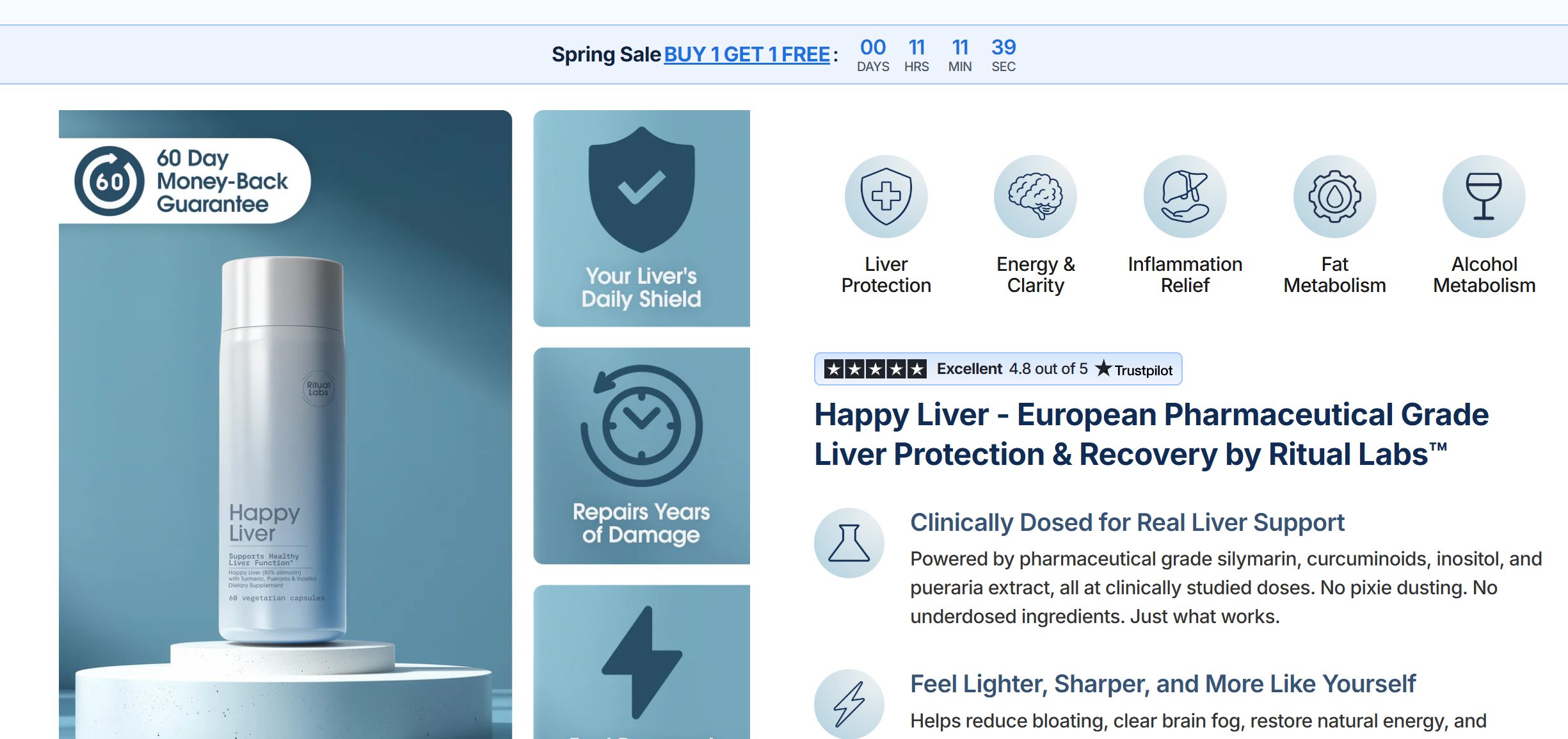

I kept seeing Ritual Labs Happy Liver everywhere, and honestly, it’s one of those supplements that kind of hooks you before you even realize it.
The ads are everywhere right now, and they all hit the same nerve. Feeling bloated. Low energy. Brain fog. Heavy mornings. That general “something feels off” vibe a lot of people deal with but don’t really talk about.
Then the pitch kicks in… your liver is the hidden problem, and this is supposed to be the simple fix. That’s what made me actually stop and look deeper instead of just scrolling past.
Quick Takeaway
- Uses real liver-support ingredients with some research behind them
- Marketing pushes much bigger results than what’s realistic
- Heavy focus on bloating, fatigue, and “recovery” messaging
- Funnel-style urgency and discount pressure everywhere
- Some complaints about refunds and subscriptions online
- Feels more like a heavily marketed wellness supplement than a breakthrough product
Table of Contents
- Quick Takeaway
- What Is Ritual Labs Happy Liver and What Does It Claim To Do?
- Ingredient Breakdown (What’s Real vs What’s Marketing)
- Does Ritual Labs Happy Liver Actually Work?
- The Marketing Angle
- Domain Setup and Transparency
- Real User Experience Pattern
- Happy Liver Side Effects and Complaints
- A Pattern I Keep Seeing
- Is Ritual Labs Happy Liver Scam or Legit?
- Conclusion
- FAQ
What Is Ritual Labs Happy Liver and What Does It Claim To Do?
Happy Liver is basically marketed as a daily supplement for liver support, digestion, energy, bloating, brain fog, and even alcohol recovery. The main idea is simple: your liver is “overloaded,” and that’s why you feel tired, puffy, slow, and foggy. At first, that doesn’t sound crazy. Liver health is a real thing, and there are legit supplements that support it. But the deeper you go into the ads, the claims start stacking up fast.
Suddenly it’s not just “support,” it’s more like:
better energy, flatter stomach, clearer thinking, faster recovery, and feeling “lighter” overall… all in a short time. That’s where it starts feeling a bit inflated.
Ingredient Breakdown (What’s Real vs What’s Marketing)
Inside Happy Liver you’ll find familiar stuff like milk thistle, curcumin, inositol, and pueraria extract. Nothing here looks random or sketchy. These are ingredients you’ll see in a lot of liver or detox-style supplements. Milk thistle especially has been around forever in this space, and curcumin shows up in pretty much every inflammation-related formula on the market.
So yeah, the ingredients are real.
The issue is more how they’re presented. Because there’s a big difference between: “may support liver health” and “will noticeably transform your energy, digestion, and body in a short time” That jump is where things get a bit exaggerated.
Does Ritual Labs Happy Liver Actually Work?
This is where expectations matter more than anything. Some people might feel a bit lighter, less bloated, or slightly more stable in digestion after using something like this for a while.
That’s pretty normal for this category of supplement. But the dramatic transformation stuff you see in ads? That’s where things don’t really line up with reality. There’s no strong evidence that Happy Liver delivers the kind of fast, noticeable “reset” effect it’s being marketed with. And honestly, that mismatch between marketing and real-life experience is the biggest thing that stood out.
The Marketing Angle
The product itself is one thing… but the way it’s sold is doing most of the heavy lifting. Happy Liver isn’t positioned like a basic supplement. It’s pushed like a life-changing reset.
The ads lean hard into emotional stuff:
feeling tired all the time, struggling with bloating, waking up drained, feeling “off,” or not recovering well after eating or drinking.
Then it ties all of that back to your liver being the hidden cause. And once you’re in that mindset, the supplement feels less like a wellness product and more like an answer to a problem you didn’t fully understand before. That’s the hook.
The “Clinically Backed” Angle
You’ll see phrases like “clinically dosed” or “science-backed” a lot in the marketing. And technically, some of the ingredients do have studies behind them. But that’s where things get a bit blurry. Because ingredient research doesn’t automatically mean the full blend works the way it’s implied in ads. A lot of supplement marketing uses that gap very intentionally.
It sounds scientific, but it doesn’t always translate into real-world results the way people assume.
Emotional Selling Tactics
This is where the product really leans in. Happy Liver isn’t just selling liver support. It’s selling the feeling of getting your body back. Less bloating. More energy. Clearer mind. Better mornings. Feeling lighter overall. It’s all very emotionally driven, and honestly, that’s what makes it so clickable.
Because it doesn’t feel like a supplement pitch… it feels like a solution to everyday frustration.
Urgency and Funnel Tactics
The buying process is very typical supplement funnel style. Countdown timers. Limited-time discounts. Bundle deals. “Only a few left” messaging. It’s all designed to get you to act quickly instead of thinking too long about it.
That doesn’t automatically mean anything shady is happening, but it does show how aggressive the sales structure is.
Domain Setup and Transparency
The brand itself looks clean and well put together. Everything feels polished, trust badges, testimonials, scientific wording, the whole setup is designed to feel premium. At first glance, it definitely gives off a “this is legit” impression.
But when you look at wider user discussions, you start seeing some recurring complaints like billing confusion, subscription issues, refund delays, and mixed customer support experiences. Nothing that proves it’s fake, but enough to make you pause before jumping in.
Real User Experience Pattern
Realistically, results from something like this tend to be pretty mild. Some people might notice small improvements in digestion or bloating. Others might feel no real change at all.
That’s pretty normal for liver support supplements in general. The big transformation claims you see in ads just don’t match what most people actually experience.
Happy Liver Side Effects and Complaints
Like with most supplements in this category, reactions can vary. Some users mention mild stomach discomfort, slight nausea, or just no noticeable effect even after consistent use.
There are also complaints around billing confusion and subscription-related frustration, which shows up quite often in supplement funnels like this. Not unusual, but still something to be aware of.
A Pattern I Keep Seeing
This reminded me a lot of what I saw in the Purisaki Berberine Patches review. Different product, same structure: real ingredients, strong transformation marketing, and expectations that get stretched way beyond what the supplement can realistically do.
I’ve also seen similar patterns in the BoostMind review and InsLemon Microneedle Patch breakdown, especially around scientific wording and aggressive wellness storytelling.
The products change, but the marketing formula doesn’t really move much.
Is Ritual Labs Happy Liver Scam or Legit?
It doesn’t really look like a scam in the sense of being fake. The ingredients are real, and it sits in a very common supplement category. The issue is more about how it’s positioned. The marketing pushes expectations that feel way bigger than what the actual product is likely to deliver. So it lands more in that “legit product, exaggerated marketing” space.
Conclusion
Ritual Labs Happy Liver feels like one of those supplements where the story being sold is doing way more work than the formula itself.
The ingredients are fine. Nothing alarming there.
But the way it’s marketed makes it feel like a complete body reset in a bottle, and that’s where things drift away from reality a bit.
At the end of the day, it’s probably closer to a mild liver-support supplement wrapped in very strong marketing than anything close to a dramatic health transformation.
FAQ
Does Happy Liver actually detox the liver?
Your liver already handles detox naturally. Supplements like this may support general function, but they don’t “cleanse” it the way ads suggest.
Can Happy Liver improve energy?
Some people may feel slight improvements, but nothing guaranteed or dramatic.
Is it FDA approved?
No. Like most supplements, it’s not FDA-approved for treating or curing conditions.
Are there complaints about Ritual Labs?
Yes, mainly around billing, subscriptions, and customer service experiences.
Is it a scam?
Not exactly, but the marketing definitely pushes expectations higher than what most people are likely to experience.