
Rifinicky.com sells household products and kitchenware at prices that may look hard to resist. But there is a bigger concern than its discounts. The website is connected to Spacegone.com, a storefront platform that has been associated with a network of suspicious online shops. Its domain is also barely a few weeks old, and the people running the store have not identified themselves. If you’re thinking of ordering from Rifinicky.com, there are several things you should check first.

What Is Rifinicky.com?
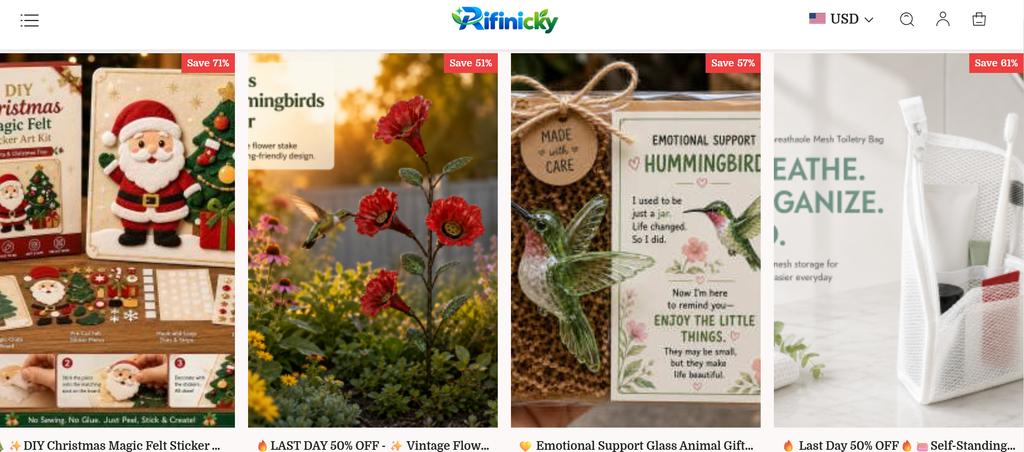
Rifinicky.com is an online store selling household goods and kitchenware. It presents itself as a regular shopping website where customers can browse products, place orders and have their purchases delivered. The store’s low prices are part of its appeal, particularly for shoppers looking for affordable home products.
However, the website does not provide enough information to establish who operates the business. There is also a concern about the platform behind its storefront, which links it to a wider group of suspicious shopping websites.
Rifinicky.com Website and Company Background
Rifinicky.com was registered in October 2026 through Cloudflare, Inc. Its registration details do not reveal the identity of the owner, and the domain is registered only until October 2027. When MalwareTips investigated the website in November 2026, it was barely a month old.
A new domain does not automatically make a retailer fraudulent. Plenty of legitimate businesses launch new websites. The problem here is the combination of a newly registered domain, hidden ownership and a connection to a storefront platform associated with questionable online shops. Rifinicky does not provide enough verifiable business information to reassure customers about who is taking their money.
Products and Discounts on Rifinicky.com
The store focuses on household goods and kitchenware, with product listings designed to appeal to people looking for inexpensive home essentials. Low prices can be attractive, but shoppers should pay attention to what they are actually getting. A product photograph may show a well-made item, but that does not guarantee the delivered product will have the same size, materials or quality.
MalwareTips also describes Rifinicky as a dropshipping operation, with orders fulfilled by suppliers in China rather than products being manufactured or handled directly by the retailer. This arrangement is not automatically dishonest, but it can make delivery, quality control and returns more difficult, especially when the seller does not clearly explain how its fulfilment process works.

The Spacegone Connection and Suspicious Store Network
One of the biggest concerns about Rifinicky.com is its connection to Spacegone.com. The MalwareTips investigation found that Rifinicky loads storefront assets from Spacegone, a platform associated with a wider network of suspicious online shops. It also identified similarities in website templates, product photographs and return-policy arrangements across stores using this platform.
This is more concerning than simply finding two websites with similar designs. Shared product images, templates and policies can point to a common storefront system used to launch multiple shops under different names. A customer may believe they are dealing with an independent retailer, even though the website is part of a much larger operation.
The platform connection does not prove that every store using Spacegone is operated by the same people or that every order will result in a loss. However, it gives shoppers a good reason to investigate Rifinicky before making a purchase. A retailer should be able to establish its identity and explain who is responsible for customer orders, regardless of the platform it uses.
Shipping, Returns and Refund Problems
MalwareTips raises concerns about Rifinicky’s delivery and return arrangements. Its investigation describes orders being shipped from suppliers in China, with delivery taking longer than the advertised five to seven days. It also reports that customers may have to pay international shipping costs to return unwanted products.
The report describes refund negotiations in which customers were offered partial refunds of around 15% to 30% of the purchase price instead of being given a straightforward return and refund. It also raises concerns about products arriving in poorer condition than their website photographs suggest.
These are claims from the MalwareTips investigation, not a collection of independently verified customer testimonials. Still, they point to a practical problem with shopping through a retailer that relies on overseas suppliers and has an unclear business identity. Returning an inexpensive item to another country can cost more than the product itself, leaving customers with little incentive to pursue a refund.
Rifinicky.com Customer Reviews and Complaints
There is limited independently verifiable customer feedback about Rifinicky.com. The MalwareTips investigation discusses possible product-quality problems, long delivery times and difficult refund arrangements, but its detailed evidence page does not establish a collection of independently sourced customer complaints or confirmed financial losses.
That means we should not treat every claim in the investigation as a verified buyer experience. There is also no good reason to fill this section with invented reviews or complaints from people who cannot be identified.
The lack of an established customer feedback history is still worth considering. Rifinicky.com is a very new website, and shoppers have little independent evidence to rely on when deciding whether to trust it with an order.
Is Rifinicky.com Legit or a Scam?
Rifinicky.com has several problems that make it a high-risk retailer. Its domain was registered recently, its owner is not publicly identified, and its storefront uses assets from Spacegone.com, a platform associated with suspicious online shops. The investigation also raises concerns about product quality, delivery times and the difficulty of returning purchases.
MalwareTips gave the website a safety score of 22/100, placing it in the High Risk category. That rating is based mainly on the store’s business and platform-related concerns, not evidence that the website is distributing malware. Its technical checks found no antivirus detections among 93 engines, and Google Safe Browsing did not list the domain.
A clean antivirus result does not make an online retailer trustworthy. Security software can check whether a website is associated with malicious code, but it cannot guarantee that the seller will send the correct product or issue a refund. There is little reason to trust Rifinicky.com with your money when the business behind it remains difficult to identify.
How Scam Online Stores Operate
Fake online stores are not always poorly designed websites with obvious spelling mistakes. Many look like ordinary retailers, with product categories, professional photographs, shopping carts and payment pages. Some are created quickly using ready-made storefront platforms, allowing operators to launch several websites under different names. Common tactics include:
- Fake storefronts and brand impersonation: Fraudulent shops copy the names, logos, colours and layouts of established businesses. Some use slightly altered domain names to make shoppers believe they are visiting an official retailer.
- AI-generated and copied product images: Scammers use AI-generated photographs, stolen product pictures and copied descriptions to make listings look convincing. The images may show products that are completely different from what customers receive.
- Fake reviews and testimonials: Fabricated customer comments, copied reviews and made-up ratings create the impression that a store has a history of satisfied buyers.
- Deceptive discounts: Some websites inflate original prices before advertising huge reductions. Others use fake closing-down sales, anniversary promotions and clearance events to make shoppers believe they are getting a special deal.
- Countdown timers and false scarcity: Timers, low-stock messages and limited-time offers pressure shoppers into ordering before checking the business.
- Misleading social media advertisements: Fake retailers use attractive product videos and photographs taken from legitimate brands. The advert may show a genuine product, but the website behind it may have no connection to the manufacturer.
- Hidden or false company information: Some stores use made-up company names, borrowed addresses and misleading contact details. Others hide the people responsible for collecting payments.
- Payment traps: Shoppers may be encouraged to pay through cryptocurrency, gift cards, direct bank transfers or accounts belonging to unrelated people. Some are asked to send additional money after placing an order.
- Non-delivery and fake tracking: Customers may receive no parcel, an invalid tracking number or shipping updates that do not lead to an actual delivery.
- Inferior substitutes and counterfeit goods: Instead of the advertised product, buyers may receive cheap imitations, incomplete items or something entirely different.
- Refund obstruction: Sellers may ignore complaints, offer small partial refunds or demand that customers pay expensive international return shipping. Some make the process so difficult that buyers give up.
- Personal information theft: Fake checkout pages can collect names, addresses, telephone numbers, passwords and payment details for misuse.
- Disappearing websites: When complaints and payment disputes increase, operators may abandon one domain and open another store under a different name.
These are common tactics used across fraudulent online shopping operations. They are not all confirmed activities of Rifinicky.com, but they show why shoppers should look beyond a website’s appearance before placing an order.
How to Spot a Scam Website
Fake shopping websites are no longer easy to recognise just by looking at them. Some use AI-created product pictures, professionally edited adverts and checkout pages copied from genuine retailers. A store can look completely convincing and still have no genuine business behind it. Before placing an order, take a few minutes to check the following:
- Compare the website address with the real brand’s address. Don’t rely on the logo or the name displayed at the top of the page. Find the company’s official website yourself and check whether the address matches. Fake retailers often use small spelling changes or extra words to make their domains look familiar.
- Investigate the domain’s history. A Whois lookup can show when a website was registered and whether its ownership details are available. Be particularly careful when a supposedly established retailer is operating through a domain that was created only recently.
- Check the website’s security reputation. Tools such as the MalwareTips Website Scanner can reveal security detections, domain information and other warning signs. A clean scan does not guarantee that a seller is genuine, so don’t treat it as the only check.
- Look for a real business behind the store. Check whether the website provides a company name, business address and working customer service details. Search those details separately to see whether they belong to the retailer or have been copied from another business.
- Question dramatic sale announcements. Fake retailers often use stories about closing down, celebrating an anniversary or clearing their entire warehouse to justify enormous discounts. These promotions are designed to make shoppers act quickly rather than investigate.
- Check what people say elsewhere. Search the store’s name alongside words such as “reviews,” “complaints” and “scam.” Independent customer feedback can reveal delivery problems, poor-quality products and refund disputes that the store’s own website will never mention.
- Pay attention to where your money is going. A retailer that asks for cryptocurrency, gift cards or direct transfers to personal accounts is taking you outside the usual protections offered by many payment providers. Also check whether the checkout redirects you to an unrelated domain before entering your details.
Don’t let an attractive advert or a familiar brand name make the decision for you. Check the seller’s identity, domain history and payment arrangements before ordering. Those few minutes of checking can save you from a much more expensive problem.
You can also compare the website with other suspicious retailers we’ve investigated, such as Vulgarioi.com and Calviona.shop. Looking at the warning signs across different stores can help you recognize similar tricks before placing an order.
What to Do If You Already Ordered from Rifinicky.com
If you have already paid, save your order confirmation, payment receipt, product listing and any messages from the seller. Contact the store through its published email address and keep a record of its response. If the seller does not deliver your order or refuses a reasonable refund, contact your bank or payment provider and ask about opening a dispute or requesting a chargeback.
If you paid through PayPal, use its dispute process and check the applicable buyer-protection deadlines. Do not send extra money simply because the seller claims it is needed to release your parcel or process a refund. If you created an account using a password you use elsewhere, change that password on the other accounts too. Watch your bank statements for unfamiliar transactions.
Final Verdict: Avoid Rifinicky.com
Rifinicky.com is a high-risk online store with hidden ownership and a connection to a storefront platform associated with suspicious shopping websites. The concerns surrounding its product quality, delivery arrangements and international returns make it an unattractive place to shop. I would avoid placing an order until the business can establish who operates it and provide convincing evidence that it is a reliable retailer.
Read also >>> Arencia Vitamin C Serum Review: Is This Viral Brightening Serum Worth the Hype?